
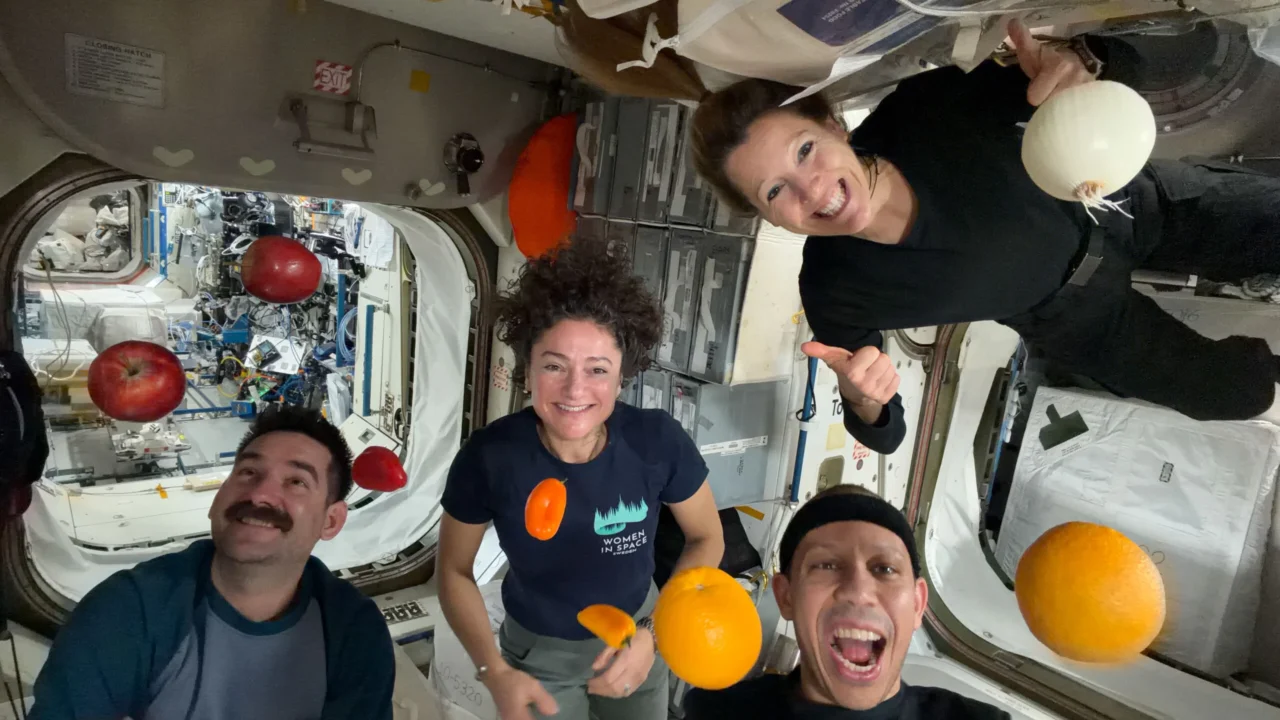
Northrop Grumman’s Cygnus XL cargo spacecraft recently arrived at the International Space Station (ISS) with a delivery of fresh food and more than 2,300 pounds of research and operational supplies. The shipment included fresh fruits and vegetables such as oranges, apples, onions, and peppers, providing astronauts with nutritious options in microgravity.
Alongside the food, the cargo contained important scientific hardware for ongoing studies aboard the ISS. Among the experiments delivered are projects focused on blood stem cells aimed at advancing treatments for cancers and blood disorders. The cargo also includes equipment to support research into protecting astronaut gut health, a critical area for long-duration spaceflight.
Additional hardware supplied by this shipment includes an advanced exercise system developed by the European Space Agency (ESA) designed to help crew members maintain physical fitness in space. New eye-imaging devices were also delivered to better monitor astronaut vision, a common concern during missions.
The spacecraft brought recharge tanks for spacesuit oxygen and nitrogen supplies, ensuring proper environmental conditions for extravehicular activities (spacewalks) and other operations. This multifaceted cargo supports both daily life aboard the station and ongoing scientific endeavors critical to NASA’s space exploration goals.
A photo taken aboard the ISS shows NASA astronauts Jack Hathaway, Jessica Meir, and Chris Williams along with ESA astronaut Sophie Adenot enjoying some of the fresh food under microgravity conditions, highlighting the practical and morale benefits of the delivery.
Why it matters
Deliveries like this Cygnus XL cargo run are essential for sustaining astronauts’ health and supporting the science experiments that expand knowledge in medicine, biology, and human physiology. Fresh food provides important nutrients that complement standard space station rations, while the research hardware facilitates experiments that could have implications for disease treatment on Earth and astronaut health during long-term missions.
Background
The International Space Station relies on regular resupply missions for food, equipment, and scientific instruments. Commercial cargo spacecraft such as Northrop Grumman’s Cygnus series play a key role in enabling continuous human presence in orbit by delivering vital supplies and advancing research capabilities. The inclusion of ESA-developed exercise hardware underscores the international collaboration essential to maintaining crew health and mission success.
Sources
This article is based on reporting and publicly available information from the following source:
Read more Space & NASA stories on Goka World News.