
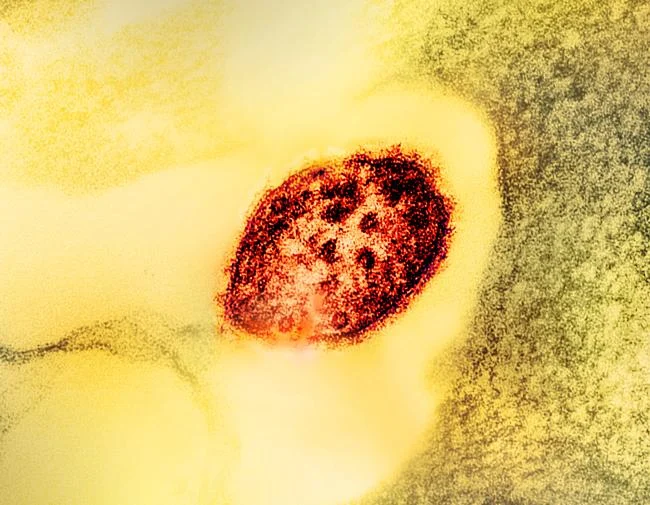
A research team funded by the National Institutes of Health (NIH) has isolated and precisely mapped the first comprehensive set of human antibodies that target the measles virus. The study identified specific antibodies capable of lowering virus levels to undetectable amounts in an animal model, laying groundwork for the development of antibody-based therapies against measles.
Measles cases have surged globally and in the United States, with over 470,000 cases reported worldwide in 2024 and at least 72 outbreaks recorded in the US since January 2025. Despite the availability of an effective vaccine, no approved therapies exist for those unable to receive immunization—including the immunocompromised, pregnant women, and infants too young for vaccination.
Identification and structural mapping of human measles antibodies
Led by Dr. Erica Ollmann Saphire at the La Jolla Institute for Immunology, the researchers isolated memory B cells from a donor vaccinated against measles three times. From these cells, they engineered and purified over 100 monoclonal human antibodies targeting specific sites on the measles virus.
Using cryo-electron microscopy, the team produced atomic-resolution maps revealing nine distinct antibody binding sites on the virus’s two key surface proteins: Hemagglutinin (H) and Fusion (F). This work is the first to structurally characterize the human antibody response to measles at such detail.
New insights into measles immunity
The findings challenge earlier assumptions that protective immunity mainly involved antibodies targeting the H protein, with antibodies against the F protein considered secondary. Instead, antibodies against both proteins demonstrated strong, independent protective effects.
One antibody against the F protein, named 4F09, was notably potent. In infected rats, 4F09 reduced lung virus levels to undetectable amounts by locking the F protein and preventing the structural changes the virus needs to fuse with human cells.
The antibodies identified bind to virus regions conserved across all known strains worldwide, indicating the virus’s limited ability to mutate to evade these immune defenses without losing viability.
Implications for measles treatment development
The researchers are now seeking partners for further studies and clinical testing to transform these antibodies into effective therapeutics. Such medicines could provide rapid post-exposure protection and treatment options for vulnerable populations who cannot be vaccinated.
Why it matters
With a resurgence of measles cases and no approved therapies currently available, this research offers a crucial step toward developing antibody-based interventions. These could fill a critical gap for individuals who cannot benefit from vaccination, potentially reducing morbidity and controlling outbreaks more effectively.
Background
Measles remains a highly contagious viral disease despite vaccination efforts. Existing vaccines have dramatically lowered incidence worldwide but gaps remain due to vaccine hesitancy and populations ineligible for vaccination. Until now, understanding of human antibody responses to measles was limited and relied primarily on animal studies and indirect methods, hindering therapeutic development.
The NIH’s National Institute of Allergy and Infectious Diseases (NIAID) supports research to expand knowledge of infectious diseases and develop new preventive and treatment options. This study was published in Cell Host & Microbe in 2026.
Sources
This article is based on reporting and publicly available information from the following source:
Read more Science Discoveries stories on Goka World News.