
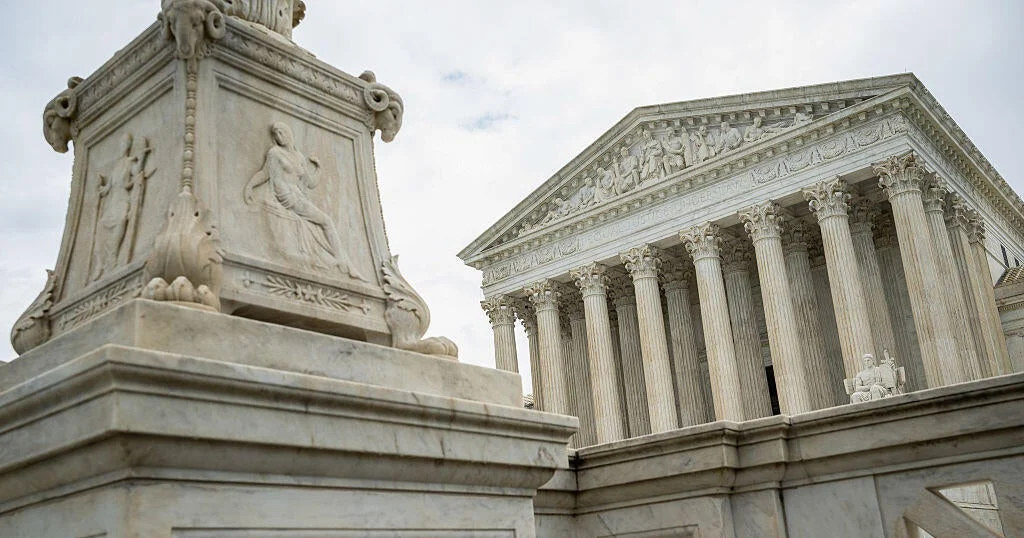
The U.S. Supreme Court on Friday rejected Virginia Democrats’ last-minute effort to reinstate a new congressional map drawn to favor their party ahead of the 2026 midterm elections. The Court issued a brief, unsigned order leaving intact Virginia’s highest court ruling that invalidated the map, without any noted dissents.
The dispute centers on a constitutional amendment process in Virginia. In 2025, the Democratic-controlled General Assembly passed an amendment to allow mid-decade redistricting of the state’s U.S. House districts. This amendment was approved by state lawmakers twice and then ratified by voters in April 2026. However, Virginia’s Supreme Court blocked the new map days later, ruling in a 4-3 decision that lawmakers had failed to follow required procedural steps under Virginia’s Constitution.
Virginia Democrats argued to the U.S. Supreme Court that the state court’s decision was a “deeply mistaken” interpretation of federal law and that forcing elections under old districts deprived voters and candidates of their rights. Republicans countered that the issue was purely a matter of state law and urged the Supreme Court to let the state court’s ruling stand.
This case is part of a broader trend of partisan fights over mid-decade congressional maps nationwide. Following a Republican-led redistricting effort in Texas that could add five GOP seats, Democratic-controlled California drew maps to gain a similar advantage. Both maps will be used in the 2026 midterms after Supreme Court approval. Other states like North Carolina, Missouri, and Florida have also altered districts to bolster Republican advantages.
Meanwhile, recent changes to the Voting Rights Act by the Supreme Court have led several Southern states, including Louisiana, Alabama, and Tennessee, to consider redrawing their maps again before upcoming primary elections.
Why it matters
The Supreme Court’s refusal to intervene reaffirms the authority of state courts to interpret state constitutional procedures on redistricting. This decision will shape Virginia’s congressional races in the November midterms under the previous voting districts, potentially affecting partisan balance. More broadly, as states engage in mid-decade redistricting battles, the ruling highlights limits on federal judicial involvement in state map disputes.
Background
After the 2020 Census, some states began redrawing district lines to influence the 2026 House elections mid-decade, a practice more common in recent decades but often controversial. Virginia’s Democrats aimed to counter Republican gerrymandering with their 2025 amendment and map, which passed voter approval but was hung up by procedural challenges in the state Supreme Court. The U.S. Supreme Court generally defers to state courts in interpreting state law, explaining the denial of Virginia Democrats’ appeal.
Sources
This article is based on reporting and publicly available information from the following source:
Read more Politics stories on Goka World News.