
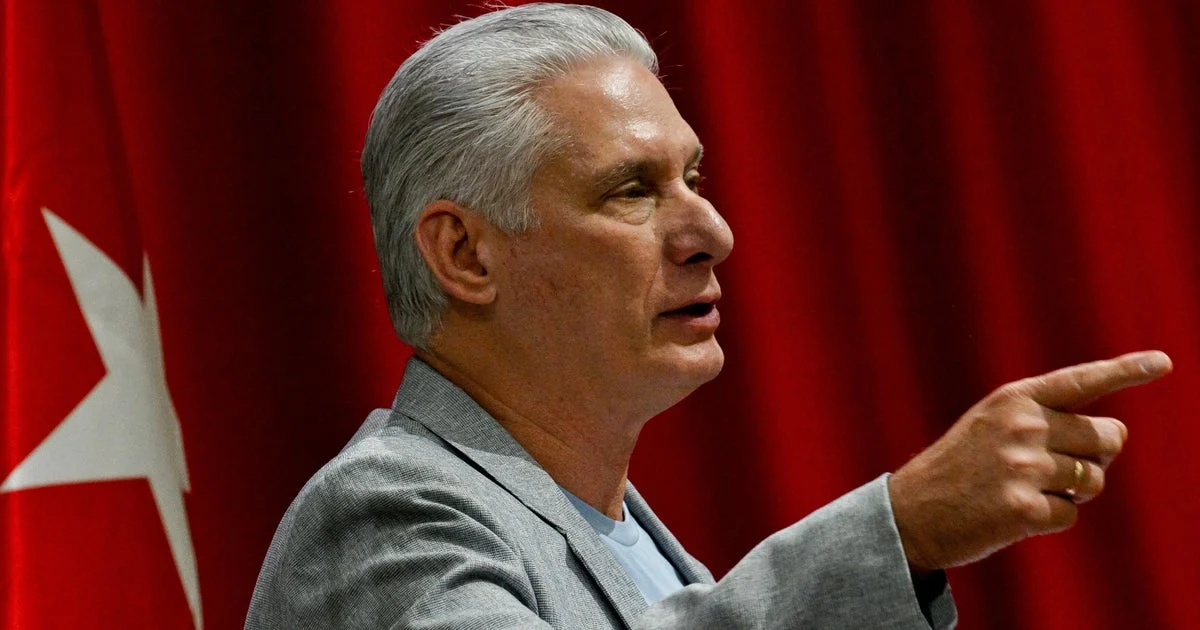
Cuban President Miguel Díaz-Canel Bermúdez publicly stated that Cuba poses “no threat” to the United States, responding to recent reports suggesting that the island has acquired hundreds of military drones and may have discussed offensive plans against U.S. targets.
The statement followed an Axios report claiming Cuba possesses around 300 military drones distributed across the country and has considered potential strikes on the U.S. military base at Guantanamo Bay and Florida’s Key West. CBS News has not independently verified these details, and Cuba has not explicitly denied the presence of military drones.
On social media, Díaz-Canel condemned what he described as “threats of military aggression against Cuba from the world’s greatest power,” referring to the United States. He emphasized that such threats themselves constitute international crimes and warned that any military confrontation would lead to devastating consequences for regional peace and stability.
“Cuba poses no threat, nor does it have aggressive plans or intentions against any country,” Díaz-Canel said, highlighting that the U.S. government, especially its defense and national security agencies, is fully aware of this position. He acknowledged Cuba’s right to self-defense but rejected any justification for war against the Cuban people.
U.S. Pressure on Cuba
The Biden administration and previous U.S. administrations have increased pressure on Cuba through sanctions and diplomatic efforts, aiming to undermine the Cuban Communist Party leadership. However, these measures have not led to significant changes in Cuba’s governance.
Former President Donald Trump publicly considered military options toward Cuba, following a November 2025 operation in Venezuela. Trump announced intentions of “taking Cuba in some form,” asserting broad authority over the situation. In March 2026, CIA Director John Ratcliffe visited Havana, demanding fundamental reforms and warning that Cuba should no longer serve as a safe haven for adversaries.
Why it matters
These developments occur amid ongoing tensions between the U.S. and Cuba, with concerns that military posturing and reports of drone capabilities could escalate the risk of conflict. Cuba’s official denial of hostile intentions serves to calm immediate fears, but U.S. attention to Cuba’s military capabilities highlights the broader geopolitical pressures in the region.
Background
Relations between Cuba and the United States have long been strained, with embargoes, diplomatic conflicts, and security concerns shaping interactions. Reports of military drones mark a new dimension in these tensions, reflecting Cuba’s efforts to strengthen defense amid perceived threats. The U.S. maintains a strategic naval base at Guantanamo Bay, which remains a focal point in bilateral security discussions.
Sources
This article is based on reporting and publicly available information from the following source:
Read more World News stories on Goka World News.