
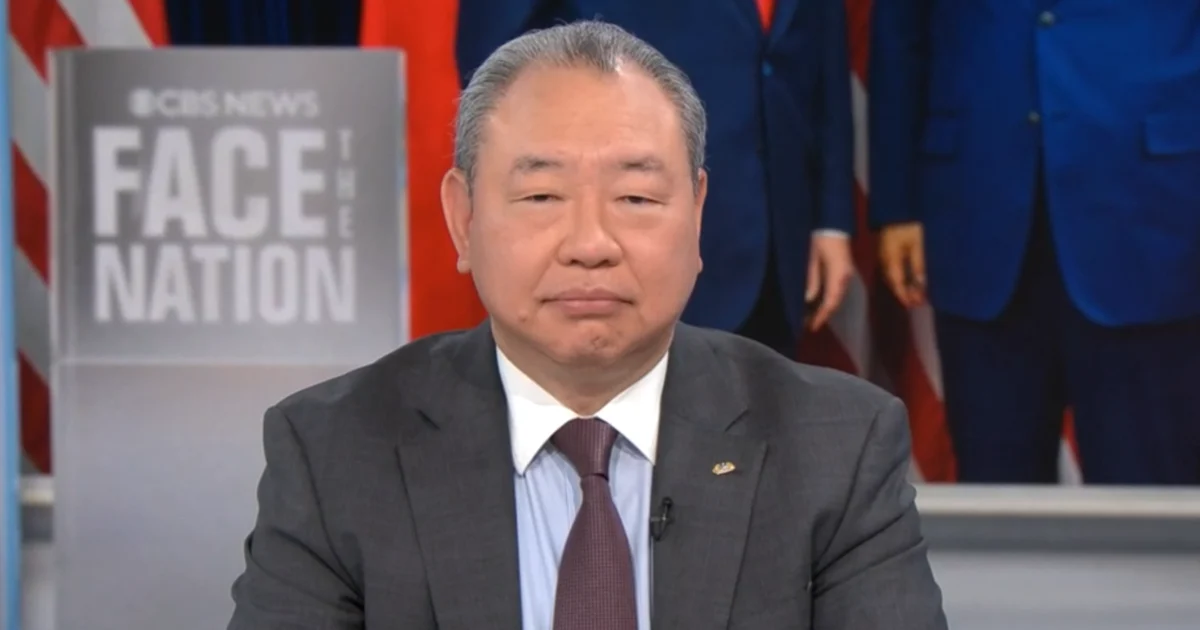
Taiwan’s representative to the United States, Alexander Yui, stressed that Taiwan desires peace and stability and does not intend to provoke conflict with China, following heightened focus on Taiwan during President Trump’s recent summit with Chinese President Xi Jinping.
In an interview on CBS News’s Face the Nation on May 17, Yui said, “We want to have our lives going on as usual. But we’re not the ones creating all this trouble,” referring to escalating tensions in the Taiwan Strait. His comments come after the summit held last week in Beijing, where Taiwan was a central issue.
Trump-Xi Summit Highlights Taiwan Issue
President Trump returned from his two-day summit with Xi Jinping in Beijing amid growing concerns about the future of U.S. support for Taiwan’s defense. China regards Taiwan as a breakaway province and has not ruled out the use of force to assert control. The U.S. has maintained a longstanding commitment to Taiwan’s security, but uncertainty has increased under the Trump administration.
According to Chinese state media, Xi warned Trump of potential “clashes and even conflicts” if the Taiwan issue is mishandled. Trump acknowledged that Taiwan was “talked about a lot” during the summit and indicated he had made “no commitment either way” regarding a pending U.S. weapons sale to Taiwan, describing it as a “very good negotiating chip.”
Yui highlighted that Trump heard primarily the Chinese perspective during the summit, stating, “He heard only their side of the story. He heard the Chinese story.” Yui expressed Taiwan’s willingness to share its narrative, one marked by “resiliency” against Chinese aggression that has persisted since 1949.
Taiwan’s Position on Independence and Security
Addressing questions about formal independence from China, Yui clarified that Taiwan’s position emphasizes sovereignty separate from Chinese control rather than a unilateral declaration of independence. “Taiwan is independent from the Chinese aggression. That we’re not subordinate to the People’s Republic of China in any way at all,” he said.
He described Taiwan’s efforts to bolster its security as defensive measures akin to “beefing up our security system” to protect their “house” against intruders, with China seen as the aggressor.
Yui also acknowledged and appreciated statements made by Trump and Secretary of State Marco Rubio during their visit to Beijing, asserting there was no change in the United States’ longstanding policy on Taiwan.
Why it matters
The Taiwan issue remains a flashpoint in U.S.-China relations and regional security. Taiwan’s stability is crucial to maintaining peace in the Asia-Pacific region, and U.S. policy decisions about arms sales and diplomatic support could significantly impact cross-strait tensions. The outcome of these diplomatic interactions informs global geopolitical balance and the potential risks of military conflict.
Sources
This article is based on reporting and publicly available information from the following source:
Read more World News stories on Goka World News.