
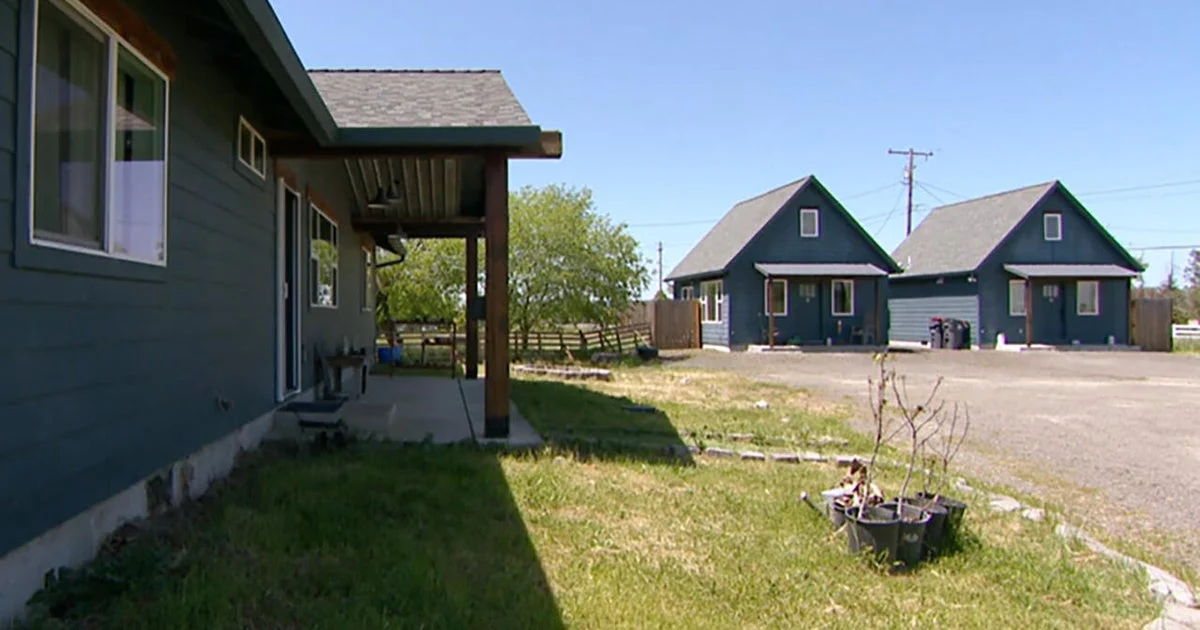
California has significantly expanded policies around Accessory Dwelling Units (ADUs), small secondary homes on the same property as a main residence, as a practical response to the state’s persistent housing shortage. These compact, fully functional units, often called granny flats or mother-in-law suites, are now easier and cheaper to build, enabling homeowners to add rental housing within their own yards.
After the devastating Almeda Fire in 2020 destroyed thousands of homes in Southern Oregon’s Rogue Valley, some residents turned to ADUs to address urgent housing needs. Artist and contractor Jacob Fry and his wife Elize built two small rental units on their property to help displaced families and to contribute to affordable housing options. The Frys prioritize community support over profit and rent their units to young families at below-market rates.
In California, legislation permits up to three modest ADUs on a single-family lot, with restrictions against short-term rentals like Airbnb to ensure availability for long-term tenants. Dana Cuff, a professor of Architecture and Urban Design at UCLA who advocated for these laws, highlighted their impact, noting there are currently around 82,000 ADU building permits active in the state. Cuff herself resides in an ADU she built in her backyard, renting out her main home to young tenants.
The ADU movement addresses environmental and urban planning concerns by promoting infill housing rather than further urban sprawl, utilizing existing neighborhoods more efficiently. However, not everyone is supportive; critics express concerns about the strain on infrastructure such as parking, sewer, and waste management systems originally designed for single-family homes.
Beyond affordability, ADUs have also provided alternative lifestyle options. In Los Angeles, 72-year-old Mona Field converted her garage into an ADU to downsize for retirement, freeing up her main house for her daughter’s family, who benefit from multigenerational living with shared support.
Residents like Kaetriauna Bowser-Smith and Jared Weber, who live with their young child in a 400-square-foot ADU, praise them as an accessible entry point to independent living that might not be otherwise affordable. Families and older adults alike are finding ADUs to be valuable, flexible housing solutions tailored to diverse needs.
Why it matters
California’s ADU reforms represent one of the most influential housing policy changes in over a decade, directly addressing the state’s severe housing shortage by increasing affordable rental options without expanding urban sprawl. As home prices and rents continue to rise, ADUs offer a scalable, community-focused approach that can accommodate displaced individuals and families while maximizing the use of existing residential land.
Background
Accessory Dwelling Units have existed under various names such as granny flats or carriage houses for decades but faced regulatory and financial barriers that limited widespread adoption. The recent wave of reforms across states like California aims to streamline approvals, reduce costs, and increase legal clarity, reflecting growing recognition of ADUs as viable tools for urban infill and housing affordability.
Sources
This article is based on reporting and publicly available information from the following source:
Read more US News stories on Goka World News.