
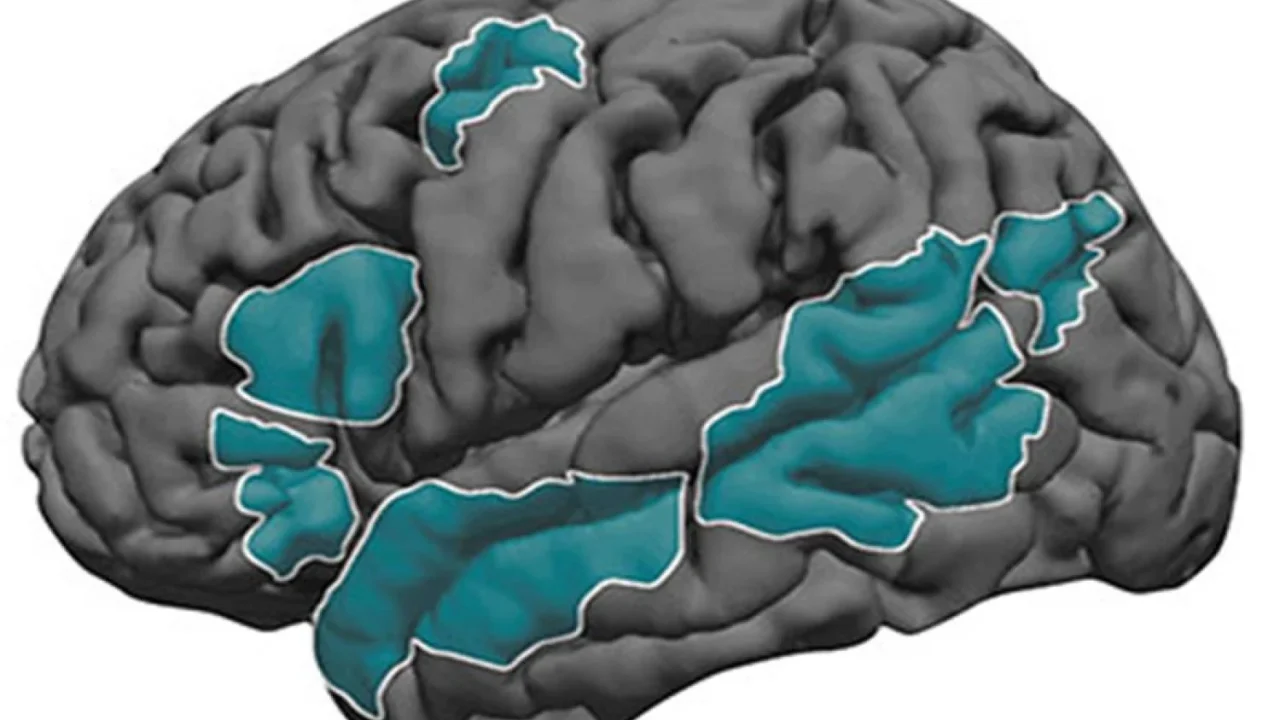
Researchers at the Massachusetts Institute of Technology have found that the brain’s language-processing regions become strongly lateralized to the left hemisphere by age four, with the language network continuing to develop and integrate until around age 16. The findings, published May 16 in Nature Communications, provide new insight into how language functions mature across childhood and adolescence.
Language Network Development from Early Childhood to Adolescence
The research team, including scientists from MIT’s McGovern Institute for Brain Research, analyzed functional MRI data from hundreds of children aged 4 to 16, alongside adult brains for comparison. Using a specialized “language localizer” task where participants listened to stories or nonsense words inside an MRI scanner, the researchers mapped regions activated specifically by language.
They observed that as children age, the language network becomes more integrated, with stronger correlations between its subregions and increased responsiveness during language processing. This enhanced activity likely corresponds with children’s expanding vocabularies and increasingly sophisticated language use.
Early Left-Hemisphere Lateralization Confirmed
Contrary to prior uncertainty, the study confirms that language functions are strongly lateralized to the left side of the brain even in the youngest children tested. “From age 4 on, it seems just as lateralized as in an adult,” said co-author John Gabrieli, Grover Hermann Professor of Health Sciences and Technology at MIT.
This early-established left hemisphere dominance challenges hypotheses suggesting that bilateral language processing in childhood reflects a developmental stage before lateralization fully emerges.
Implications for Developmental Disorders
The discovery holds significance for understanding developmental language disorders such as autism and dyslexia. People with these conditions often show more involvement of the right hemisphere during language tasks compared to typically developing individuals. The researchers note that since typical lateralization is present by age four, the bilateral language processing seen in such disorders is unlikely to be due to a simple delay in brain maturation.
Further study is required to determine how language networks form in infancy and how early brain damage affects lateralization. The research team highlighted that early brain plasticity allows for language functions to sometimes shift to the right hemisphere if the left is damaged early in life, despite strong early lateralization patterns.
Why it matters
Understanding the timeline and characteristics of language lateralization can improve the interpretation of developmental deviations in language disorders. Clarifying when and how language regions specialize could inform diagnostic and therapeutic strategies for conditions that impact language acquisition and processing.
Sources
This article is based on reporting and publicly available information from the following source:
Read more Science Discoveries stories on Goka World News.