
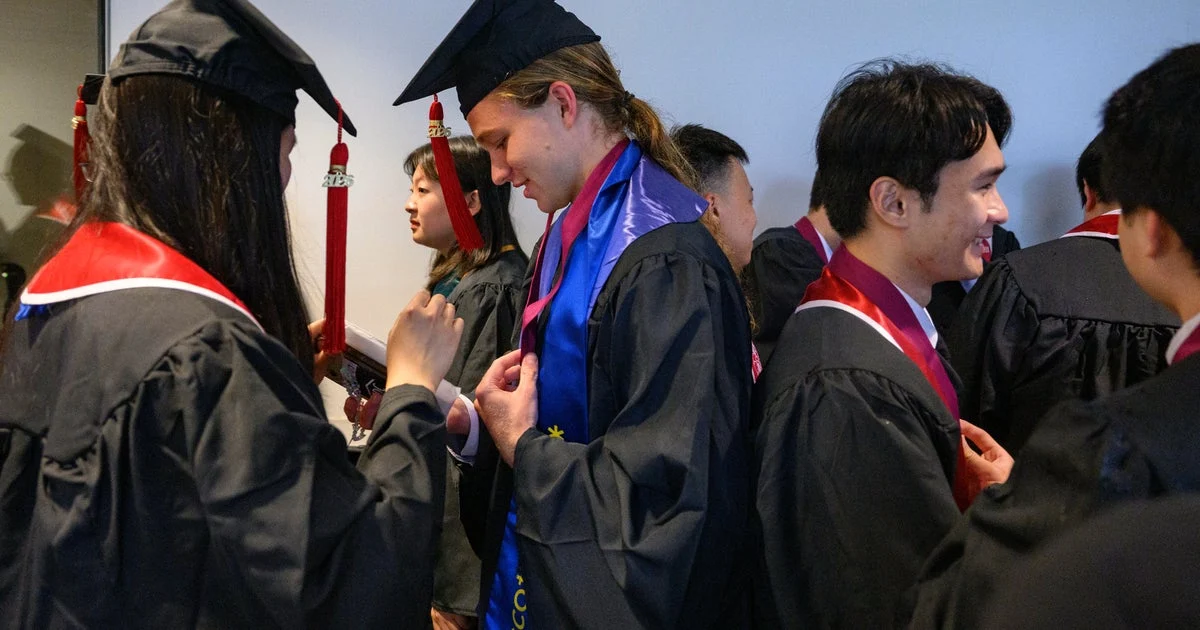
Recent commencement ceremonies have highlighted growing discontent among new graduates regarding artificial intelligence (AI) and its implications for their careers. At the University of Arizona, students booed former Google CEO Eric Schmidt during his speech about AI’s future impact. Graduates conveyed frustration at being discouraged from using AI tools while their speaker championed the technology, reflecting broader unease among young Americans facing uncertain job markets.
Similar reactions emerged at the University of Central Florida and Middle Tennessee State University, where mentions of AI during speeches drew negative responses. Olivia Malone, a University of Arizona graduate, told the Associated Press that the contrast between campus restrictions on AI and the pro-AI rhetoric from commencement speakers felt “disrespectful” to students.
Younger Workers’ Job Market Struggles
Data from Gallup indicates a sharp decline in youth job market confidence: only 43% of people aged 15-34 say it is a good time to find a job, down from 75% in 2022. This represents a stark contrast to older workers and may partly reflect fears that automation and AI could reduce entry-level employment opportunities.
The Labor Department reports the unemployment rate for 20- to 24-year-olds was 7.6% in April, considerably higher than the national average of 4.3%. Recent graduates frequently report sending dozens or hundreds of applications before securing positions. Many jobs now require candidates to “collaborate with AI,” a term that some young applicants say remains unclear, particularly when schools often ban AI use during studies.
Sami Wargo, a Marquette University graduate, expressed frustration at the school’s decision to have an AI expert deliver the undergraduate commencement address despite a student petition opposing it, citing AI’s threat to the class’s job prospects.
Mixed Public Views on AI
A broader skepticism about AI is emerging nationally. CBS News polling reveals that while many Americans accept AI for routine tasks like proofreading, they remain concerned about its wider effects. Pew Research Center data show increasing wariness since 2021, with 42% fearing AI could eliminate jobs in their field and 45% doubtful about AI companies’ economic impact.
This public skepticism sharply contrasts with AI experts’ optimism: A 2025 Pew survey found 73% of AI experts believe AI will positively affect the workforce, whereas only 23% of the general public share this view.
Early Labor Market Disruptions
Although economists note AI’s current impact on jobs is limited, research from Goldman Sachs reports that openings for occupations highly vulnerable to AI automation—such as legal assistants, proofreaders, and insurance clerks—have fallen below pre-pandemic levels. This suggests companies are already leveraging AI to reduce labor costs and improve productivity.
Conversely, AI-related jobs are on the rise. LinkedIn data show the fastest-growing role for young U.S. workers is “AI engineer,” with hundreds of thousands of AI-focused job postings added between 2023 and 2025.
Why it matters
The combination of rising job market challenges and widespread AI skepticism among new graduates underscores critical tensions as AI technologies become integral to workplaces. These attitudes could influence educational policies, hiring practices, and efforts to help young workers adapt to technological change. Understanding this generational divide on AI’s role in employment is essential for policymakers, employers, and educators aiming to address workforce transitions.
Background
Concerns about technology disrupting labor markets are not new. Economists note parallels with the dot-com bubble of the early 2000s, where expectations for vast job creation failed to materialize. AI’s rapid evolution is prompting renewed debate over its long-term impacts on job growth, worker displacement, and economic inequality.
Sources
This article is based on reporting and publicly available information from the following source:
Read more Artificial Intelligence stories on Goka World News.