
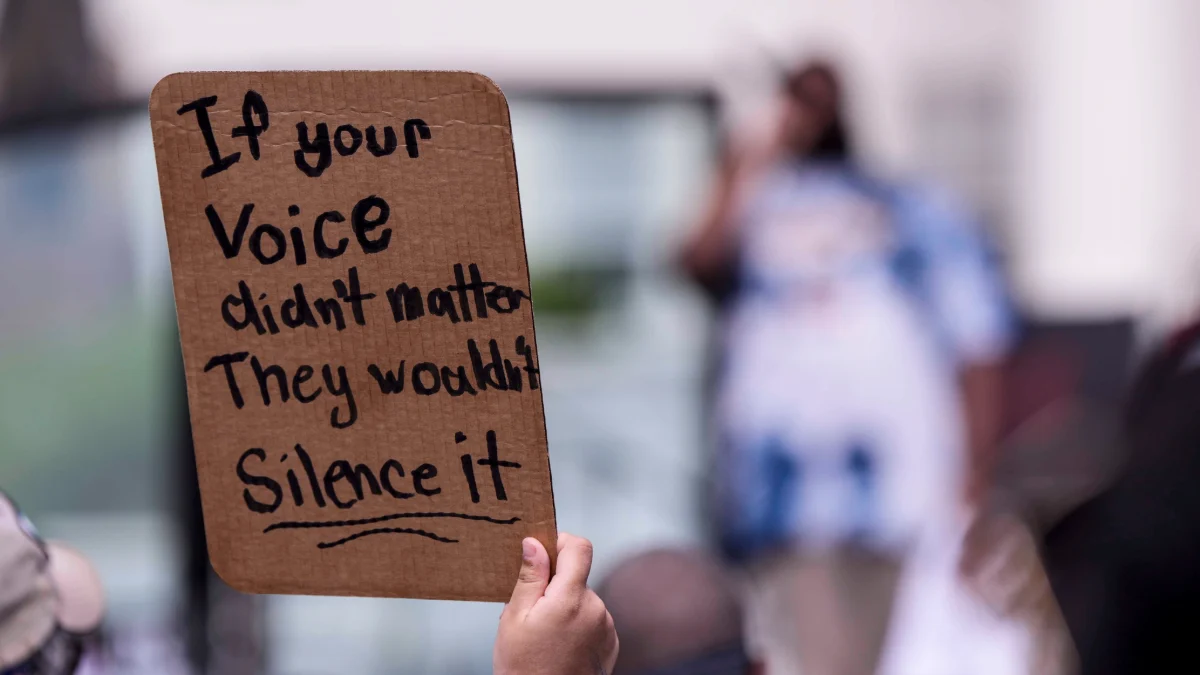
On April 29, 2026, the United States Supreme Court issued a 6-3 decision severely limiting Section 2 of the Voting Rights Act, a key civil rights provision that prohibited racially discriminatory voting practices. The ruling declared that race-conscious redistricting is unconstitutional, significantly weakening the protections that ensured the representation of Black voters in Congress and state legislatures.
The case, Louisiana v. Callais, originated from Louisiana’s 2022 redistricting map designed to create a second majority-Black congressional district. Before this change, Black Louisianans—making up roughly a third of the state population—were represented in only one out of six congressional districts. The Court’s decision overturns the ability to use race as a factor in drawing districts, under the justification that society must move toward a “colorblind” political framework.
Impact on Black Voting Power and Representation
Civil rights leaders have widely condemned the ruling as a betrayal, pointing out its potential to drastically reduce Black electoral influence. Estimates suggest that up to 30% of the Congressional Black Caucus could lose their seats without protections from Section 2. The Court’s majority opinion endorses a legal fiction of a “post-racial” or race-neutral society, a notion critics say ignores entrenched racial disparities and replicates historical patterns of disenfranchisement.
Historical comparisons have been drawn to the 1898 Louisiana Constitution, which employed “race-neutral” language to implement poll taxes, literacy tests, and other measures that effectively disenfranchised Black voters. This earlier legal strategy reduced Black voter registration from over 130,000 in 1896 to fewer than 1,000 by 1904. Legal scholars warn the recent ruling similarly weaponizes race-neutral language to govern race-conscious matters, despite producing unequal outcomes for minority voters.
Algorithmic Redistricting and Data Bias
The decision’s weakening of Section 2 also elevates concerns about the use of algorithms in redistricting. Researchers such as Dr. Ruha Benjamin have highlighted how algorithmic processes can embed systemic bias under the guise of objectivity, a concept she terms “The New Jim Code.” With fewer legal safeguards, algorithms drawing district maps may perpetuate or worsen racial disparities.
Academic studies show that race-blind algorithmic methods tend to underrepresent Black-majority districts. Additionally, commercial data brokers collect and sell vast demographic and political preference information—often with opaque methodologies that disproportionately disadvantage racial minorities. Such data-driven practices, combined with the Court’s colorblind legal framework, risk further diluting Black voting strength.
Immediate and Long-Term Consequences
Following the ruling, several states have moved quickly to redraw districts affecting Black representation. In Tennessee, Republican lawmakers passed legislation splitting Memphis’s majority-Black district, a Democratic stronghold for over 50 years. Louisiana’s Senate has also approved a map eliminating a majority-Black district ahead of the 2028 elections.
The ruling makes future legal challenges against discriminatory redistricting more difficult, raising the possibility of substantial reductions in minority representation nationwide. Civil rights groups anticipate the 2028 elections could see the largest decline in Black electoral power since Reconstruction.
Why it matters
This Supreme Court decision marks a critical shift in voting rights enforcement, undermining nearly six decades of protections from racial discrimination at the ballot box. As race-neutral legal criteria replace explicit consideration of racial demographics, systemic biases entrenched in political processes and technological tools like data analytics may go unchecked.
The ruling threatens to reshape American democracy by reducing the electoral influence of Black communities, with ripple effects on representation, policy decisions, and the protection of civil rights. Observers warn that these developments could imperil initiatives on reproductive rights, climate action, and social justice, making it a defining issue for upcoming elections.
Sources
This article is based on reporting and publicly available information from the following source:
Read more Politics stories on Goka World News.