
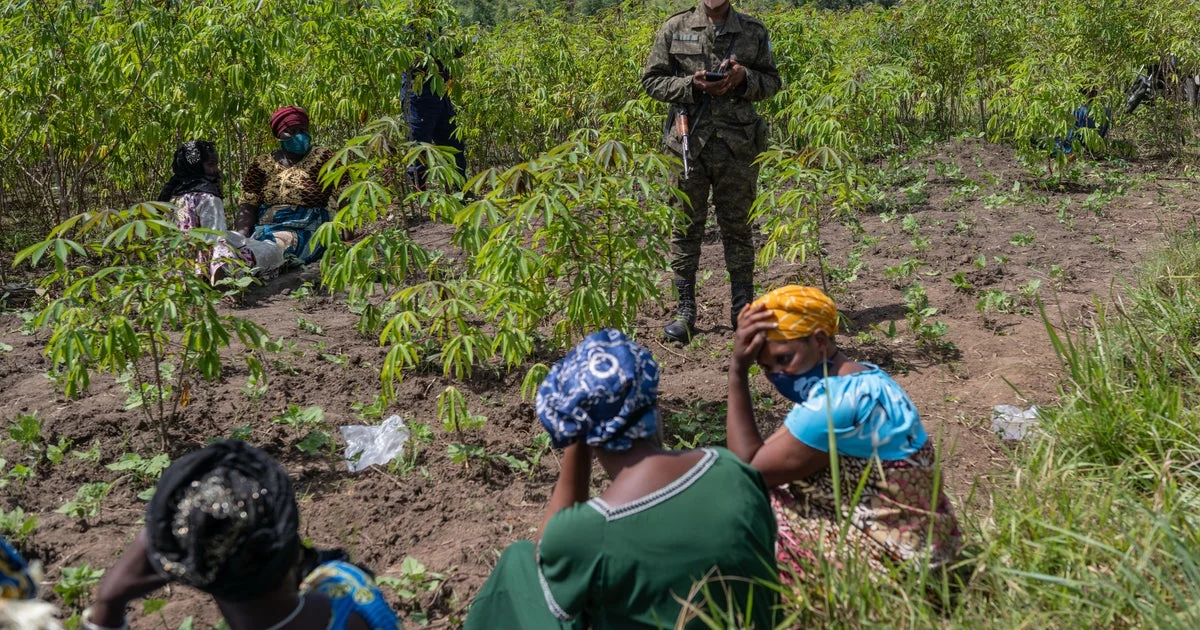
Residents in Mongbwalu, a town at the epicenter of the Ebola outbreak in eastern Democratic Republic of Congo (DRC), attacked and set fire to a tent used for treating Ebola patients, marking the second such incident in the region within a week. The assault occurred late Friday, involving a treatment tent run by the humanitarian organization Doctors Without Borders (MSF), according to Dr. Richard Lokudi, director of Mongbwalu hospital.
No injuries were reported, but 18 people suspected of having Ebola escaped the facility amid the chaos and are currently missing, raising concerns about further virus transmission in the community.
This attack follows a similar incident in the nearby town of Rwampara the previous day, where a treatment center was burned down after authorities refused family members’ requests to retrieve the body of a suspected Ebola victim.
Community Resistance to Ebola Control Efforts
Efforts to contain Ebola have been met with strong hostility from local communities, particularly regarding the handling of victims’ bodies. Ebola-contaminated corpses can spread the virus if traditional burial practices are followed, prompting authorities to oversee burials with strict safety protocols.
In Rwampara on Saturday, an Ebola victim burial was conducted with heavy security, including armed police and soldiers, as Red Cross workers in protective gear lowered sealed coffins into the ground. David Basima, leading the burial team, reported significant resistance from community members and youth, resulting in a need to call for security assistance.
The northeastern Congo government recently banned funeral wakes and gatherings exceeding 50 people to curb virus transmission, highlighting the challenges of balancing public health measures with local customs and tensions.
Scale and Risks of the Outbreak
The World Health Organization (WHO) has raised its risk assessment of the outbreak in Congo to “very high,” citing more than 100 confirmed cases and over 900 suspected cases, with 204 suspected deaths recorded so far. The outbreak involves the Bundibugyo strain of Ebola, for which no vaccine currently exists. The virus circulated undetected for weeks before being identified, complicating containment efforts.
Several healthcare workers have died in the outbreak, including three volunteers from the International Federation of Red Cross and Red Crescent Societies in Mongbwalu. These infections are believed to have occurred during missions unrelated to Ebola but involved contact with deceased individuals.
One American doctor working with a missionary group in Congo has tested positive for Ebola, and multiple others are considered exposed. Health officials emphasize the need to build trust with affected communities to improve outbreak response efforts.
International Response and Travel Restrictions
In response to the outbreak, U.S. federal health officials have implemented travel restrictions barring green card holders who have recently been in Congo, Uganda, or South Sudan from reentering the United States. This measure aims to ensure adequate screening, quarantine, and monitoring capacities for U.S. citizens.
While South Sudan has not reported any Ebola cases in this outbreak, it was included in the restriction list without clear explanation. The restrictions took effect immediately under federal health regulations, though the Department of Health and Human Services has not commented publicly.
Why it matters
The burning of treatment centers and community resistance to public health measures jeopardize efforts to contain the Ebola outbreak in eastern Congo, risking further spread of a deadly virus with no current vaccine. The escape of suspected cases from treatment facilities increases the potential for new infections. The heightened WHO risk level reflects ongoing challenges in outbreak management amid local mistrust and security issues. International travel restrictions underscore global concerns about controlling disease spread beyond the region.
Background
Ebola outbreaks in Congo’s Ituri province have historically triggered mistrust toward health interventions due to cultural burial practices and fears surrounding medical treatments. The Bundibugyo strain involved in this outbreak is rare compared to other Ebola variants and currently has no licensed vaccine, complicating response efforts. Past outbreaks have highlighted the necessity of combining medical interventions with community engagement to effectively manage viral hemorrhagic fever threats.
Sources
This article is based on reporting and publicly available information from the following source:
Read more World News stories on Goka World News.