
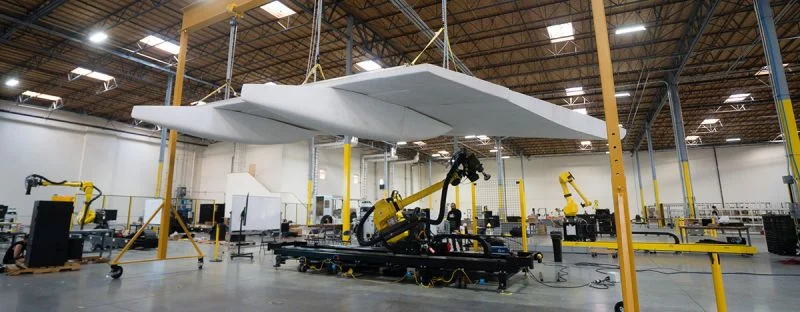
The U.S. National Science Foundation (NSF) has relaunched its Small Business Innovation Research (SBIR) and Small Business Technology Transfer (STTR) programs with a total funding commitment of $250 million. This relaunch includes a new $40 million pilot initiative dedicated to next-generation scientific instrumentation aimed at enabling new kinds of experimental platforms and advanced scientific equipment.
What happened
The NSF’s SBIR/STTR programs provide non-dilutive funding to early-stage startups and small businesses, often emerging from federally funded academic and lab research, to develop deep technologies into commercially viable products. The programs focus on innovations with significant economic and security impacts. Alongside standard funding opportunities such as Phase I, Phase II, Fast-Track, Supplements, and Strategic Breakthroughs, the NSF is introducing a new emphasis area targeting the infrastructure for transformative scientific discovery through novel instrumentation and platforms.
This new emphasis area aims to invest in tools and technologies that open entirely new fields of scientific research, facilitating breakthroughs that would otherwise be impossible. NSF Assistant Director Erwin Gianchandani emphasized that scientific breakthroughs depend on advanced instruments and that this initiative will help ensure American small businesses lead these developments.
Entrepreneurs interested in applying must first submit a project pitch to avoid unnecessary proposal preparation if the idea doesn’t align with program goals. Selected pitches then receive invitations to submit full Phase I proposals. The program accepts pitches and proposals across nearly all technology sectors, with three annual review deadlines for proposals.
Why it matters
The relaunch and expanded focus provide critical early-stage funding for startups pushing the boundaries of scientific research and technology commercialization. Investing in next-generation scientific instruments accelerates innovation by supplying the necessary tools to create new scientific fields and applications. This aligns with NSF’s mission to transform research breakthroughs into commercially impactful technologies, sustaining U.S. leadership in science and technology.
Since its establishment, the SBIR/STTR program has supported over 1,600 startups, which have collectively raised nearly $36 billion in private investments. By fueling the development of advanced scientific instruments, NSF is poised to foster novel discoveries that can lead to enduring economic and national security benefits.
Background
The NSF piloted the SBIR program in the late 1970s and it was formally established by Congress in 1982, extending later to other federal agencies with substantial R&D budgets. The program provides early-stage capital needed to transition cutting-edge research from concept to market-ready innovations. Over nearly a decade (2016–2025), NSF invested more than $2 billion in startups via SBIR/STTR, helping to create a robust ecosystem of technology-driven small businesses across the United States.
For further information, NSF offers resources and upcoming webinars to guide potential applicants through the submission process.
Sources
This article is based on reporting and publicly available information from the following source:
Read more Science & Technology stories on Goka World News.