
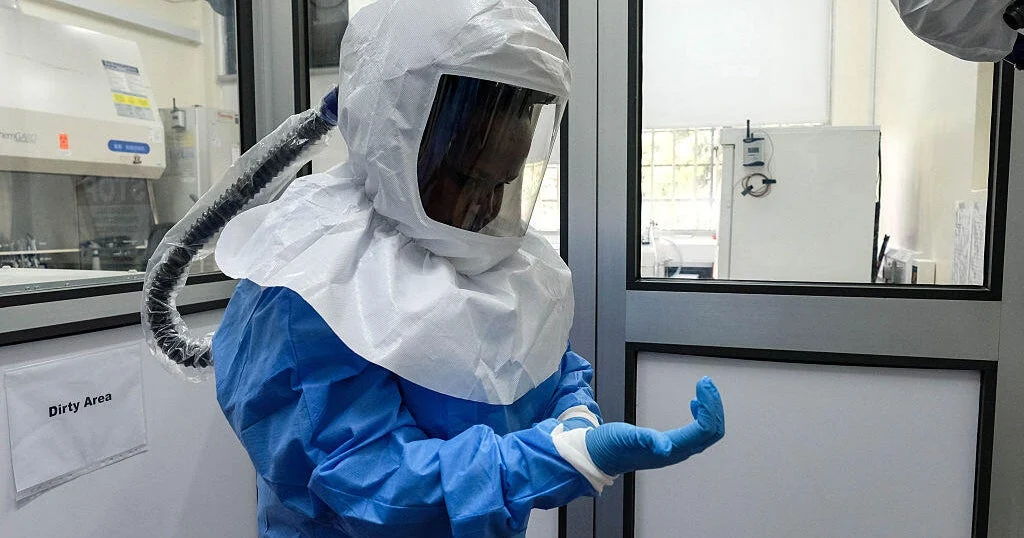
Uganda ordered the closure of its border with the Democratic Republic of Congo (DRC) on Wednesday amid a surge in cases of Bundibugyo Ebola, a rare strain of the virus, raising concerns about contagion in East Africa.
What happened
The closure follows confirmed Ebola cases in both countries, including seven in Uganda with one death, and 121 confirmed cases along with 17 deaths in Congo, according to data from the U.S. Centers for Disease Control and Prevention (CDC) and the World Health Organization (WHO). Uganda’s decision comes after health workers were exposed to the virus through patients who crossed into Uganda before the outbreak was officially declared in eastern Congo on May 15.
Ugandan authorities have allowed border crossings only for emergencies such as outbreak response, cargo transport, or security reasons. Travelers entering Uganda from Congo under exceptional circumstances are subject to mandatory 21-day isolation, Health Ministry official Dr. Diana Atwine said.
The Bundibugyo virus, which causes hemorrhagic fever, is transmitted through close contact with bodily fluids of infected individuals, with healthcare workers and family members at high risk. Congolese health officials reported the first patient recovered from the virus was discharged from a treatment center in eastern Congo.
The WHO has labeled this outbreak a public health emergency of international concern but advises against border closures. The agency warns closures can redirect people to informal crossings that lack monitoring, increasing spread risks. The Uganda-Congo border spans hundreds of miles with numerous unregulated footpaths commonly used for family visits and trade.
The outbreak response in Congo faces challenges including delayed identification of the virus, violent armed groups in the region, displaced populations, and inadequate infrastructure. WHO Director-General Tedros Adhanom Ghebreyesus called for a ceasefire to enable safe access for health responders.
In response to the outbreak, the United States is establishing a treatment facility in Kenya for Americans exposed to or infected with Ebola. Several American patients have been evacuated to European countries for treatment or monitoring. The U.S. has restricted entry of travelers recently in Congo, Uganda, or South Sudan to select airports with enhanced screenings.
Why it matters
Uganda’s border closure underscores the heightened concerns over cross-border transmission of a dangerous Ebola strain with no approved vaccines or treatments. The decision illustrates the tension between national containment strategies and WHO guidance, which prioritizes monitored mobility over closures to prevent unregulated crossings.
The Bundibugyo Ebola outbreak presents a significant public health risk in a region with limited healthcare resources and ongoing conflict, complicating efforts to trace contacts and isolate cases. The involvement of multiple countries highlights the need for coordinated international response to prevent wider spread.
Additional measures, including isolation and enhanced screenings at airports, reflect global awareness of the threat and attempts to limit international transmission, especially to countries with high travel volumes linked to the affected region.
Background
Uganda and Congo have experienced Ebola outbreaks before, most frequently involving the more common Zaire strain. Bundibugyo virus is a rarer variant and lacks approved vaccines and specific treatments, heightening the urgency for containment.
WHO declared the current outbreak a public health emergency in May 2026, highlighting the rapid case increase and the region’s complex security and infrastructure issues hindering effective control. Efforts to identify the virus were delayed as initial testing focused on other Ebola variants.
The Uganda-Congo border area is heavily trafficked by local populations for trade and family ties, making containment efforts challenging amid porous frontiers and informal routes often beyond government control.
Sources
This article is based on reporting and publicly available information from the following source:
Read more Health & Public Health stories on Goka World News.