
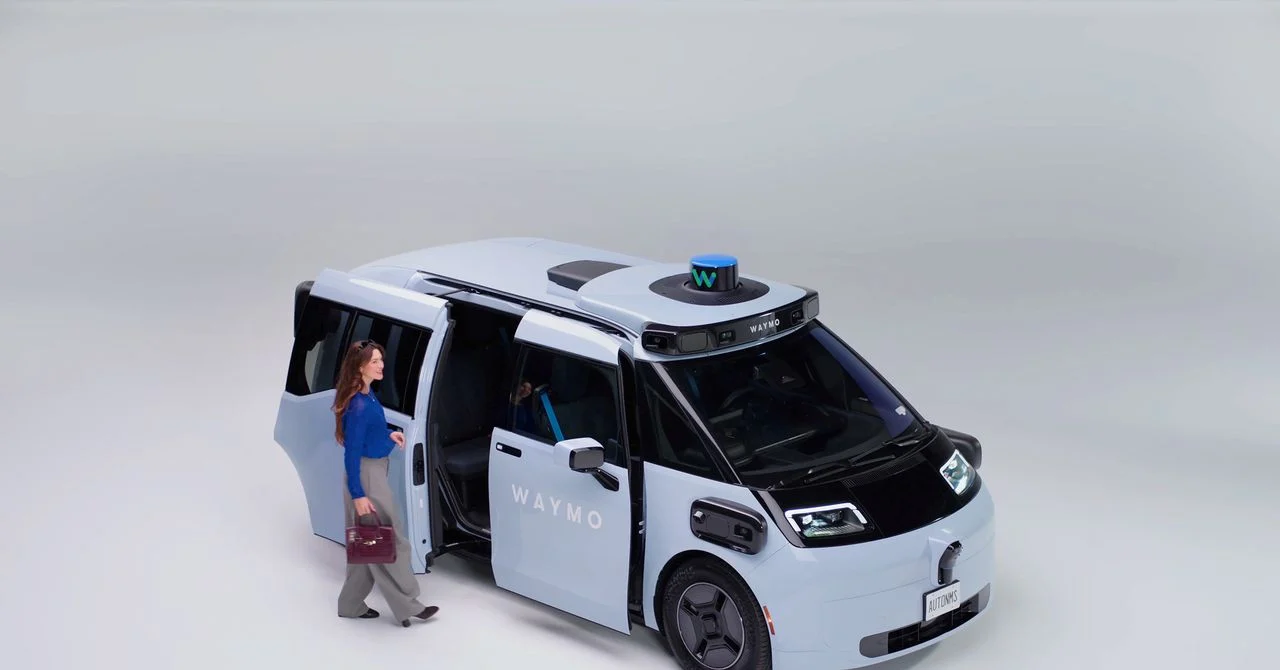
Waymo has launched its latest autonomous vehicle, the Ojai, offering free public rides starting May 28, 2026, in Los Angeles, San Francisco, and Phoenix. The Ojai is a new pale-blue, boxy minivan designed specifically for autonomous driving and equipped with the company’s latest AI and sensor technology.
What happened
The Ojai robotaxi, named after a California arts community, marks a significant step for Waymo by being the first vehicle built expressly for autonomy rather than adapted from human-driven cars. The Ojai platform integrates 13 cameras, six radar systems, and four lidar sensors alongside Waymo’s updated software system that leverages recent AI advances. Passengers can request rides through Waymo’s app.
Notably, the vehicle platform itself is manufactured in China by Geely’s sub-brand Zeekr, and shipped to Waymo’s Arizona facility for installation of autonomous driving hardware and software. These base vehicles contain no connected systems or telematics until modified in the US, complying with current national security regulations that restrict foreign-connected vehicle technology on American roads starting 2027.
Currently, all rides are free to the public as Waymo collects rider feedback and refines the service. In California, the company is still awaiting regulatory approval from the California Public Utilities Commission to charge fares, due for a decision by June 27, 2026. Waymo also faces recent operational challenges including suspensions of services over flooding and construction zone driving concerns.
Alongside the Ojai, Waymo continues to operate its Jaguar I-Pace fleet and plans to incorporate Hyundai Ioniq 5 vehicles as part of its expanding robotaxi service across multiple US cities and future international markets.
Why it matters
The Ojai’s debut exemplifies the maturation of autonomous vehicle technology into purpose-built platforms, promising improved passenger comfort, greater accessibility features, and operational efficiencies such as faster charging and easier repairs. This is crucial as Waymo aims to rapidly expand its robotaxi network domestically and internationally, entering challenging environments like harsh winter climates.
Moreover, the use of a Chinese-made vehicle platform modified with US autonomous technology highlights the complex interplay of global manufacturing and national security considerations in advanced vehicle development. This partnership has drawn political scrutiny amid concerns about foreign involvement in critical transportation infrastructure.
The free ride rollout also reflects regulatory and safety challenges still faced by autonomous vehicle providers, signaling a cautious but steady progression toward wider adoption of driverless mobility services.
Background
Waymo has been a pioneer in autonomous driving since 2009, initially deploying its technology in traditional cars like the Chrysler Pacifica hybrid and later the electric Jaguar I-Pace. The Ojai represents the company’s first fully purpose-built self-driving vehicle, designed from the ground up to optimize autonomy and passenger experience.
Geely, through its Zeekr brand, has grown internationally since 2023 but does not retail vehicles in the US market, making its collaboration with Waymo unique. The US government’s 2027 ban on Chinese and Russian connected vehicle technology, citing national security, exempts platforms like Ojai where autonomous systems are added domestically.
Waymo’s service operates in 11 US cities and plans aggressive expansion, including trials in London and Tokyo. The firm has recently faced challenges such as service suspensions due to flooding and construction zone navigation, which underscores the operational hurdles still present in commercial autonomous driving.
Sources
This article is based on reporting and publicly available information from the following source:
Read more Major Tech Companies stories on Goka World News.