
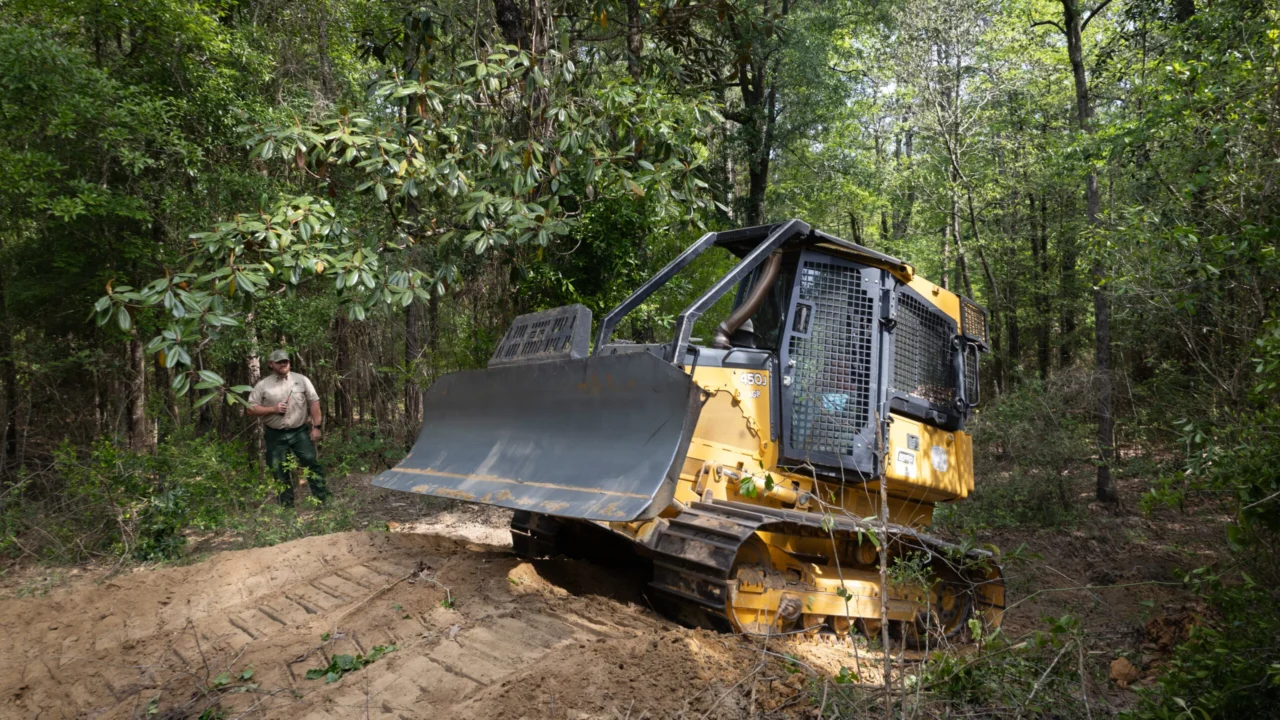
NASA has developed low-cost thermal sensors designed to improve safety for firefighters operating bulldozers, or “fire dozers,” on the front lines of wildfires. These sensors alert operators when heat from nearby flames reaches dangerous levels, providing crucial warnings inside enclosed bulldozer cabins.
What happened
As wildfire season approaches, NASA’s FireSense project, in collaboration with the Alabama Forestry Commission (AFC), has introduced thermal sensors to be installed on bulldozers used for clearing vegetation and creating fire breaks. These sensors monitor radiant heat outside the bulldozer’s enclosed “envirocab,” which can obscure operators’ ability to detect escalating temperatures.
The sensors use commercially available thermocouples connected to LED lights on the bulldozer dashboard. When heat surpasses a safe threshold, the LEDs blink, alerting the operator immediately. The system is battery-powered and designed for easy operation and low cost. Since installation began in late 2025 and early 2026, the sensors have successfully operated during wildfires and prescribed burns.
Beyond safety, these sensors collect data on what occurs beneath the fire canopy, aiding researchers’ understanding of fire behavior. NASA and the AFC are planning to integrate additional instruments, such as the Fire Thermal InfraRed Spectrometer (FireTIRS), anemometers, and compact cameras, to provide comprehensive fire data including temperature, spread rate, wind conditions, and fuel consumption.
Why it matters
Bulldozer operators face serious risks from high radiant heat, which can cause electrical failures and strand operators in life-threatening conditions. Thermal sensors provide a vital safety upgrade by enhancing situational awareness in enclosed cabins where conventional heat detection is limited.
Furthermore, data collected from these sensors and forthcoming instruments will improve wildfire models, allowing firefighters to receive earlier warnings of fire behavior and better anticipate dangerous conditions. This can lead to safer and more effective wildfire management.
Background
The FireSense project is part of NASA’s broader efforts to develop ground-based technology that complements satellite wildfire monitoring. Previous collaborations with the AFC have included training on wildfire weather and soil moisture, and testing airborne sensors on active fires. This sensor initiative marks a significant advancement in operational firefighter technology and data integration.
Outfitting bulldozers with environmental sensors is part of a continuing relationship between NASA and wildfire agencies aimed at leveraging space and ground data to enhance firefighting strategies amid increasing wildfire threats.
Sources
This article is based on reporting and publicly available information from the following source:
Read more Space & NASA stories on Goka World News.