
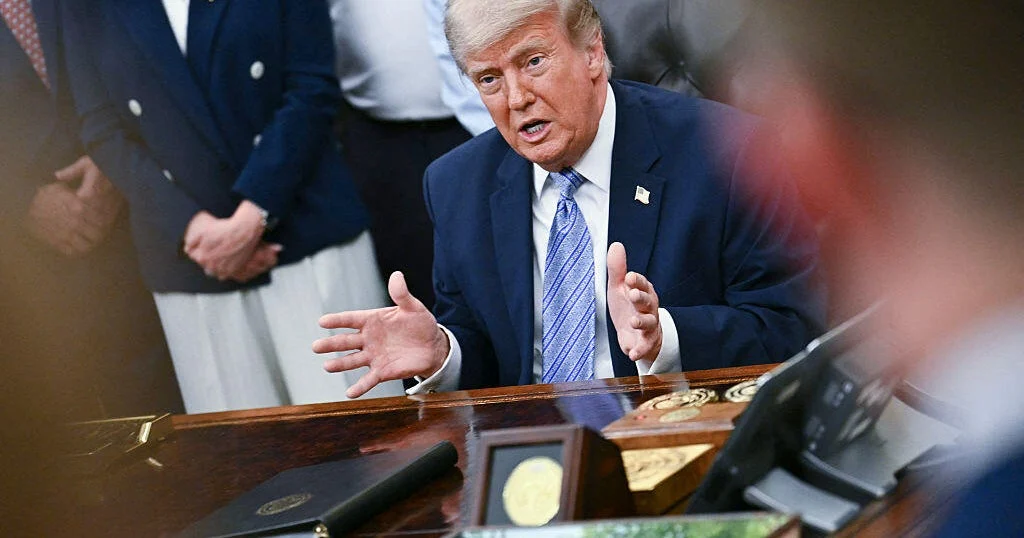
President Donald Trump signed an executive order on Tuesday that establishes a voluntary program for artificial intelligence companies to share new AI models with the federal government before public release. This initiative aims to boost national cybersecurity and foster innovation without imposing regulatory burdens.
What happened
The newly signed executive order encourages AI developers to provide the government with access to “frontier” AI models—systems at the leading edge of AI technology—for up to 30 days prior to their public launch. This early look is designed to help the government identify software vulnerabilities and secure critical infrastructure against cyber threats. The order directs the relevant federal agencies, including the Departments of Homeland Security, Treasury, Defense, and the National Security Agency, to enhance cybersecurity programs and establish an AI cybersecurity clearance house to detect potential risks.
President Trump delayed signing an earlier version of the order nearly two weeks ago out of concern the measures might hinder U.S. competitiveness against China and other countries. The final order underscores the importance of maintaining American leadership in AI by avoiding regulations that could stifle innovation. It explicitly states that no mandatory government approvals, permits, or licensing will be required for AI model development or release.
Leading AI labs, like Anthropic, have already begun voluntary sharing of their new models, such as Mythos, with select partners to strengthen cybersecurity defenses before broader deployment.
Why it matters
This executive order represents a significant effort by the U.S. government to proactively address the cybersecurity risks associated with powerful new AI technologies while preserving the country’s competitive edge in AI innovation. By facilitating voluntary cooperation between AI companies and federal agencies, the government seeks to identify and fix vulnerabilities before malicious actors can exploit them. The move reflects growing concerns about AI’s dual-use potential to enhance cybersecurity or enable cyberattacks.
At the same time, reaffirming the voluntary nature of these disclosures and rejecting mandatory licensing ensures that private sector innovation in AI development remains unhindered. As AI models grow more capable, this balance between security and innovation will be crucial for maintaining U.S. technological leadership and national security.
Background
Following rapid advances in artificial intelligence, both the federal government and private sector are grappling with how to manage emerging risks from AI systems that can identify software vulnerabilities and generate potentially harmful outputs. Several technology firms have volunteered to share their most advanced models with select partners ahead of wide release to improve security.
Earlier drafts of the executive order were withheld amid concerns by President Trump that overly restrictive measures could disadvantage the U.S. against other nations, particularly China. The latest order reflects a calibrated approach emphasizing voluntary collaboration and enhanced federal cybersecurity efforts without new regulatory barriers for AI development.
Sources
This article is based on reporting and publicly available information from the following source:
Read more AI Regulation stories on Goka World News.