
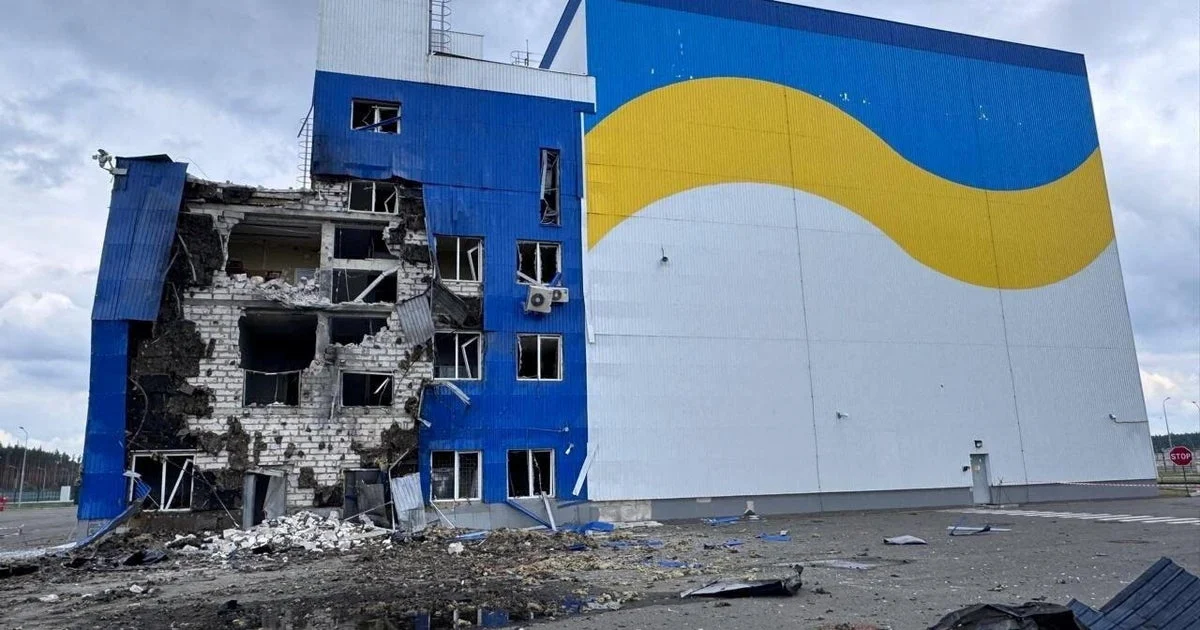
Three people were killed and one wounded in a Russian drone strike at a bus stop in southeastern Ukraine’s Zaporizhzhia region on Sunday, Ukrainian officials reported. Separately, a Russian strike damaged a storage facility for spent nuclear fuel near Chernobyl in Ukraine’s Kyiv region.
What happened
The drone attack in Balabyne, Zaporizhzhia, resulted in three civilian deaths and one injury, according to Ivan Fedorov, head of the regional military administration. Meanwhile, Ukraine’s General Staff confirmed a strike hit a nuclear fuel storage site around nine miles from the Chernobyl nuclear power plant. The attack partially destroyed the facility and caused a fire covering approximately 40 square meters (430 square feet).
The state-owned nuclear operator Energoatom said the facility was empty at the time of the strike. The fire was extinguished within an hour, and officials reported that radiation levels remained safe. The International Atomic Energy Agency (IAEA) chief Rafael Grossi expressed deep concern over the attack due to the large amounts of nuclear material stored at the site and announced plans for the agency to visit soon.
In a related development, a Ukrainian strike in Russia’s Kursk region killed one man and injured a woman, Governor Alexander Khinshtein reported.
Why it matters
The damage to a nuclear storage facility near Chernobyl raises serious safety concerns given the facility’s proximity to a historically significant site of nuclear disaster. Although the fire was quickly controlled and radiation levels remain stable, the incident highlights the risks of warfare near sensitive nuclear infrastructure. Additionally, the attacks reflect the intensifying and expanding nature of the conflict, including cross-border strikes affecting civilians on both sides.
The strikes come amid high-profile diplomatic engagements involving Ukraine and European leaders, underscoring the ongoing international focus on supporting Ukraine’s defense and addressing the war’s broader regional impacts.
Background
The conflict between Russia and Ukraine, now over four years old following Russia’s full-scale invasion in February 2022, has seen persistent fighting along the front lines with frequent use of long-range missile and drone strikes on both military and civilian targets. The Chernobyl site remains a sensitive area due to the catastrophic 1986 nuclear disaster. The International Atomic Energy Agency continues to monitor nuclear safety in the region closely.
Recent Ukrainian drone attacks have extended deep into Russian territory, including a high-profile strike on St. Petersburg, Russia’s second-largest city, just days before these incidents were reported. This escalation illustrates Ukraine’s growing capability to conduct offensive operations far beyond the frontline zones.
Sources
This article is based on reporting and publicly available information from the following source:
Read more World News stories on Goka World News.