
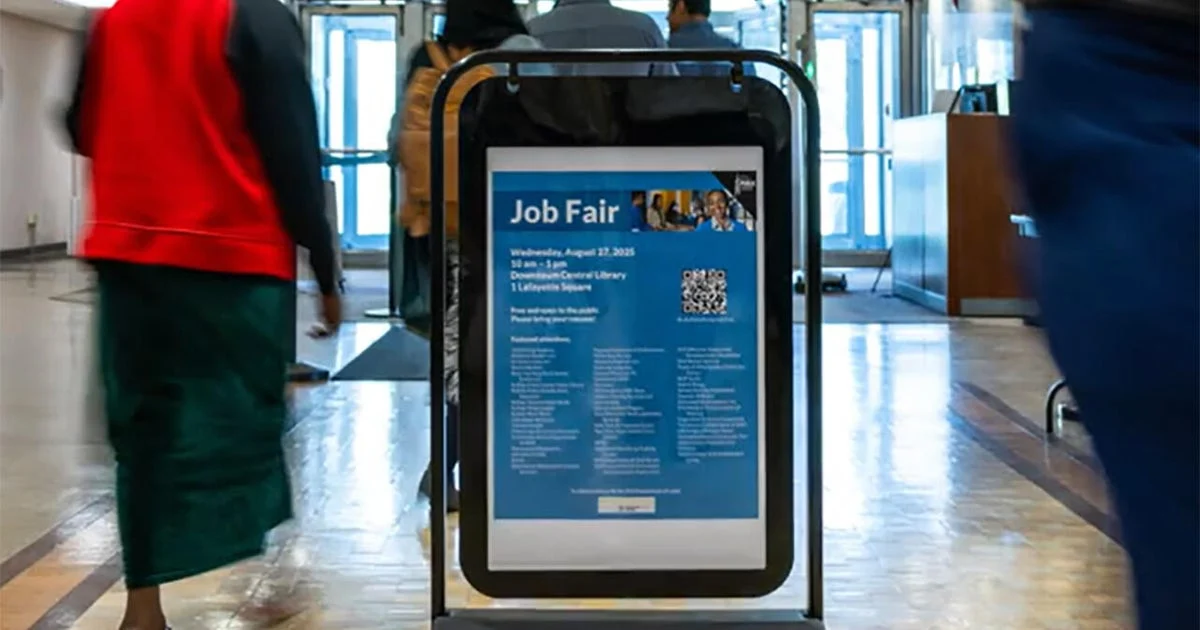
Recent college graduates are facing significant obstacles as they attempt to enter a challenging job market characterized by intense competition, reliance on AI for application screening, and overall economic uncertainty.
What happened
Graduates like Meghan Obetz from Philadelphia and others in cities such as New York, Minneapolis, and Anchorage report frustration and slow progress despite sending hundreds of applications. Many describe the screening process as impersonal, with resumes often filtered by artificial intelligence and no direct human contact. Olivia Bennett noted that applicants often receive no response at all, while Daniel Fischer observed that openings can attract hundreds of candidates, making individual consideration rare.
Columbia Business School professor Laura Veldkamp highlighted that youth unemployment remains about twice the national average, and many graduates are taking jobs that do not require a college degree. While AI contributes slightly to higher unemployment—estimated to raise it by about 0.1%—Veldkamp emphasized that broader economic uncertainty is the main driver. Factors include fluctuating tariffs, volatile fuel prices, and employer hesitation amid unclear future business conditions. These uncertainties make companies reluctant to hire new, untested workers, especially recent graduates.
Description of job search tools reveals that “one-click apply” features on job platforms have led to a surge in applications for every listing, overwhelming employers and reinforcing the use of AI screening systems. Laura Fuentes, Hilton’s chief human resources officer, advises job seekers to “play the long game” by widening their job search criteria and leveraging personal networks instead of relying solely on job sites.
Why it matters
The difficulties young job seekers face affect workforce entry and economic mobility, with many settling for lower-paying or unrelated roles. Understanding the interplay of economic conditions, technology, and job market practices helps explain why entry-level hiring remains slow. Recognizing these challenges can guide both job seekers and policymakers toward solutions, such as emphasizing networking over mass applications and addressing economic uncertainties that stall hiring.
Background
Historically, college graduates expected to transition quickly into stable employment, but recent trends show a mismatch between graduate expectations and job availability. Economic instability, shifting tariffs, and rising operational costs have increased employer caution. Meanwhile, AI tools intended to streamline hiring add complexity by filtering large applicant pools, often leaving candidates without feedback. Employers have acknowledged these challenges while encouraging patience and adaptability among new entrants to the workforce.
Sources
This article is based on reporting and publicly available information from the following source:
Read more Business stories on Goka World News.