
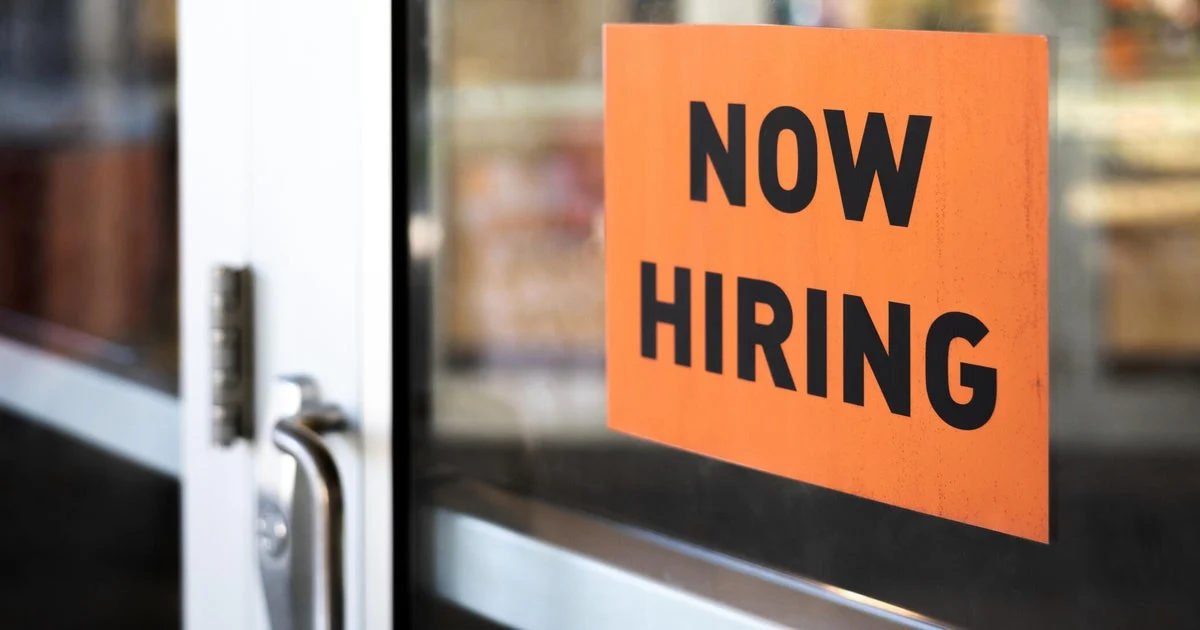
U.S. employers added 172,000 jobs in May, significantly exceeding economists’ forecasts of 105,000, highlighting continued strength in the labor market despite persistent inflation and geopolitical tensions.
What happened
The Labor Department reported that May’s job gains rose well above expectations, marking a third consecutive month of strong payroll growth. Employment increased by 172,000 jobs, supported primarily by the leisure and hospitality sector, which added 70,000 jobs—substantially higher than its average monthly gain of 14,000 over the past year. Local government employment rose by 55,000 jobs, while healthcare added 35,000 positions, maintaining its role as a leading employment sector.
Revisions to previous months also showed stronger labor market performance, with March’s and April’s payroll gains adjusted upward to 214,000 and 179,000, respectively. The unemployment rate stalled at 4.3%, unchanged from April.
This expansion occurred amid rising inflation fueled by geopolitical instability, notably from the Iran war, which strained global energy supplies. Inflation recently reached its highest level in nearly three years.
Why it matters
The robust job additions underline a resilient U.S. economy, even as inflationary pressures intensify. Strong corporate profits and fiscal and monetary policies supporting AI investments and stock market performance have contributed to hiring momentum. However, these gains may discourage the Federal Reserve from cutting interest rates soon, as officials prioritize controlling inflation.
Economists caution that ongoing payroll strength signals persistent inflation risks rather than weakening labor demand, making rate reductions less likely in the near term. Despite the positive headline figures, some analysts warn that the labor market’s surface calm may mask underlying softness, with job growth not reflecting a broader surge in hiring or wage increases outpacing inflation.
Wage growth rose by an annualized 3.4% in May, but inflation at 3.8% continues to erode purchasing power, with many workers reporting their earnings do not keep up with rising costs.
Background
The U.S. labor market has experienced uneven recovery following disruptions from the COVID-19 pandemic. Recent months have shown improvement, with May’s figures continuing a trend of better-than-expected payroll growth. Persistent inflation, driven by energy price hikes and geopolitical conflicts, remains a critical challenge for policymakers and workers alike.
Government responses, including economic stimulus measures and Federal Reserve interest rate adjustments, aim to balance fostering employment with containing inflation. The labor market data serve as key indicators for economic health and guide these policy decisions.
Sources
This article is based on reporting and publicly available information from the following source:
Read more Business stories on Goka World News.