
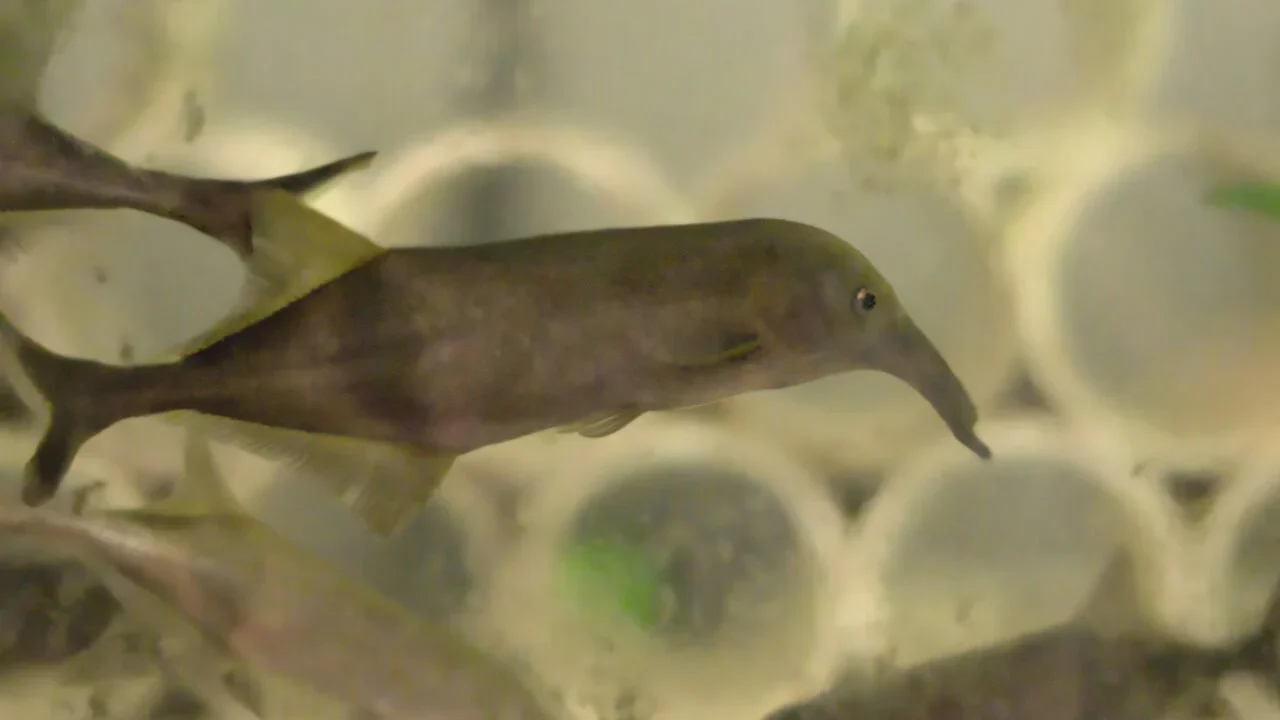
Researchers at Washington University in St. Louis have uncovered how electric fish update their brain’s sensory predictions through a central timing hub. Published in Current Biology in 2026, the study identifies a specific small brain region that coordinates sensory input timing changes due to hormones, development, and evolution.
What Happened
To explore mechanisms behind corollary discharge—the brain’s method for distinguishing self-generated sensory signals from external ones—the team led by Professor Bruce Carlson recorded neural activity across multiple brain regions in weakly electric fish. The research, conducted in 2026, involved monitoring fish with differing electric pulse durations, including hormone-treated individuals and different species, to observe neural timing changes along the corollary discharge pathway. The first brain region showing timing adjustments was pinpointed as the mesencephalic command-associated nucleus (MCA).
Key Facts
- Study published in Current Biology, 2026, DOI: 10.1016/j.cub.2026.04.068
- Target species: weakly electric fish producing electric organ discharges (EODs) for communication and sensing
- MCA identified as a central timing hub modulating sensorimotor integration
- Adjustments in timing due to three factors: hormonal fluctuations (e.g., testosterone), individual development (aging), and evolutionary species differences
- MCA branches into three pathways: communication, sensory input, and electric discharge regulation
- First full recording across all neural areas in an individual fish along the corollary discharge circuit
Why It Matters
This discovery explains how sensory systems maintain accurate predictions despite temporal variability in signals caused by biological and evolutionary changes. It avoids complex recalibration across multiple brain circuits by centralizing the timing control within a single hub. Understanding this mechanism in electric fish offers insights into similar brain functions across species, potentially informing treatments for neurological disorders involving sensory prediction errors.
Background
Corollary discharge is a widespread neural mechanism allowing animals to differentiate sensory inputs generated by their own movements from external stimuli. Previously, the specific circuitry and timing adjustments ensuring its accuracy, especially in response to biological changes, were not well understood. Electric fish serve as a model system because their communication relies heavily on precise timing of electric pulses and their sensory suppression.
Analysis
Martin Jarzyna, a graduate student in the Carlson lab and first author, emphasized the unprecedented full-pathway neural recording and the identification of MCA as an integrative timing locus. Carlson noted that this common solution across development, hormones, and evolution underscores the efficiency of neural circuit reuse rather than the invention of new mechanisms. The approach enhances generalizable knowledge about sensory prediction processes beyond electric fish.
Who Is Affected
This research principally impacts neurobiologists studying sensory processing and sensorimotor integration. It has implications for understanding sensory prediction mechanisms in a broad range of animals, including humans, and may contribute to progress on sensory processing disorders such as schizophrenia.
What Remains Unclear
- Exact cellular and molecular changes underlying timing adjustments within MCA neurons
- Whether similar MCA-like mechanisms operate in the brains of other animals beyond electric fish
- The detailed intracellular processes that enable MCA to modulate timing shifts
What Comes Next
The Carlson lab plans to conduct intracellular recordings from MCA neurons to decode the cellular and molecular bases of timing changes. Future research aims to fully characterize the dynamic neural modifications enabling sensory prediction coordination.
Sources
This article is based on reporting and publicly available information from the following source:
Read more Science Discoveries stories on Goka World News.