
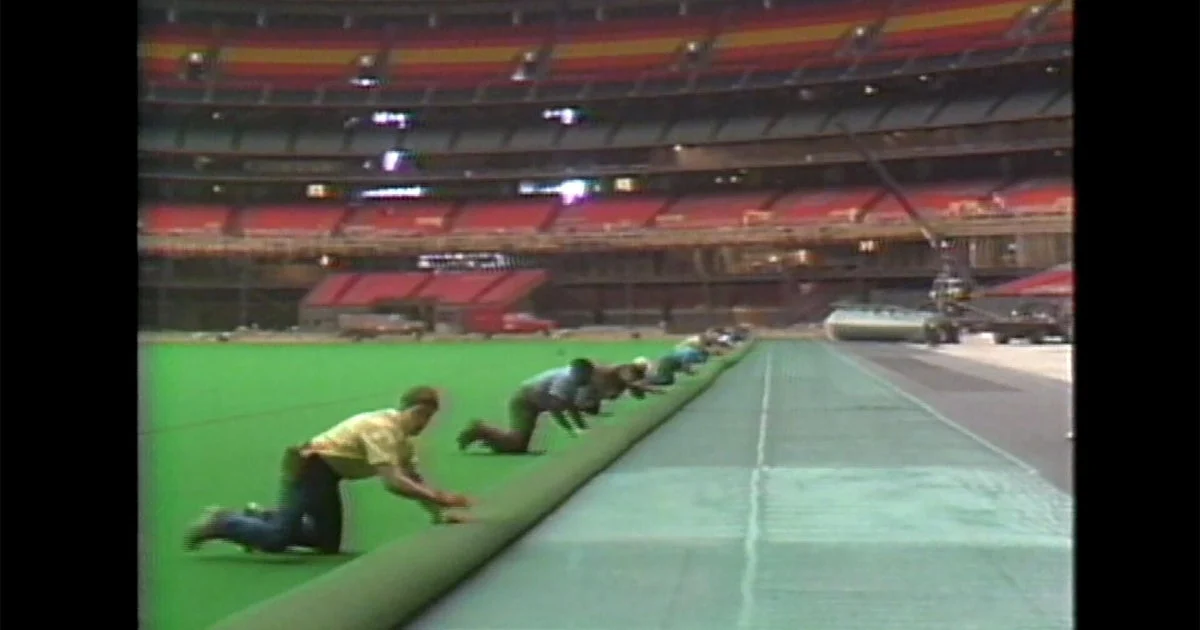
Houston’s Astrodome, an innovative indoor stadium that opened in 1965, was celebrated in 1999 after the Houston Astros major league baseball team departed. The city marked the event with a party reflecting on the Astrodome’s unique history as a pioneering sports venue and cultural landmark.
What Happened
The Astrodome, located in Houston, Texas, was completed and opened in 1965 as the world’s first fully enclosed, air-conditioned stadium. It featured an artificial playing surface, dubbed “AstroTurf,” for major league baseball games. In 1999, after the Astros moved to a new stadium, Houston hosted an event to honor the Astrodome’s legacy. The city also sought alternative events such as monster truck rallies, high-diving stunts, and chariot races to continue drawing crowds to the iconic venue.
Key Facts
- The Astrodome opened in 1965 and was marketed as the “Eighth Wonder of the World.”
- It was the first enclosed stadium with air conditioning in major league baseball.
- The stadium introduced “AstroTurf,” an early form of artificial grass.
- The Houston Astros played there until their departure in 1999.
- The city held a celebration in 1999 marking the stadium’s past achievements.
- Post-1999, the Astrodome hosted various spectacle events to maintain attendance.
- The report on the Astrodome’s history originated from a “Sunday Morning” segment by correspondent Bill Geist on October 10, 1999.
Why It Matters
The Astrodome represents a milestone in sports architecture and sports culture, being the prototype for modern indoor stadiums and contributing innovations such as artificial turf. The 1999 celebration highlights Houston’s recognition of its historical and cultural value, marking a transition point for both the city’s sports scene and the stadium’s evolving role as an event venue.
Background
Known as the “Eighth Wonder of the World” when it opened, the Astrodome was groundbreaking for its time by offering an enclosed, climate-controlled environment for major sports events. Its debut introduced new technologies and aesthetics to stadium design, influencing many future arenas. Over time, the stadium hosted a variety of sporting and entertainment events beyond baseball, including rodeos and concerts.
Analysis
According to Bill Geist’s 1999 report, the Astrodome’s legacy remains significant in Houston’s history as an architectural marvel and a symbol of innovation. The city’s efforts to repurpose the venue with diverse spectacles demonstrate a commitment to preserving its relevance and honoring its storied past.
Who Is Affected
The city of Houston, sports fans, particularly Houston Astros supporters, event organizers, and visitors to the stadium are directly affected by the Astrodome’s history and ongoing usage.
What Remains Unclear
This information was not confirmed in the reviewed sources.
What Comes Next
This information was not confirmed in the reviewed sources.
Sources
This article is based on reporting and publicly available information from the following source:
Read more US News stories on Goka World News.