
U.S. businesses are confronting significant uncertainty following a federal judge’s June 8 decision invalidating the Trump administration’s increase of the H-1B visa fee from approximately $215 to $100,000. The ruling has left companies relying on skilled foreign workers unsure how to proceed amid ongoing legal appeals.
What Happened
On June 8, U.S. District Judge Leo Sorokin struck down the Trump administration’s $100,000 fee for H-1B visa petitions, ruling it to be an unauthorized tax. The policy, announced in September 2025, faced a lawsuit from 20 states challenging its legality. Nonetheless, the administration is appealing the ruling, creating ambiguity for employers dependent on the program.
Key Facts
- The original fee for H-1B visa applications was approximately $215 before the proposed increase.
- The Trump administration sought to increase the fee to $100,000 effective September 2025.
- Judge Sorokin’s 42-page ruling declared the fee an unauthorized tax without statutory authority.
- Seventy-three percent of H-1B visa holders are from India, according to 2023 Pew Research Center data.
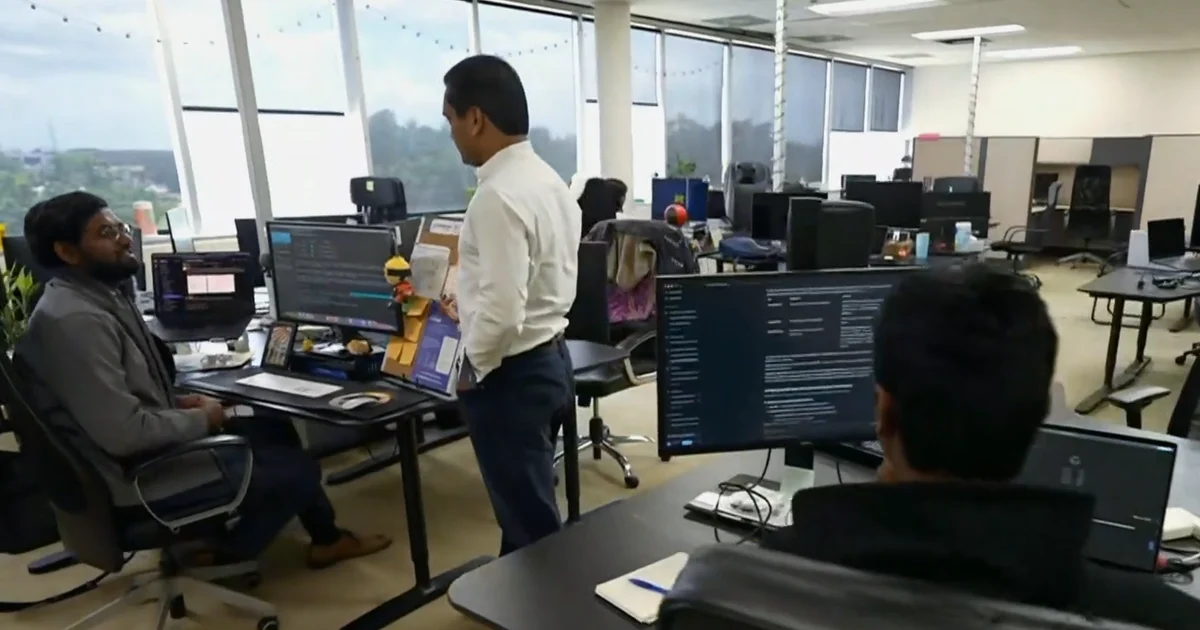
- Kishore Khandavalli, a Dallas-based software consulting company owner, employs 380 people, nearly half on H-1B visas.
Why It Matters
The significant fee hike caused many employers to pause hiring H-1B workers due to budget constraints, risking talent shortages in critical sectors such as technology. Prolonged uncertainty jeopardizes innovation and sustaining skilled labor pipelines within the United States. Companies may consider offshoring work if visa access remains financially unviable.
Background
The H-1B visa program has long served as a crucial mechanism for U.S. employers to hire specialized foreign workers where domestic talent is insufficient—estimated at only 3% availability in some sectors. The program’s affordability has historically allowed companies, especially in technology, to fill critical skills gaps.
Analysis
Kishore Khandavalli emphasized concerns that without affordable access to the visa program, U.S. businesses might lose skilled talent to other countries. The ongoing legal battle creates instability for companies relying heavily on foreign workers, highlighting the challenge of balancing immigration policy with economic needs.
Who Is Affected
- U.S. companies dependent on H-1B workers, especially in technology and consulting sectors.
- Skilled foreign workers, predominantly from India, who use the H-1B visa to work in the U.S.
- The broader U.S. labor market facing a shortage of specialized technical skills.
What Remains Unclear
- The final legal outcome pending the appeal of the federal court’s decision on the visa fee.
- The potential for future changes or further increases to the H-1B visa fee.
- How long the current uncertainty will persist and its full economic impact.
What Comes Next
The Trump administration is appealing the June 8 decision, with the timeline for resolution currently unspecified. Businesses and visa applicants await further clarification on the fee structure as the case proceeds through the courts.
Sources
This article is based on reporting and publicly available information from the following source:
Read more Politics stories on Goka World News.