
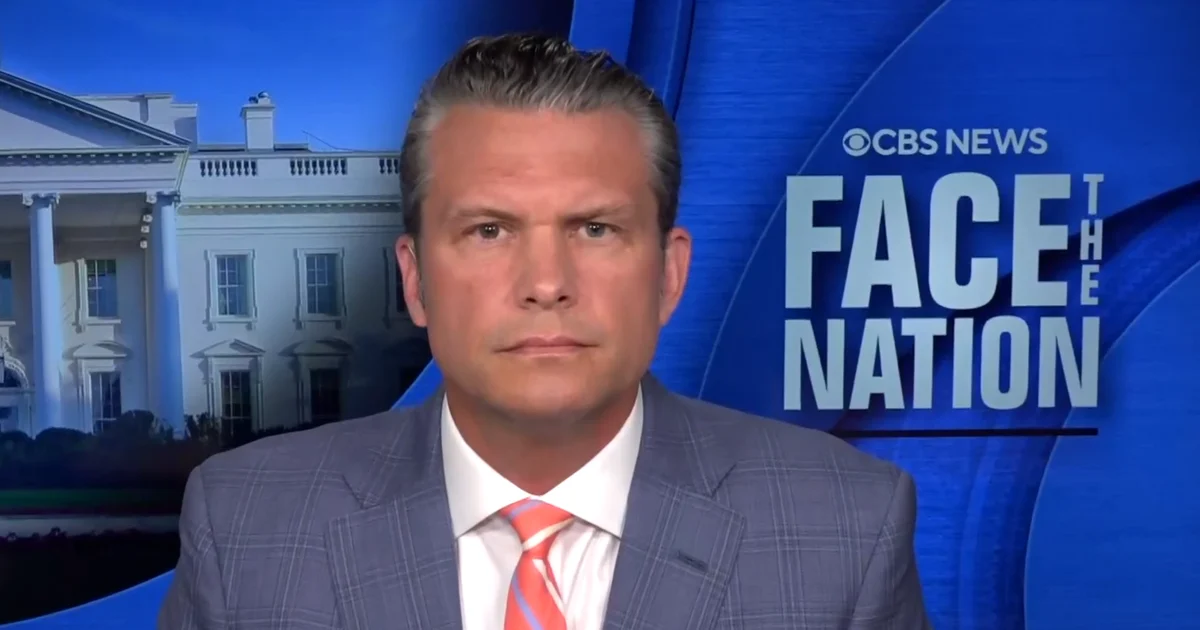
On June 14, 2026, U.S. Defense Secretary Pete Hegseth denied media claims that the United States currently faces a shortage of munitions stockpiles, stating in an interview on “Face the Nation” that such reports are “manufactured.” His comments contrast with testimony he gave earlier this year regarding challenges in replenishing munitions amid the ongoing conflict with Iran.
What Happened
During the June 14 interview with Margaret Brennan on CBS News’ “Face the Nation,” Secretary Hegseth rejected the notion of a munitions stockpile crisis, asserting that U.S. stockpiles “are great, and they’re only getting stronger.” This followed his April 30 testimony before the Senate Armed Services Committee, where he acknowledged that replenishing munitions used in the Iran conflict could take “months and years,” depending on the weapon systems involved. Hegseth emphasized ongoing efforts to build new production facilities and speed up manufacturing in response to demand.
Key Facts
- Hegseth testified before the Senate Armed Services Committee on April 30, 2026, regarding the Pentagon’s $1.5 trillion budget request.
- He estimated replenishing stockpiles would take “months and years,” primarily referencing varied weapon system production timelines.
- Lockheed Martin reported in April that scaling up Patriot missile production from 650 to 2,000 units annually could take three to four years.
- Defense Department has not disclosed the volume of munitions used in the Iran conflict so far.
- Democratic Senator Mark Kelly cited Hegseth’s testimony and raised concerns about munitions supply shortages.
- Joint Chiefs Chairman Dan Caine previously stated there are sufficient precision munitions for current operational needs.
Why It Matters
This debate highlights concerns over U.S. military readiness and munitions availability amid continued operations linked to the Iran conflict and other global commitments. It impacts defense budgeting, manufacturing priorities, and geopolitical posturing involving allied requests such as Ukraine’s call for increased Patriot missile production.
Background
Hegseth’s April Senate testimony came during scrutiny over the Pentagon’s budget in light of ongoing military operations with Iran. He referenced lingering stockpile depletion attributed to prior administration decisions and ongoing conflicts. The Biden administration’s support for Ukraine’s defense has also been a factor in defense material allocations.
Analysis
Senator Mark Kelly emphasized the reality of finite munitions supplies given extensive military actions, noting the need for cautious resource management. Meanwhile, Hegseth framed the situation as manageable, pointing to accelerated production efforts and dismantling Pentagon bureaucratic hurdles to improve defense manufacturing rates.
Who Is Affected
- U.S. military personnel and allied forces relying on munitions supply.
- Defense contractors involved in munitions production like Lockheed Martin.
- Regional allies such as Gulf Arab states and Ukraine, which depend on U.S. supplied armaments.
What Remains Unclear
- The exact quantity of munitions expended during the Iran conflict has not been publicly disclosed.
- The timeline and capacity for achieving full munitions production scale-up remain estimates.
- Further official assessments of stockpile sufficiency in light of ongoing global demands are pending.
What Comes Next
This information was not confirmed in the reviewed sources.
Sources
This article is based on reporting and publicly available information from the following source:
Read more US News stories on Goka World News.