
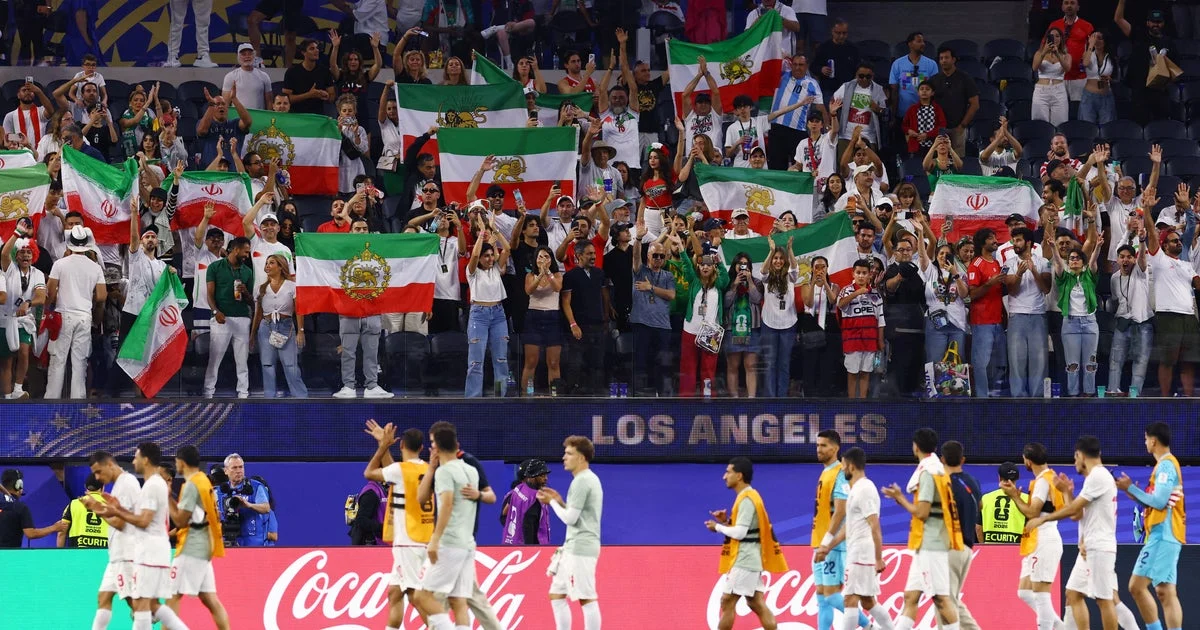
The coach of Iran’s national soccer team, Amir Ghalenoei, confirmed on June 15, 2026, that the team was ordered to leave the United States just hours after their opening FIFA World Cup match in California. The unexpected directive forced the players and staff to travel back to their training base in Tijuana, Mexico, disrupting their planned recovery time between games.
What Happened
Following Iran’s 2-2 draw with New Zealand at SoFi Stadium in Inglewood, Calif., on June 15, U.S. officials instructed the Iranian squad to immediately depart the country. Originally scheduled to stay overnight to recuperate, the team was told they had to board a plane for the roughly 140-mile trip to Tijuana. The exact authority ordering the early departure was not specified by coach Ghalenoei.
Andrew Giuliani, executive director of the White House’s World Cup task force, explained the U.S. policy that the Iranian team would only be allowed to enter the country one day prior to matches and would be required to leave on the evening of their game. Iran is set to follow this protocol again for their upcoming matches in Los Angeles and Seattle, with similar arrangements for the knockout stages if qualified.
Visa complications also arose: winger Mehdi Torabi’s entry visa expired after the first match, though a new multiple-entry visa was secured shortly after to allow his continued participation. The U.S. State Department confirmed the issue was resolved promptly.
Key Facts
- The first World Cup group stage match took place on June 15, 2026, at SoFi Stadium, Inglewood, California.
- The score was Iran 2, New Zealand 2.
- The team was ordered to leave immediately after the match instead of staying overnight as planned.
- Andrew Giuliani heads the White House’s World Cup task force and outlined the team’s limited U.S. entry windows.
- Iran’s training base is in Tijuana, Mexico, about 140 miles from Los Angeles.
- Mehdi Torabi’s visa expired but was replaced by a multiple-entry visa allowing future U.S. travel.
- Other Iranian officials, including the football federation president and support staff, were denied U.S. visas ahead of the event.
Why It Matters
The enforced early departure restricts Iran’s team from standard recovery periods after international matches, potentially impacting player health and performance. It also underscores the political tensions influencing sports diplomacy amid the ongoing conflict between the U.S. and Iran. These measures complicate Iran’s World Cup preparations and highlight the intersection of international politics and global sporting events.
Background
The 2026 FIFA World Cup includes matches hosted in the United States. Iran’s participation has been affected by geopolitical tensions exacerbated by U.S. and Israeli military actions against Iran beginning February 28, 2026. Iran had requested to relocate its group-stage matches outside the U.S., but FIFA denied that request.
Iran’s team also faced visa denials for key federation officials and media personnel, hampering full delegation presence. Iran’s opening draw came after arduous travel and layered security checks for the squad, including a long transit from Tijuana to Los Angeles.
Analysis
Coach Amir Ghalenoei and team captain Mehdi Taremi criticized the logistical challenges, linking cramps and injuries during the match to disrupted preparation and travel constraints. Ghalenoei described the situation as stressful and influenced by external decision-makers, indicating limited control over their schedule.
Andrew Giuliani justified the U.S. government’s travel restrictions as a clear and established policy, delineating the narrow windows for the team’s entry and exit designed to manage political sensitivities.
FIFA’s involvement remains limited to upholding match schedule adherence, with Iranian players expressing frustration at the lack of additional assistance from the international governing body.
Who Is Affected
- Iran’s national soccer team players and coaching staff
- Iranian football federation officials
- World Cup fans, particularly those of Iranian descent in the United States
- U.S. government and security agencies managing World Cup protocols
What Remains Unclear
- Which specific U.S. authority mandated Iran’s immediate departure after the game.
- The long-term impact of travel restrictions on Iran’s chances to advance beyond the group stage.
- Whether diplomatic negotiations will adjust Iran’s visa and travel policies for the remainder of the tournament.
What Comes Next
- Iran is scheduled to play Belgium in Inglewood on June 21, 2026.
- The team will follow U.S. travel rules—entering the country one day prior and leaving immediately after matches.
- Expected match against Egypt in Seattle the following week, under similar travel and visa regulations.
Sources
This article is based on reporting and publicly available information from the following source:
Read more World News stories on Goka World News.