
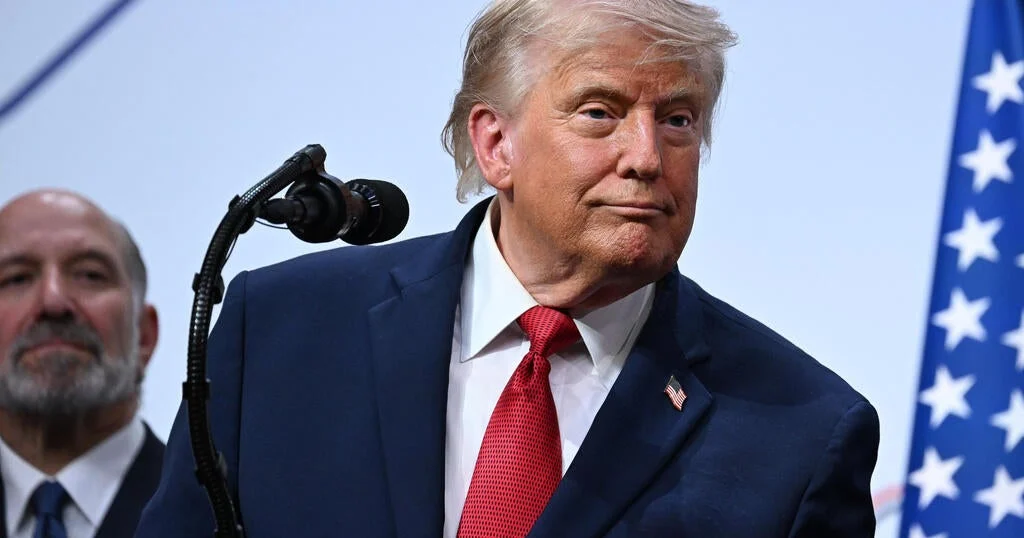
President Donald Trump announced a memorandum of understanding with Iran on June 17, 2026, outlining a preliminary framework for future negotiations on the Iranian nuclear program. This 14-point deal marks a significant departure from the more comprehensive 2015 Joint Comprehensive Plan of Action (JCPOA) brokered under the Obama administration, which Trump withdrew from in 2018.
What Happened
Last weekend, the Trump administration finalized a memorandum of understanding with Iran intended to extend the existing ceasefire and establish a roadmap for a permanent nuclear deal. Senior U.S. officials presented the agreement on June 17, defining it not as a detailed treaty but as a framework setting a 60-day timeline to negotiate specific terms, including uranium enrichment and sanctions relief. Defense Secretary Pete Hegseth emphasized that the new approach would retain a military option against Iran, an element Trump insisted was absent in the JCPOA.
Key Facts
Unlike the JCPOA’s extensive 100-plus page documentation that set precise uranium enrichment limits (such as capping enrichment at 3.67% for 15 years and centralizing enrichment to the Natanz facility), the new memorandum defers technical specifics to forthcoming discussions. It acknowledges Iran’s commitment to refrain from “procure[ing] or develop[ing]” nuclear weapons but leaves enforcement mechanisms to later agreement.
The memorandum includes immediate waivers for Iran’s oil and petroleum exports and envisions sanctions relief based on compliance in a final deal, distinct from the JCPOA which involved multiple sanctioning countries beyond the U.S. Notably, the Trump memorandum proposes a $300 billion reconstruction and economic development fund for Iran, a concept absent in the Obama-era deal.
Neither deal addresses ballistic missile restrictions in detail, with Trump stating that Iran’s possession of missiles roughly proportional to neighboring countries is acceptable. Unlike the JCPOA, which had 10- and 15-year sunset clauses, the new memorandum does not specify any expiration terms. Trump has publicly suggested a suspension of uranium enrichment for 15 to 20 years with permanent restrictions limiting enrichment to nonmilitary uses.
What This Means
This memorandum signifies a strategic shift in U.S. policy toward Iran’s nuclear program, highlighting a preference for a flexible framework rather than a prescriptive treaty. By emphasizing enforceability, including a military option, the Trump administration aims to create stronger deterrence against nuclear weapon development. However, deferring key technical details to future negotiations introduces uncertainty regarding exact limitations on Iran’s nuclear capabilities and the nature of sanctions relief.
The bilateral nature of the deal, excluding traditional JCPOA partners such as China, Russia, and European allies, could complicate multilateral cooperation and sanction enforcement. Immediate waivers on oil exports may face domestic and international scrutiny, reflecting tensions within the U.S. political landscape and skepticism from former officials like Nikki Haley.
For ordinary citizens and the international community, the memorandum’s success hinges on subsequent talks and inspections by the International Atomic Energy Agency. The proposed extensive financial package for Iran’s economic development could foster incentives for compliance but also raise concerns about funding and oversight.
Background
The Obama-era JCPOA, signed in 2015, was a detailed nuclear agreement involving the U.S., Iran, and other world powers, designed to limit Iran’s nuclear program in exchange for phased sanctions relief. President Trump withdrew the U.S. in 2018, labeling the deal “disastrous” and “one-sided,” criticizing its sunset clauses and lack of enforcement rigor. The new memorandum reflects Trump’s ongoing efforts to reshape U.S.-Iran relations on terms he deems more stringent.
What Comes Next
The memorandum calls for a 60-day period of negotiations to finalize a comprehensive nuclear deal with detailed terms on uranium enrichment, sanctions, and verification protocols. The White House did not specify dates for these talks but highlighted the urgency of reaching a longer-term agreement. Close coordination with regional partners and monitoring by international agencies like the IAEA will be crucial in the coming weeks.
Sources
This article is based on reporting and publicly available information from the following source:
Read more Politics stories on Goka World News.