
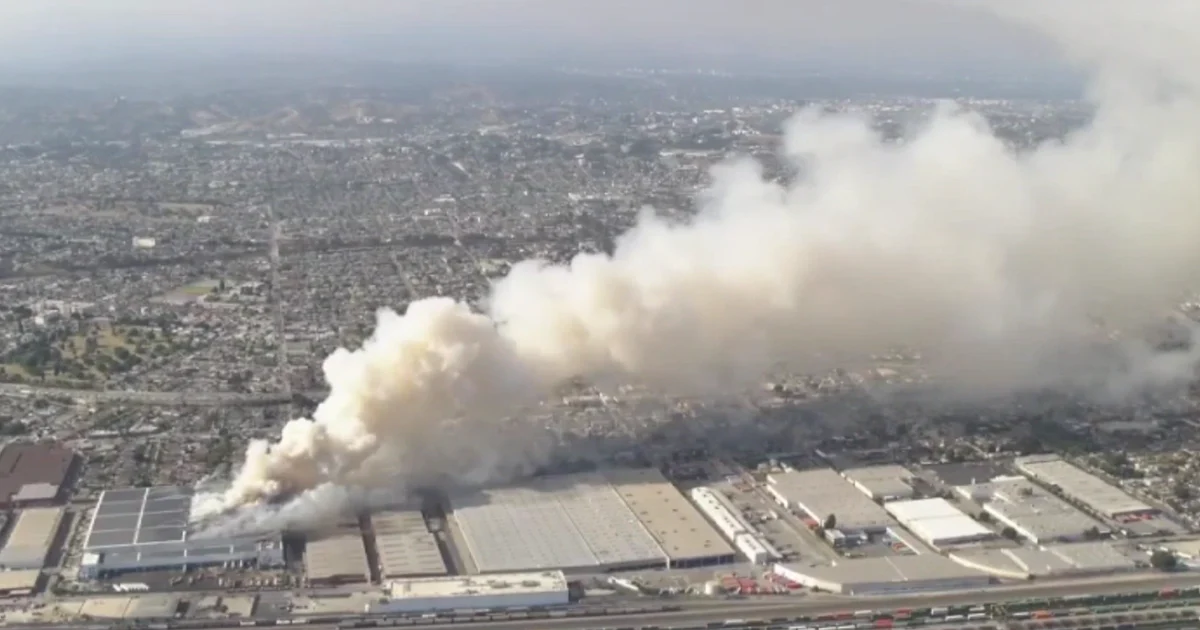
Los Angeles firefighters have made significant progress extinguishing a massive blaze at the Lineage Big Bear cold storage warehouse in Boyle Heights, but officials warn smoke may persist for up to three more days. The complex fire has consumed part of the 500,000-square-foot facility that stores millions of pounds of frozen food and presents ongoing challenges due to hazardous materials and structural conditions.
What Happened
The fire broke out on June 17, 2026, at the cold storage facility located at 1400 S. Los Palos Street in Boyle Heights, an industrial neighborhood of Los Angeles. The Los Angeles Fire Department (LAFD) has been fighting the fire nonstop since Wednesday using a combination of aerial water drops, fire retardant gel, and ground crews with water cannons after splitting the building to limit the fire to one side. On Saturday, efforts escalated with the introduction of 3,000-gallon water-dropping helicopters and excavators removing parts of the building’s exterior to enhance ventilation. The structure’s steel walls and dense foam insulation alongside ammonia-based refrigeration have complicated fire suppression.
Key Facts
Chief Jaime Moore of the LAFD described the fire as transitioning into a smoldering blaze involving Class A combustibles inside the building, which generates dense smoke expected for two to three more days. Approximately 85 million pounds of food, including bread, meat, and seafood, remain inside, creating biohazard concerns as the refrigeration system was shut off and the food begins to thaw and spoil. No firefighters or civilians have been injured, and no evacuation or shelter-in-place orders are currently in effect, though residents sensitive to smoke are advised to stay indoors.
Mayor Karen Bass and California Governor Gavin Newsom declared a state of emergency to unlock additional state resources for firefighting and environmental mitigation. Firefighting resources now include specialized water cannons arriving from Texas, contract helicopters, and the de-energizing of solar panels alongside removal of lithium-ion batteries to reduce hazards.
What This Means
The protracted nature of this fire highlights the complexities of battling blazes inside large industrial facilities containing specialized materials like foam insulation and ammonia refrigeration systems. While the fire appears contained to one section, the ongoing release of smoke and toxic residues presents public health concerns, especially for local residents with respiratory issues. The thawing of millions of pounds of stored frozen food raises environmental and biohazard risks, complicating recovery efforts and emphasizing the need for careful management of spoiled goods.
Emergencies like this reveal the intricate coordination needed between city fire departments, state agencies, and emergency management officials to both suppress fires and mitigate secondary impacts such as hazardous smoke and environmental contamination. For the Boyle Heights community, these efforts aim to preserve safety without disruptive evacuations while addressing the broader challenge of industrial fire hazards in dense urban areas.
What Comes Next
Authorities plan to continue using aerial and ground firefighting tactics while employing new equipment to aid containment. Efforts to safely remove remaining frozen goods before they pose biohazard risks are underway but will require further assessment. The Los Angeles Emergency Operations Center remains activated, and local officials will continue coordinating with the state on resource allocation and environmental clean-up.
Sources
This article is based on reporting and publicly available information from the following source:
Read more US News stories on Goka World News.