
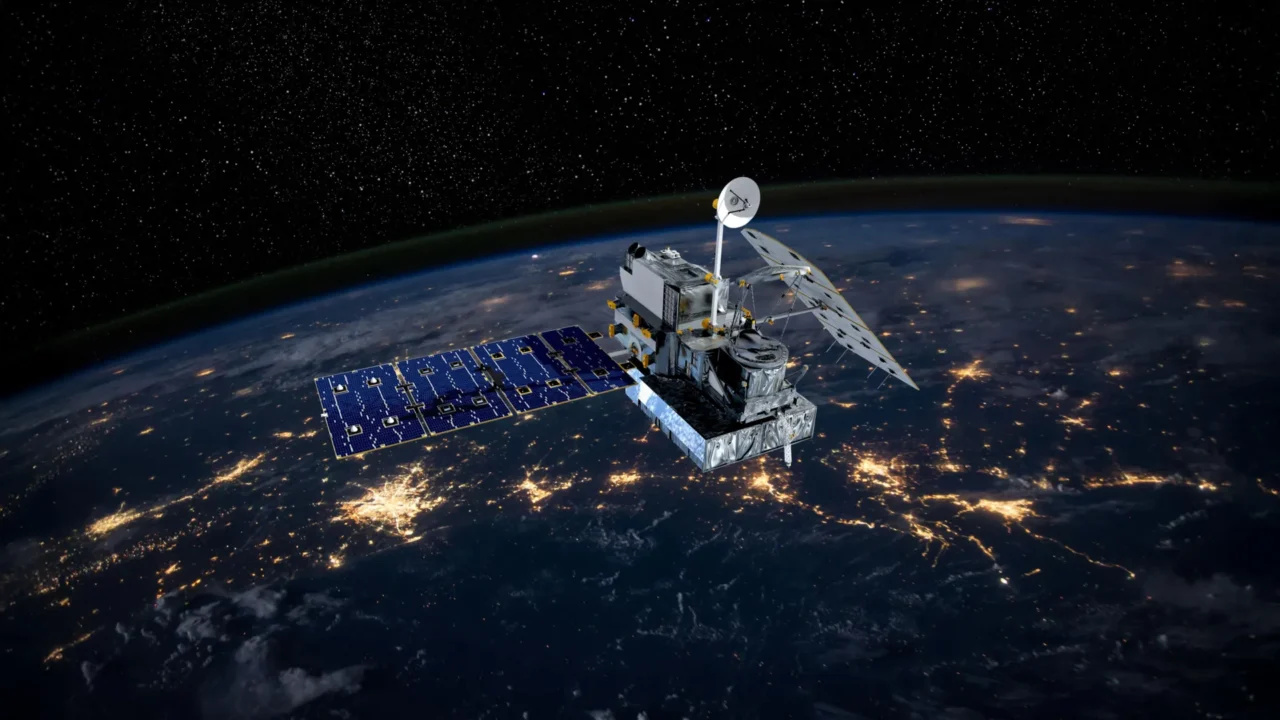
SpaceX is exploring the development of artificial intelligence (AI) data centers in orbit, a bold concept aiming to harness the unique advantages of space to meet the increasing global demand for computing. This idea, while promising in theory, faces significant engineering and operational challenges, as detailed by university researchers specializing in data center design and space systems.
What Happened
In a recent announcement, SpaceX revealed plans for its AI1 Compute Satellite, intended as an orbital data center to provide cloud computing capabilities from space. Unlike traditional data centers on Earth, these space-based centers would rely on solar energy for power and radiators to dissipate heat into the cold vacuum of space. However, the AI1 satellite’s current computing power is estimated to be 100 to 1,000 times lower than that of modern Earth-based data centers, revealing the scale of the technical gap that must be crossed.
Key Facts
Space-based data centers would harness solar panels for continuous power, avoiding reliance on Earth’s grids, with sunlight available nearly all the time except for orbital shadows. Cooling would be managed by large radiators that emit heat as infrared radiation, requiring surfaces comparable to two football fields to dissipate 10 megawatts of heat. Unlike Earth centers that use air or liquid cooling, space centers must rely on slow infrared heat emission. These data centers also impose logistical challenges such as in-space assembly, hardware refresh cycles every three to five years—which are much more complicated in orbit—and vulnerability to space radiation, micrometeorites, and increasing orbital debris.
What This Means
The push toward space-based AI data centers reflects growing constraints faced by terrestrial facilities, including land use conflicts, rising energy consumption driven by AI workloads, and environmental concerns. In orbit, unlimited solar power and the lack of local resource constraints make the proposition attractive. However, latency issues limit the applicability of space data centers for many real-time or user-heavy cloud applications, suggesting early uses will target space operations, Earth observation data, or scientific computing where latency is less critical.
This effort signals how the AI boom is pushing innovation beyond traditional boundaries, with companies like SpaceX attempting to pioneer an entirely new class of infrastructure. Nonetheless, the technological barriers—thermal management, repair and upgrade logistics, radiation shielding, and launch costs—mean space data centers remain a long-term ambition rather than an immediate solution.
For the broader AI ecosystem and users, such developments highlight the lengths to which the industry must go to sustain exponential growth in computational demand, potentially reshaping how and where cloud infrastructure is deployed.
Background
Traditional Earth-based data centers combine computing servers with complex electrical and thermal infrastructure, relying heavily on local land, power, water, and cooling systems. AI’s rapid compute growth stresses these resources, driving interest in alternatives. Similar satellite constellations, like SpaceX’s Starlink and Amazon’s Kuiper, have demonstrated high-volume space-to-Earth data communication, laying groundwork technology for orbital data centers.
What Remains Unclear
Independent assessments of SpaceX’s AI1 Compute Satellite’s capabilities and performance have not yet been published. The longevity and economics of hardware refreshes in orbit, as well as solutions for mitigating space radiation effects and debris collisions, remain open challenges. The impact of increased launch frequency on environment and public acceptance near launch sites is also not fully resolved.
What Comes Next
SpaceX’s orbital data center plans are in early stages, with hardware design and technology demonstrations ongoing. Future steps will likely involve incremental launches and in-space assembly experiments, alongside developing communication infrastructure to manage large data flows between orbit and Earth.
Sources
This article is based on reporting and publicly available information from the following source:
Read more Space & NASA stories on Goka World News.