
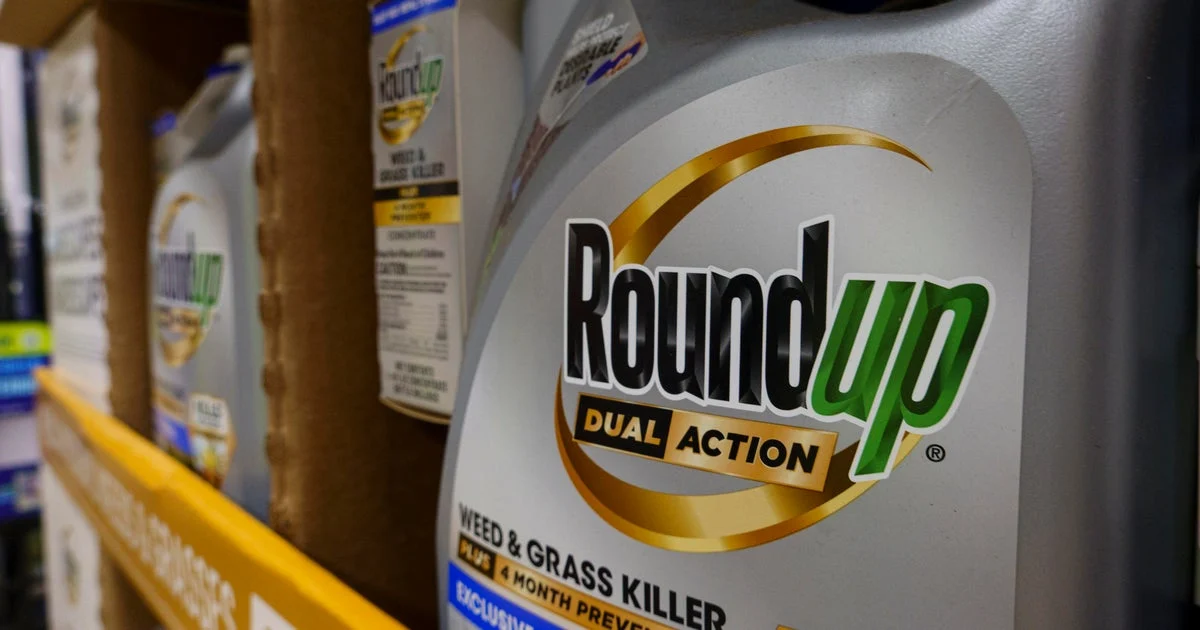
The U.S. Supreme Court on Thursday ruled that Monsanto cannot be held liable under state law for failing to warn consumers about the alleged cancer risks of its popular weedkiller, Roundup. The 7-2 decision emphasized that federal pesticide regulation preempts state warning requirements, effectively blocking thousands of lawsuits.
What Happened
The ruling pertains to the case Monsanto Co. v. Durnell, heard by the Supreme Court on June 25, 2026. John Durnell, a Missouri gardener who sued Monsanto in 2019 claiming that long-term exposure to Roundup caused his non-Hodgkin’s lymphoma, had won a $1.25 million verdict against the company in Missouri state court based on the claim that Monsanto failed to warn of cancer risks. However, Monsanto appealed, arguing that federal law under the Federal Insecticide, Fungicide, and Rodenticide Act (FIFRA) preempts state requirements for pesticide labeling.
The Court agreed, with Justice Brett Kavanaugh writing for the majority and joined by six other justices. They affirmed that FIFRA requires pesticide labels, including those on Roundup, to follow Environmental Protection Agency (EPA) approved language exclusively. Since the EPA has deemed Roundup safe and does not require a cancer warning, state laws cannot impose additional labeling requirements.
Justices Ketanji Brown Jackson and Neil Gorsuch dissented, disagreeing with the majority’s interpretation of federal preemption.
Key Facts
- Roundup’s key ingredient, glyphosate, was classified by the International Agency for Research on Cancer as “probably carcinogenic” in 2015, but the EPA has repeatedly evaluated glyphosate and found it unlikely to be carcinogenic.
- Bayer, which acquired Monsanto in 2018, no longer sells glyphosate-based Roundup products directly but offers other herbicide versions through retailers.
- The EPA’s labeling rules are central to the case, with FIFRA requiring federally approved labels that preclude state-level variations.
- The $1.25 million damages award to Durnell was specifically for Monsanto’s alleged failure to warn consumers.
- Bayer is pursuing approval of a $7.25 billion class-action settlement aimed at resolving current and future claims related to Roundup.
- The Missouri Supreme Court declined to review the earlier appellate court ruling in favor of Durnell’s lawsuit preemption.
What This Means
This Supreme Court ruling provides significant clarity on the interplay between federal pesticide regulations and state product liability claims. For consumers, it limits the avenue to sue manufacturers over pesticide labeling if the EPA has already approved those labels, effectively insulating companies like Monsanto from certain state-level lawsuits.
For the agricultural and chemical industries, this verdict reinforces the EPA’s authority as the sole regulator for pesticide safety and labeling, enabling a uniform national standard which companies and farmers rely on for predictability. This reduces the legal uncertainty and financial risk posed by fragmented state lawsuits.
However, this decision may be frustrating for plaintiffs who believe Roundup caused their illnesses but now face a higher barrier to hold companies accountable if the EPA’s stance differs from independent findings like those from the World Health Organization.
Background
The controversy over Roundup centers on glyphosate’s safety profile. While the EPA has found no strong evidence supporting carcinogenicity, independent groups such as the International Agency for Research on Cancer have classified it as a probable carcinogen. This scientific disagreement led to waves of litigation as users alleged cancer diagnoses linked to Roundup exposure.
FIFRA, enacted in 1947, governs the sale and labeling of pesticides nationwide, requiring manufacturers to obtain EPA approval of labels before marketing their products. This federal framework aims to create consistency but also limits state-level variations in warnings.
What Comes Next
The Missouri state court is currently reviewing Bayer’s proposed $7.25 billion class settlement to resolve Roundup-related litigation. If approved, Bayer would make annual payments for up to 21 years, helping contain ongoing and future lawsuits. Meanwhile, the ruling may be cited in pending cases across the country where plaintiffs seek to impose cancer warnings on Roundup labels.
Sources
This article is based on reporting and publicly available information from the following sources:
Read more Politics stories on Goka World News.