
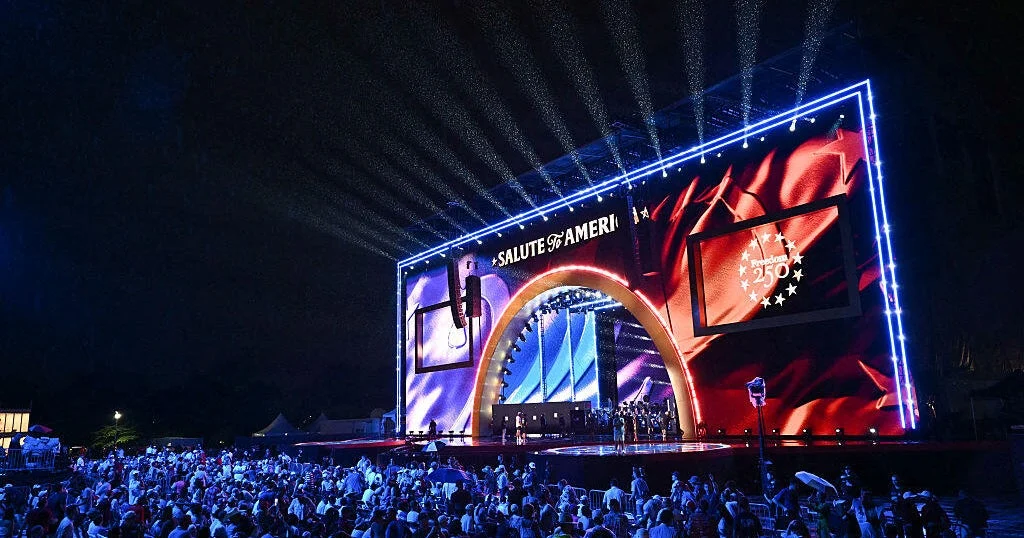
The National Mall in Washington, D.C., saw a dramatic disruption of its July 4th America 250 celebrations as severe thunderstorms prompted a temporary evacuation of thousands of attendees. The evacuation delayed festivities including President Trump’s highly anticipated address and a historic fireworks show celebrating the nation’s 250th anniversary of independence.
What Happened
On the evening of July 4, 2026, at approximately 7 p.m. Eastern Time, authorities evacuated the National Mall due to the threat of severe thunderstorms. Attendees were directed to seek shelter in federal buildings, museums, and designated tents for safety. The United States Secret Service dismantled metal detectors to protect equipment from weather damage, temporarily suspending security screening. The evacuation lasted several hours, during which scheduled events were postponed.
Following the storm’s passing, the National Mall gates reopened at 9:45 p.m. under President Trump’s direction. The president then arrived on site just after 11:15 p.m. and began delivering remarks late into the night ahead of what was billed as the largest fireworks show in U.S. history to mark America’s semiquincentennial birthday. Despite weather delays, festivities moved forward with an emphatic message of resilience and patriotism.
Key Facts
Thousands of visitors were forced to evacuate the area due to lightning and intense thunderstorms. The National Mall, the venue for the White House’s Freedom 250 Fourth of July celebrations, was the focal point of the disruption. The U.S. Secret Service temporarily removed metal detectors to prevent storm damage, signaling a lack of secured entry before re-entry screening resumed. President Trump publicly expressed determination to hold the celebration on schedule, rejecting suggestions to postpone his speech.
Several cabinet members including Treasury Secretary Scott Bessent, Secretary of State Marco Rubio, Commerce Secretary Howard Lutnick, and Secretary of Homeland Security Markwayne Mullin attended the event. House Speaker Mike Johnson was also present. Other major events affected nationwide included the One Philly: Unity Concert in Philadelphia, which was halted due to weather, and cancellations of D.C.’s Independence Day parade earlier that day because of heat concerns.
What This Means
The evacuation highlights the challenges severe weather poses to large-scale public gatherings and national celebrations, especially those held outdoors in iconic locations such as Washington, D.C.’s National Mall. Events marking pivotal national milestones must increasingly plan for contingencies surrounding climate and weather disruptions to ensure public safety without undermining the significance of the occasion.
For attendees, such disruptions can cause confusion and necessitate swift coordination between security, organizers, and emergency services. The efficient evacuation and subsequent reopening demonstrate the capability and readiness of federal agencies to manage safety under unexpected conditions. This event underscores the growing need for robust weather monitoring and crisis communication strategies at public venues.
More broadly, the incident reflects how climate factors can intersect with civic life and celebrations, pushing event planners and public officials to adapt traditional festivities to face evolving risks, from heatwaves to storms. It also underscores the importance of cooperation between government departments and emergency responders to balance celebration with safety.
What Comes Next
Authorities continue to monitor weather conditions across the capital region as the July 4th events progress. The Secret Service and event organizers confirmed that safety protocols were reinstated and screenings resumed as people re-entered the National Mall. No further delays or cancellations to the scheduled fireworks and concluding festivities were reported after reopening. Organizers and officials will likely assess emergency responses and update contingency plans for future large-scale outdoor events.
Sources
This article is based on reporting and publicly available information from the following sources:
Read more US News stories on Goka World News.