
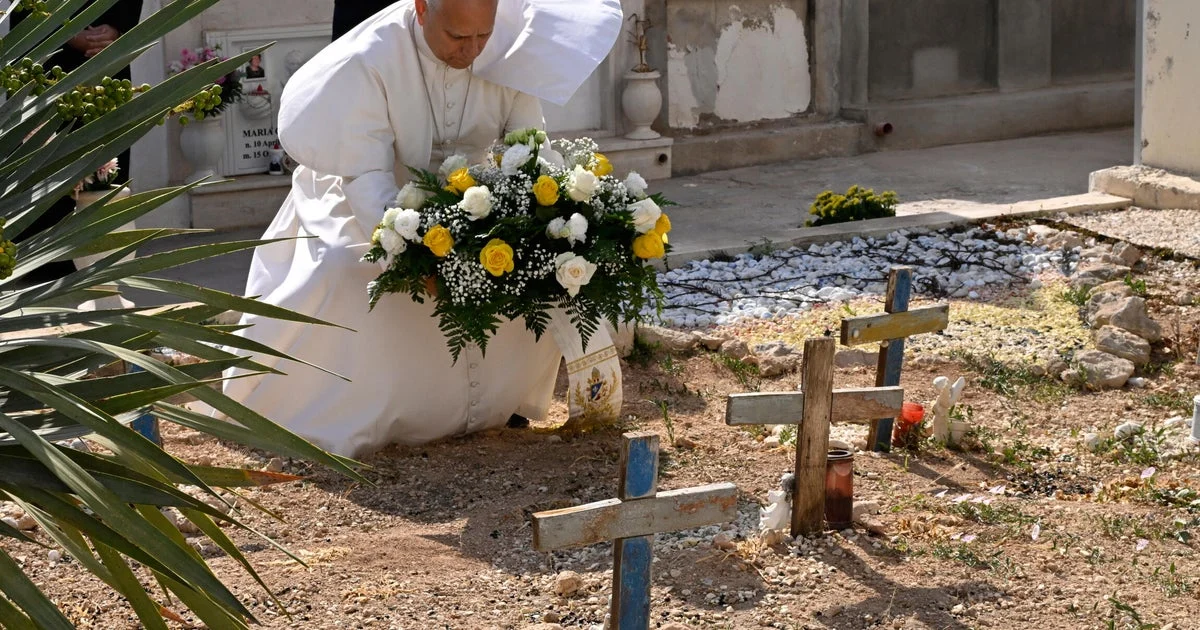
Pope Leo XIV spent July 4, 2026, on the Italian island of Lampedusa to honor migrants who have died attempting to reach Europe by crossing the Mediterranean. His visit highlighted the ongoing humanitarian crisis in Europe’s migration debate and reaffirmed a call for dignity and compassion toward vulnerable migrants.
What Happened
The U.S.-born pontiff traveled to Lampedusa, Sicily, a key European entry point for migrants crossing from North Africa. On July 4, he prayed at the island’s migrant cemetery, laid a wreath on graves marked by wooden crosses made from wrecked boats, and celebrated Mass for residents and migrants. He also met with migrants at the port and visited the residence of Brian Burch, the U.S. ambassador to the Holy See, marking an unusual papal engagement with an ambassador. During this visit, Burch presented the pope with symbolic gifts including a commemorative baseball and a U.S. World Cup jersey. The two discussed American efforts on peace and religious freedom globally.
Key Facts
Lampedusa, situated closer to Africa than mainland Italy, serves as the primary landing point for migrants from Libya and Tunisia. According to Italy’s Interior Ministry, arrivals in 2026 numbered 14,464 as of early July, down from 30,598 in the same period last year. The International Organization for Migration (IOM) reports more than 35,000 missing migrants in the Mediterranean since 2014, with many uncounted due to unrecorded shipwrecks. Pope Leo paid tribute in the footsteps of Pope Francis, who visited the island in 2013 and denounced the “globalization of indifference” toward migrants. The Oct. 3 Committee, a nonprofit representing victims of a 2013 shipwreck with 368 deaths, welcomed Leo’s visit as a vital gesture for recognizing migrant deaths.
What This Means
The pope’s visit to Lampedusa on the U.S. Independence Day sends a powerful symbolic message linking migration, human dignity, and the shared migrant heritage of America and Europe. By honoring the dead and engaging directly with migrants, Leo XIV stresses the humanitarian obligation of nations to protect vulnerable populations amid contentious migration debates. His presence amplifies calls for comprehensive migration policies that balance border management with robust refugee protection and integration strategies. For European countries grappling with migration, and for the U.S. observing a milestone in immigrant history, this underscores the moral imperative to address migration as a complex human issue beyond politics. Ordinary observers worldwide are reminded of the human cost of migration crises and the need for empathy-driven responses.
Background
Lampedusa has become emblematic of Europe’s migration challenges as thousands risk dangerous sea crossings to flee conflict, poverty, and climate change. Pope Francis first drew global attention to this humanitarian dilemma with his 2013 visit and call against ignoring migrants’ suffering. Pope Leo continues this pastoral mission amid rising political tensions and restrictive immigration policies in both the U.S. and Europe. His pastoral visits to other migration hotspots, including Spain’s Canary Islands, reaffirm the Vatican’s stance against migrant exploitation and indifference.
What Remains Unclear
The precise number of migrant deaths in Mediterranean crossings remains uncertain due to unrecorded shipwrecks and the “invisible” nature of many tragedies. Detailed outcomes regarding international cooperation or new policy commitments stemming from the pope’s visit have not been disclosed.
What Comes Next
Pope Leo’s Lampedusa visit signals ongoing Vatican engagement in migration issues, with potential follow-up through continued pastoral outreach and diplomatic dialogue. Discussions with the U.S. ambassador may feed into broader conversations on global peace, religious freedom, and migration ethics. European leaders have yet to publicly respond to his call for comprehensive migration strategies.
Sources
This article is based on reporting and publicly available information from the following source:
Read more World News stories on Goka World News.