
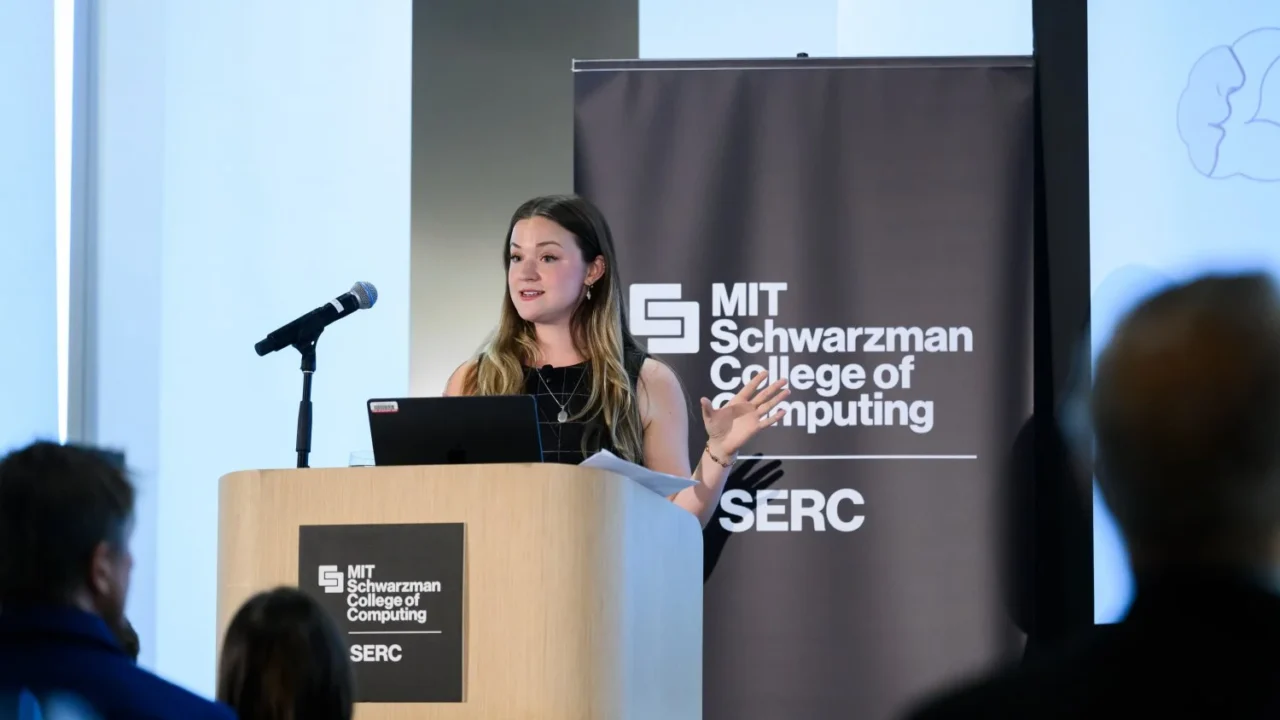
Rachel Sava, a PhD candidate in the Harvard-MIT Program in Health Sciences and Technology, received the $10,000 grand prize from MIT’s Envisioning the Future of Computing Prize for her essay on the societal risks and benefits of neural implants as they near consumer markets.
What Happened
The fourth annual Envisioning the Future of Computing Prize, organized by MIT’s Social and Ethical Responsibilities of Computing (SERC) initiative with support from MAC3 Philanthropies, recognized Sava’s submission titled “Superintelligence, Superintimate.” The competition encouraged MIT students to consider the real-world impact of artificial intelligence and related technologies beyond pure technical advancement, weighing potential societal benefits and ethical concerns in essays up to 3,000 words. The awards ceremony, hosted by Caspar Hare, featured presentations and a Q&A before a judging panel.
Key Facts
Rachel Sava is a PhD candidate at the joint Harvard-MIT Health Sciences and Technology program. Her essay explored neural prostheses, medical devices that translate brain activity to external communication, and the ethical implications as such technology expands beyond patients with debilitating conditions to broader uses. The prize awards $10,000 to the grand winner, with two runners-up awarded $5,000 each and four honorable mentions receiving $500. SERC is a cross-campus initiative within MIT’s Schwarzman College of Computing, supported by the School of Humanities, Arts, and Social Sciences.
What This Means
Sava’s essay highlights a critical moment in neurotechnology development where life-enhancing medical devices could simultaneously present significant risks to privacy and civil liberties. As neural implants become commercially available, their ability to monitor or influence brain activity raises concerns about corporate surveillance or government overreach, potentially “policing” thoughts or mental productivity. This work pushes the conversation beyond the purely technical achievements of AI and neurotech, urging policymakers, researchers, and companies to consider protective frameworks before these technologies are widely adopted.
For users and society alike, this scrutiny signals a need for early intervention in setting ethical boundaries and regulatory guardrails. It emphasizes the importance of maintaining human agency and privacy as neurotechnology transitions from clinical settings to consumer markets, a shift that could profoundly affect daily life and rights.
Background
Sava’s interest in neurotechnology ethics originated during an internship at IBM, where she worked with Kevin Brown, a pioneer in brain decoding devices for patients with severe neurological impairments such as locked-in syndrome. Over six years later, she revisited the topic with an eye toward emergent risks as such technology evolves beyond strictly medical applications. The prize she won encourages interdisciplinary approaches, including medicine, law, ethics, and policy, to imagine future technological impacts.
Analysis
Brian Hedden, co-associate dean of SERC, noted the competition continues to attract comprehensive submissions reflecting a broad range of disciplines and deep ethical engagement with emerging technologies. Nikos Trichakis, also co-associate dean of SERC, praised entrants for their imaginative yet rigorous integration of human agency into discussions on AI and neurotechnology, underscoring the importance of steering technology toward societal good.
What Comes Next
The Envisioning the Future of Computing Prize is an annual event that will continue to challenge MIT students to evaluate the ethical, social, and policy consequences of cutting-edge technology. Submissions for the next contest will likely reflect ongoing developments in AI and neurotechnology, emphasizing multidisciplinary perspectives that balance innovation with social responsibility.
Sources
This article is based on reporting and publicly available information from the following sources:
Read more Science & Technology stories on Goka World News.