
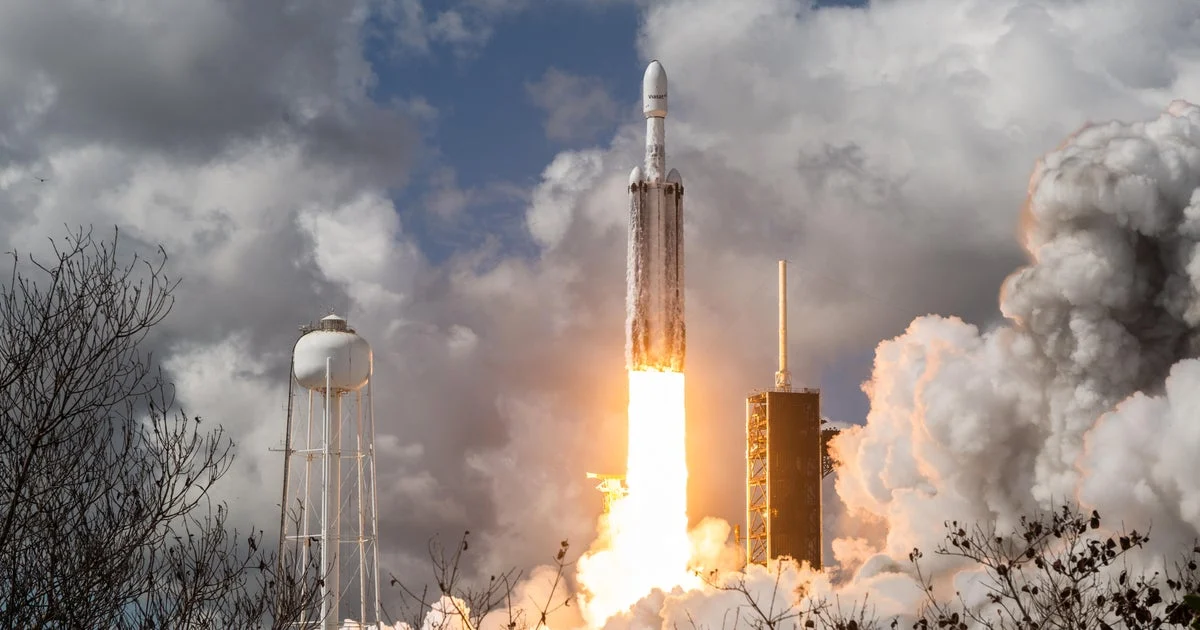
As the United States marks its 250th anniversary, three renowned futurists offer predictions about the country’s trajectory across centuries in health, space exploration, and artificial intelligence. Their insights, blending recent scientific milestones with long-term societal shifts, provide a window into a future shaped by technological innovation and evolving governance.
What Happened
Reflecting on the U.S. bicentennial and inspired by founding father Benjamin Franklin’s 1780 letter envisioning advances a millennium ahead, futurists George Friedman, Amy Webb, and Brian David Johnson shared their forecasts on the nation’s transformative prospects. These experts drew from recent breakthroughs such as the rapid development of mRNA COVID-19 vaccines and the ongoing privatization and militarization of low Earth orbit, underscoring emerging trends in synthetic biology, space-based communications, and artificial intelligence. Their commentary comes amid heightened debate over biotechnology funding, government planning horizons, and geopolitical control of space technology.
Key Facts
Among the technological milestones referenced, Amy Webb highlighted the COVID-19 vaccine’s genetic sequence design completed within two days in 2020, which demonstrated an unprecedented ability to “read-edit-write” biology, signaling synthetic biology’s rise as an engineering discipline. Brian David Johnson pointed to the proliferation of low Earth orbit satellites, with companies like SpaceX deploying more than 10,000 satellites to enable global connectivity and enhance defense capabilities. George Friedman noted that modern warfare’s evolution hinges increasingly on space intelligence, using satellite data to target precise strikes, comparing it to traditional control of oceans in historic conflicts. The U.S. government’s practice of burying a 250th-anniversary time capsule to be opened in 2276 symbolizes an explicit awareness of the challenge in planning for decades and centuries ahead.
What This Means
These futurists’ perspectives illuminate a pressing challenge facing American society: adapting institutions and policy frameworks to rapidly changing technological landscapes that will redefine industry, security, and human health. Webb’s vision of proactive disease detection embedded in everyday life alongside personalized genomic therapies signals a shift from reactive healthcare to a system integrated with continuous biological data flows. The ongoing deployment of satellites not only promises enhanced telecommunications but also introduces new dimensions of national security and commercial competition in space, potentially reshaping global power dynamics.
Moreover, artificial intelligence’s disruption of labor markets and societal roles challenges traditional values about work, productivity, and human identity. Johnson’s optimism about leveraging AI to revalue human creativity and Friedman’s perspective that current political division follows historical patterns rather than unique crises emphasize resilience within cultural evolution. The futurists collectively urge investment in governance mechanisms capable of looking beyond election cycles and short-term gains to steward long-term societal wellbeing amid uncertainty. For the everyday American, this means living through transitions in health management, information access, labor, and global interaction framed by unprecedented technological capability and complexity.
Background
Benjamin Franklin, writing in 1780, speculated about advances like easy transport via levitation and curing all diseases including aging—ambitious ideas encouraging forward-thinking about human potential. In this spirit, contemporary futurists have expanded those foundational ideas with concrete technological reality, reflecting on biotechnological breakthroughs such as mRNA vaccines, which propelled the COVID-19 pandemic response. Similarly, John Adams’s 1787 metaphor about the vastness of future prospects now finds resonance in the ongoing expansion of satellite-based communication networks and space infrastructure. Meanwhile, debates over funding for synthetic biology research, especially under the current U.S. administration, highlight tensions between scientific innovation and regulatory oversight.
What Remains Unclear
Despite promising technological progress, several uncertainties remain. Broader societal impacts of AI, including labor displacement and ethical governance, continue to be sites of active debate without clear resolutions. The long-term ecological, geopolitical, and commercial consequences of satellite proliferation in low Earth orbit require further study as the regulatory regime struggles to keep pace with rapid deployment. Moreover, funding shifts around synthetic biology and mRNA research introduce questions about future innovation pipelines in healthcare. The ability of political institutions to adopt planning horizons commensurate with the rapid pace of technological change is also an unresolved challenge.
What Comes Next
Looking forward, the United States faces strategic choices in investing in biotechnology, space infrastructure, and AI governance. The 500th anniversary time capsule, set to be unsealed in 2276, symbolizes a long-term vision that contrasts with current short-term political planning. As the country navigates these complex transformations, scheduled regulatory reviews, congressional debates over scientific research funding, and evolving space policy frameworks will shape its trajectory. Businesses, policymakers, and citizens alike will confront the task of balancing innovation with ethical and societal considerations while preserving cultural resilience in an era of disruption.
Sources
This article is based on reporting and publicly available information from the following sources:
Read more Science & Technology stories on Goka World News.