
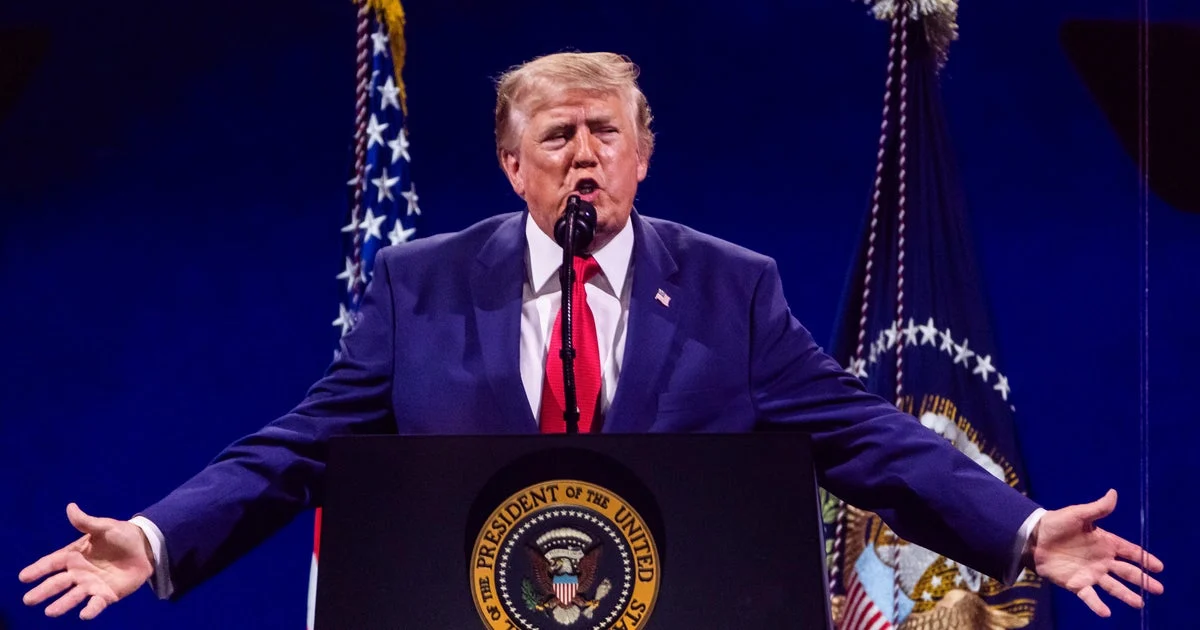
President Donald Trump marked the 250th anniversary of American independence on July 4, 2026, with a speech in Washington, D.C., where he honored veterans, criticized communism, and promoted his election integrity legislation, the SAVE America Act. The address, held after a weather delay and National Mall evacuation, combined patriotic themes with pointed political commentary ahead of the midterm elections.
What Happened
Trump’s July 4th speech was delivered after a two-hour evacuation of the National Mall due to severe weather conditions. During the “Salute to America” event, the president paid tribute to military veterans—including World War II veterans, a pioneering Black Special Forces officer from the Vietnam War, and Civil War Medal of Honor recipient William Harvey Carney. Highlighting American military accomplishments, he cited recent U.S. actions against Iran’s navy, claiming the sinking of 159 Iranian ships as a key victory.
The president also used the platform to attack communism, stating, “Our warriors did not fight communism on battlefields across the world, only to have that menace rear its ugly head right back here in America.” This rhetoric was widely interpreted as a critique aimed at Democrats ahead of November’s midterm elections.
Trump reiterated his push for the SAVE America Act, which would require voters to prove U.S. citizenship during registration and show identification when voting. The legislation has yet to gain sufficient Congressional support. He framed the bill as essential to preventing election fraud, saying, “You won’t have cheating on the elections anymore, it’s very simple.”
In closing, Trump lauded NASA astronauts, police officers, and farmers, calling the country’s 250th anniversary “only the dawn of the golden age of America” and expressing optimism that “the best is yet to come.”
Key Facts
Trump’s speech took place after a delayed start caused by severe weather and the evacuation of the National Mall.
He recognized veterans from multiple conflicts, including notable Black servicemembers like William Harvey Carney.
The president referenced recent U.S. military operations against Iran’s navy, describing the sinking of 159 ships.
The SAVE America Act advocated by Trump requires voters to prove citizenship and produce ID at the polls but has not passed Congress.
Trump estimated that at least 150,000 people returned to the venue after the initial evacuation.
What This Means
Trump’s speech served not only as a patriotic celebration but also a clear political message in advance of the midterm elections. His denunciation of communism in a domestic context signals an attempt to frame the opposition as a dangerous ideological threat, mobilizing his political base. The emphasis on the SAVE America Act underscores ongoing efforts by Trump and his allies to shape election laws centered on voter identification and citizenship requirements, a controversial topic in U.S. electoral politics.
By invoking historic military valor alongside recent military claims, Trump tied past American triumphs to current policy stances, reinforcing a narrative of strength and national pride. His optimistic declaration about a “golden age” aims to cast his administration and political movement as the guardians of American greatness, which could resonate powerfully with supporters but deepen partisan divisions.
The crowded and weather-challenged event indicates persistent public interest in Trump’s rallies, reflecting his continued influence despite political polarization. The speech also illustrates how major national observances can serve as platforms for significant political messaging.
Background
This speech follows Trump’s similar rhetoric during his Mount Rushmore address on July 3, 2026, where he condemned communism and celebrated American achievements. The SAVE America Act has been a recurring focus of Trump’s campaign to impose stricter voter qualifications, but so far lacks sufficient Congressional backing.
What Comes Next
The SAVE America Act faces uncertainty in Congress with no confirmed date for a vote. Midterm elections in November 2026 will be a focal point for the political battles over election laws and broader ideological conflicts framed in this speech.
Sources
This article is based on reporting and publicly available information from the following source:
Read more Politics stories on Goka World News.