
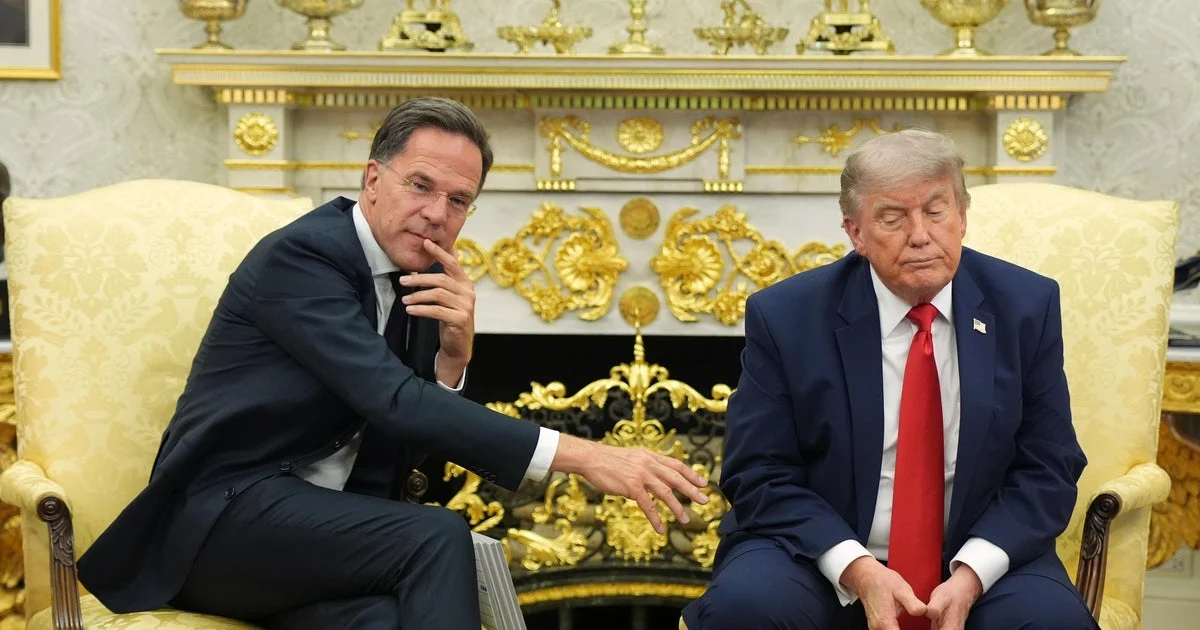
President Donald Trump arrived in Ankara, Turkey, on July 7, 2026, to attend a pivotal NATO summit where he renewed his call for member countries to spend 5% of their gross domestic product (GDP) on defense. The summit takes place amid ongoing U.S. military reductions in Europe, diplomatic tensions with Italy’s Prime Minister Giorgia Meloni, and the unconventional issue of Greenland’s status within the alliance.
What Happened
At the NATO summit held in Turkey’s capital, President Trump continued to press the alliance for increased defense spending, emphasizing the need for members to shift the burden of European security away from the United States. The 32-nation alliance had agreed at the 2025 summit in The Hague to reach a 5% GDP defense spending target by 2035, up from the previous 2% goal. Trump is advocating for countries to accelerate this timeline.
U.S. Ambassador to NATO Matthew Whitaker highlighted that while countries like Poland and the Nordic and Baltic states are leading in defense investment, others lag significantly. Germany, for instance, aims to reach the 5% target by 2029, but Trump expects immediate action from all allies.
In parallel, the Pentagon announced plans to reduce U.S. military presence in Europe, including withdrawal of about 5,000 troops from Germany and cuts to fighter jets and tanks. This military posture adjustment complements Trump’s defense spending push, reflecting a strategic recalibration to rely more on NATO partners for their security.
Aside from defense spending, Trump’s visit rekindled diplomatic friction with Italian Prime Minister Giorgia Meloni, who previously had been an ally. Disputes over support related to the Strait of Hormuz and Iran led to Italy’s foreign minister canceling a visit to the U.S., and Trump publicly mocked Meloni with a social media post referencing a “restraining order.”
Another contentious issue at the summit involves Trump’s long-standing interest in acquiring Greenland, a semi-autonomous territory of Denmark and a NATO member country. Despite Denmark and Greenland’s firm opposition, U.S. officials asserted acquiring Greenland remains a strategic priority to enhance NATO’s defense posture in the Arctic region, though alternative options are also being considered.
President Trump is also scheduled to meet Ukrainian President Volodymyr Zelenskyy during the summit’s sidelines to discuss ongoing concerns amid Russia’s invasion of Ukraine, an unresolved conflict that the alliance remains deeply engaged with.
Key Facts
The 32 NATO members committed last year to increasing defense spending to 5% of GDP by 2035, a target boosted from the prior 2%. The U.S. currently spends roughly 3% of its GDP on defense. The Pentagon’s troop withdrawal involves approximately 5,000 soldiers from Germany, alongside cuts to other military equipment. Trump’s defense spending demand has provoked tensions, notably criticism and trade threats directed at Spain for opting out of the 5% target. The NATO summit was described by Secretary of State Marco Rubio as “probably the most important meeting in NATO’s history.” Italy’s diplomatic rift with the U.S. deepened following Trump’s comments about Prime Minister Meloni.
What This Means
This NATO summit underscores a significant shift in U.S. defense policy, where President Trump’s administration is actively encouraging European NATO members to take greater financial and military responsibility for their own defense. This realignment aims to reduce the long-standing U.S. burden, signifying a move toward a more European-led security framework.
For ordinary citizens in NATO countries, increased defense budgets could lead to heightened government spending on military capabilities, potentially affecting national budgets and security priorities. Reduced U.S. troop presence could also mean European countries must develop stronger independent military capacities and collaboration.
The diplomatic frictions evident at the summit, including the strained U.S.-Italy relationship and the Greenland proposal, reveal underlying challenges to alliance cohesion. These tensions highlight the complexity of balancing national interests within a collective security agreement. Meanwhile, discussions around Ukraine continue to position NATO as a central actor in European stability, influencing both geopolitical dynamics and policy decisions among member states.
Background
The 2025 NATO summit in The Hague set the ambitious new target of 5% GDP defense spending for members by 2035, a significant increase guided in part by Trump’s administration. However, many NATO members have struggled to meet even the earlier 2% target, fuelling U.S. frustrations. Trump’s criticism of European allies’ defense contributions and threats such as cutting trade with non-compliant countries have been consistent themes throughout his presidency.
Turkey’s hosting of the summit is notable given its controversial role within NATO, including its complex relations with Russia and domestic human rights concerns. The summit’s location also reflects improved ties between Trump and Turkish President Recep Tayyip Erdoğan.
What Comes Next
President Trump’s planned meeting with Ukrainian President Volodymyr Zelenskyy will be closely watched as both sides seek pathways to address the ongoing conflict with Russia. NATO members are expected to discuss further steps on collective defense and potential acceleration of defense spending targets.
The outcomes of the summit may lead to formal proposals for increased military collaboration and funding requirements, while diplomatic efforts to resolve intra-alliance disagreements, especially between the U.S. and Italy, will continue in the coming months.
Sources
This article is based on reporting and publicly available information from the following sources:
Read more Politics stories on Goka World News.