
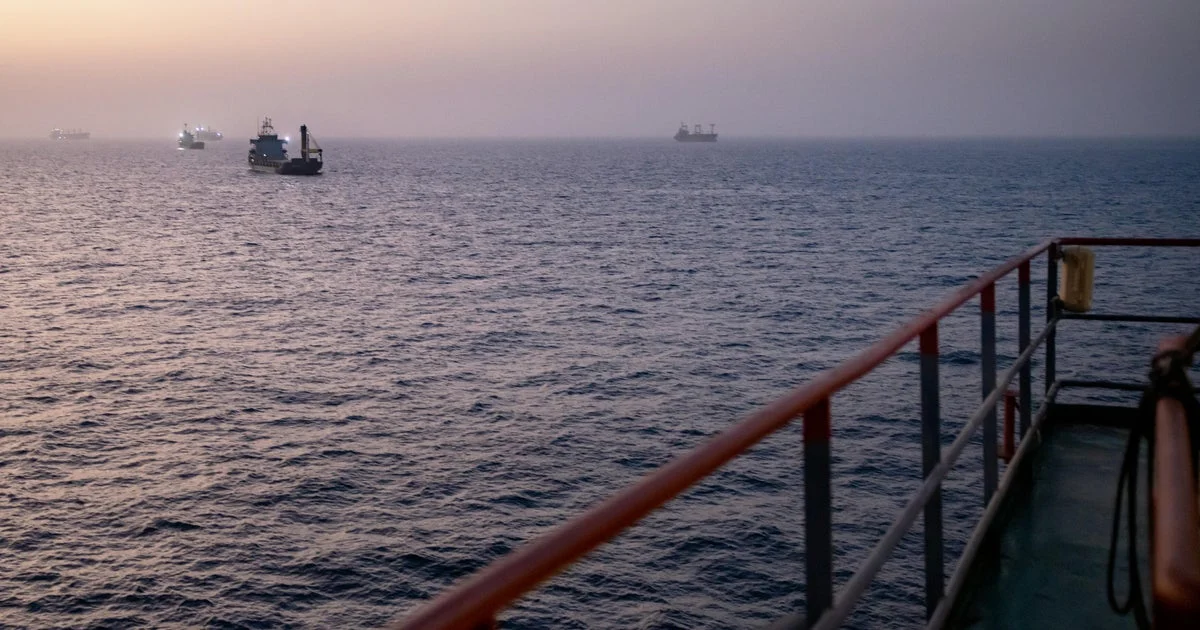
Iran has privately communicated to advisers within the Trump administration that the attacks targeting commercial ships in the Strait of Hormuz were a mistake, according to senior U.S. officials. These incidents, attributed to a faction of hardliners seeking to sabotage ongoing negotiations, may complicate the delicate diplomatic process aimed at preserving peace and trade stability in the region.
What Happened
On July 10, 2026, senior U.S. officials revealed that Iranian representatives admitted the attacks on ships transiting the Strait of Hormuz were an “errant” action by a hardline sect within Iran’s system. This private acknowledgment was conveyed to a delegation advising President Trump, which includes Vice President JD Vance, presidential adviser Jared Kushner, special envoy Steve Witkoff, and Secretary of State Marco Rubio. The White House has urged Iran to publicly acknowledge its mistake to uphold the ceasefire agreement.
The Trump administration directed these officials to continue diplomatic talks with Iran, scheduled for the following day in Oman. However, officials cautioned that further hostile actions by Iran would prompt a U.S. response employing military and economic measures. A senior official summed up Iran’s message as: “We screwed up. We made a mistake. Let’s keep talking.”
U.S. negotiators expect Iran to commit to keeping the Strait of Hormuz open for commercial traffic as before the conflict. Failure to do so would have serious diplomatic repercussions, the official noted.
Key Facts
The administration members leading the dialogue are Vice President JD Vance, Jared Kushner, special envoy Steve Witkoff, and Secretary of State Marco Rubio. The forthcoming meeting in Oman is scheduled for Saturday, July 11, 2026. The attacks on the southern lane of the Strait, near the Omani coast, were reportedly triggered by unexpected traffic volume, disrupting Iran’s prior memorandum expectations. The White House continues to scrutinize Iran’s nuclear program remnants, referred to by President Trump as “nuclear dust,” with contingency plans depending on Iran’s cooperation.
What This Means
This development signals a cautious thaw in tensions as Iran’s admission could ease one of the major sticking points in negotiations concerning navigation rights through a critical global oil transit chokepoint. The Strait of Hormuz is vital for global energy markets; ensuring its openness is essential not only for regional stability but also for international trade security.
The acknowledgment also reflects internal divisions within Iran, suggesting some elements undermine official diplomatic efforts. For the U.S., this creates both an opening to continue talks and a warning sign about the complexity of enforcing agreements with a factionalized Iranian system. The administration’s readiness to leverage both diplomatic engagement and military-economic pressure underscores its strategic balance of incentives and deterrence.
For global observers and markets, the outcome of the Oman talks will be closely monitored as an indicator of whether peace negotiations can translate into concrete arrangements that avoid further conflict and stabilize energy supplies worldwide.
Background
The attacks followed a ceasefire agreement intended to de-escalate hostilities in the Strait of Hormuz, a strategic waterway used by a significant portion of the world’s maritime oil trade. Earlier diplomatic efforts had aimed to designate certain lanes for traffic to facilitate safer passage, with the southern lane along Oman’s coast expected to remain open. Iran’s sudden reconsideration of this arrangement, apparently triggered by the unexpectedly rapid movement of commercial vessels, sparked the recent confrontations.
President Trump’s administration had maintained a firm stance that violations of the ceasefire by Iran would trigger a proportional U.S. response, emphasizing the need for Iran to abide by previously negotiated terms before addressing more contentious issues like its nuclear program.
What Comes Next
The White House has scheduled negotiations in Oman on Saturday, July 11, with Trump’s team pressing Iran for public acknowledgment of its mistake and commitments to keep the strait open to maritime traffic. The administration has signaled that ongoing compliance will shape whether talks can proceed to address the broader question of Iran’s nuclear program.
Sources
This article is based on reporting and publicly available information from the following source:
Read more World News stories on Goka World News.