
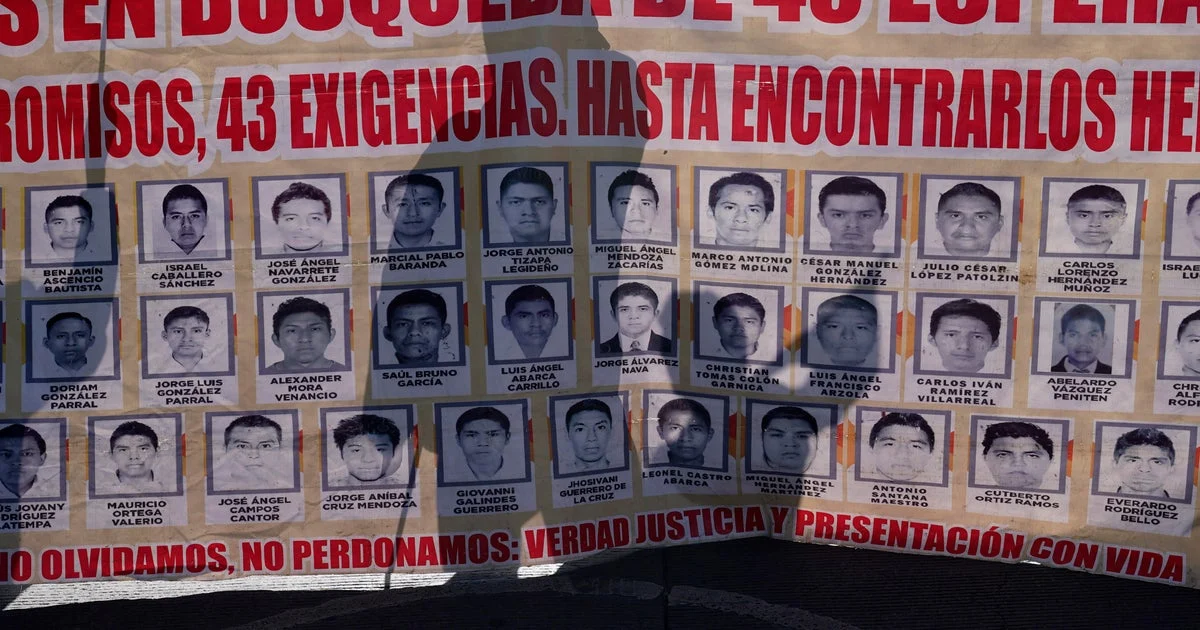
Mexican authorities announced a significant development in the long-running investigation into the disappearance of 43 rural college students who vanished in 2014. Twelve years after the incident that shocked the nation, police have identified 17 new suspects and uncovered human remains connected to the case, renewing hopes for justice in a matter that severely impacted Mexico’s reputation and highlighted entrenched cartel violence.
What Happened
The students disappeared on September 26, 2014, in the state of Guerrero, where they were en route to Mexico City for a protest. They were stopped by police in the town of Iguala, with investigations indicating police colluded with the Guerreros Unidos cartel, handing over the students to criminal elements. Since then, authorities have pursued numerous arrests without securing a conviction, with only three bodies recovered from the 43 missing.
On September 29, 2026, Mauricio Pazaran, the special prosecutor assigned to the case, revealed that recent phone-call analyses from the night of the disappearance led to the identification of 17 additional suspects. These include public officials, police officers, cartel members, and private individuals. Investigators also recovered a firearm, bones, and bone fragments with teeth at a funeral home, corroborating the ongoing pursuit of forensic evidence.
Key Facts
Authorities are prosecuting a total of 168 individuals related to the case, with 130 currently held in pretrial detention. Among those arrested recently are a former governor, charged with ordering the deletion of security camera footage from the night of the incident, a former senior judge accused of concealing video evidence, and the state’s former attorney general—all underscoring official complicity. A minor, arrested in April and linked to Guerreros Unidos, is cited as a direct participant in the events. The investigation remains focused on rural and remote clandestine sites where cartels operate, as Mexico continues to face severe cartel-related violence and disappearances.
What This Means
This breakthrough illustrates the complex entanglement of organized crime and public institutions in Mexico, exemplifying challenges in addressing impunity and corruption. The involvement of officials in the disappearance has broad implications for governance and the rule of law, signaling to both domestic and international observers the continued necessity for transparency and accountability. For families and communities affected by cartel violence, renewed investigations and arrests represent a crucial, albeit partial, measure of justice and hope.
The case’s persistence keeps attention on Mexico’s larger struggle with cartel-related violence, which has caused half a million deaths or disappearances over decades. It highlights the dire need for systemic reforms in policing and judicial processes. Moreover, publicizing these arrests amid annual marches ensures sustained pressure on authorities to resolve cold cases and address historical injustices that have long undermined social trust.
Background
The 43 missing students were teachers in training at the Ayotzinapa Rural Teachers’ College. Their disappearance during a police interception and subsequent handover to the Guerreros Unidos cartel sparked national and international outrage, severely damaging Mexico’s global standing. Since the original event, investigations have encountered obstacles including destroyed evidence, witness intimidation, and extensive involvement of organized crime across Guerrero. The ongoing inquiry has seen multiple arrests but no definitive convictions, and it persists as one of Mexico’s most emblematic cases of enforced disappearances tied to corruption and cartel violence.
What Remains Unclear
Despite progress, several key details remain unresolved: the exact location of most victims’ remains continues to elude investigators, and no formal convictions have been secured. Responsibility for the full orchestration of the disappearances remains officially unestablished, and the full extent of collusion between officials and cartels is yet to be concretely documented. Some evidence, such as deleted security footage, complicates clear reconstruction of events.
What Comes Next
Authorities will continue to prosecute the suspects currently detained, and efforts to locate further human remains are expected to persist in rural Guerrero locations. The case remains under active investigation by the special prosecutor’s office, with authorities emphasizing their commitment to delivering justice. Annual public marches and calls for clarity show enduring public interest and pressure on Mexican institutions.
Sources
This article is based on reporting and publicly available information from the following source:
Read more World News stories on Goka World News.