
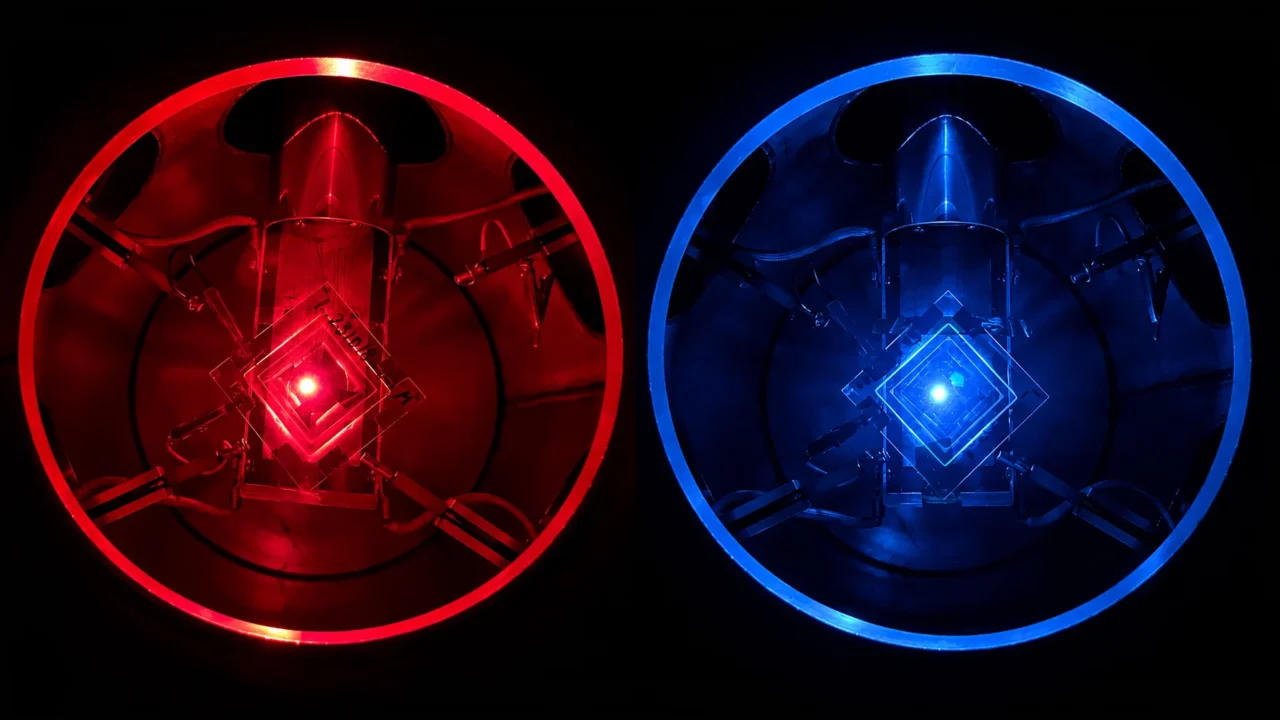
MIT scientists have found a way to dramatically extend the lifespan of quantum dot light-emitting diodes (QD-LEDs), paving the way for more energy-efficient digital displays with richer, brighter colors. Published in Science Advances, the study led by a team including Vladimir Bulović and Ruiqi Zhang from MIT, in collaboration with Samsung, demonstrates that encapsulating QD-LEDs in an acrylate-based resin can reduce physical degradation and enhance device stability by thousands of times.
What Happened
Researchers from MIT analyzed the microscopic deterioration processes occurring inside electrically excited quantum dot LEDs, focusing on the persistent problem of the limited operating lifespan of blue QD-LEDs. Using advanced nanoscale microscopy, the team sliced the ultrathin layers of both red and blue QD-LEDs to investigate the structural and chemical changes after extended use. They discovered that the layers inside blue QD-LEDs degraded, thinning and losing their distinct shape due to the release of excess hydrogen and oxygen.
By applying a simple, scalable method of encapsulating these devices with an acrylate-based resin layer, the team effectively suppressed the release of these harmful elements, reducing morphological degradation. This technique improved the lifespan of red QD-LEDs by eightfold and achieved an unprecedented 5,000-fold improvement for blue QD-LEDs, overcoming a significant barrier for commercial applications.
Key Facts
The findings were published in Science Advances and involved collaboration between MIT’s Research Laboratory of Electronics and Samsung Advanced Institute of Technology. Key contributors include principal investigator Vladimir Bulović, lead author Ruiqi Zhang, and Nobel laureate Moungi Bawendi. The study examined nanoscale cross-sections of QD-LEDs under MIT.nano’s advanced microscopy facilities. The encapsulation process uses acrylic resin, a cost-effective approach that can be applied at scale during production. Prior quantum dot LED designs struggled with very short lifespans, particularly for blue emitters, which were 50 to 100 times less stable than red and green counterparts.
What This Means
This breakthrough unlocks the potential for next-generation display and lighting technologies that are slimmer, more vibrant, and less power-hungry. By solving the longevity issues that have hindered blue QD-LEDs—the critical component for producing full-color displays—manufacturers could move beyond conventional OLED and LED technologies to deliver screens with purer colors and greater efficiency. This has implications for consumer electronics, including smartphones, augmented and virtual reality devices, flat-panel TVs, and even large-scale ambient lighting panels.
Furthermore, the scalable resin encapsulation method suggests that these improvements can be implemented without substantial cost increases or manufacturing complexity, potentially accelerating commercial adoption. Beyond displays, stabilized QD-LEDs may find uses in sensors, lasers, and other optoelectronic devices, potentially reshaping multiple industries through enhanced performance and durability.
Background
The study builds on foundational work by Moungi Bawendi, who was awarded the Nobel Prize in Chemistry in 2023 for developing quantum dots—semiconductor nanocrystals that emit highly pure colors when electrically excited. Vladimir Bulović’s earlier research at MIT and Princeton pursued integrating quantum dots into LED displays as an alternative to organic LEDs (OLEDs). While quantum dots have been incorporated into commercial “QLED” displays by Samsung, these devices currently rely on less efficient excitation methods. Electrically excited QD-LEDs promise better efficiency and scalability but have been limited by poor device stability, especially for blue emitters.
What Remains Unclear
Although resin encapsulation substantially reduces degradation, the exact source of the excess hydrogen and oxygen causing physical damage remains unidentified. Further, encapsulation does not completely eliminate all forms of device degradation. The researchers acknowledge that additional layers or materials may need to be explored to further extend the lifespan and enhance the efficiency of all QD-LED colors.
What Comes Next
The MIT team plans to continue investigating supplementary techniques to further improve QD-LED robustness and performance. They aim to build on these insights to optimize devices for broader commercial applications, exploring ways to enhance the stability of QD-LEDs in various technologies beyond displays, such as sensors and lasers.
Sources
This article is based on reporting and publicly available information from the following sources:
Read more Science & Technology stories on Goka World News.