
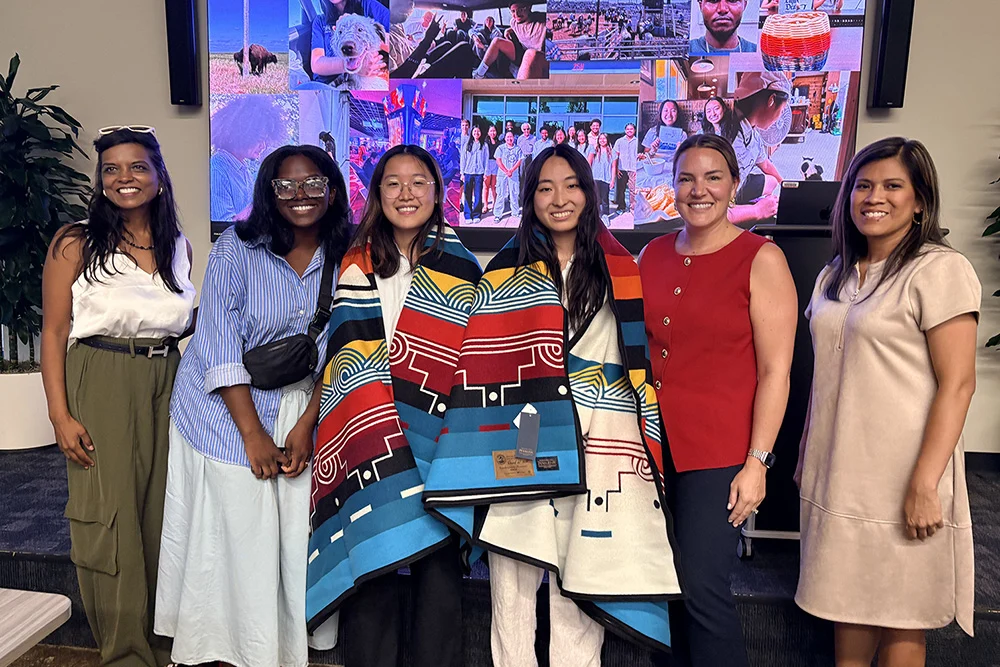
MIT students took part in the 2026 Code.Tulsa program, an initiative merging technical innovation with community engagement in Tulsa, Oklahoma. Through internships with the Muscogee Creek and Cherokee nations, as well as local nonprofits, these students applied machine learning, data science, and engineering skills to support projects with tangible social impact, including health data analysis and STEM education for Native youth.
What Happened
This summer, ten MIT undergraduates participated in the second year of Code.Tulsa, a program hosted by MIT’s PKG Center for Social Impact with funding from the Patrick J. McGovern Foundation and the George Kaiser Family Foundation. Students lived at the University of Tulsa and interned with tribal governments and nonprofit organizations on projects designed to address social challenges through technology. Notably, MIT mechanical engineering student Daphne Wang and AI and decision-making major Lucy Sun contributed to the first Pregnancy Risk Assessment Monitoring System (PRAMS) survey specific to the Muscogee Nation. Their work involved literature reviews, dataset analysis, and drafting survey questions with sensitivity to data sovereignty and tribal governance.
Key Facts
The Code.Tulsa program places students in internships that blend technical work with cultural and historical education. Mentorship by the PKG Center staff and local tribal leaders provided a humanist perspective on technology’s role in community development. The program also launched the Tulsa Advanced Sciences Camp (TASC), a weeklong STEM camp for high school students from 25 Native nations, offering AI engineering, DNA technology, physics, and chemistry tracks complemented by philosophical workshops. The camp accepted 25 students selected from 160 applicants, representing 10 federally recognized tribes.
Jack Carson, a Cherokee Nation member and MIT sophomore, founded Code.Tulsa with the vision to improve STEM access for Native youth. The program’s partners included the Muscogee and Cherokee nations, Black Tech Street, and the Urban Coders Guild. Students like electrical engineering major Chenise Harper interned with nonprofits, gaining firsthand insight into community needs and social challenges intertwined with technology.
What This Means
Code.Tulsa demonstrates how leading technology education institutions can integrate socially conscious engagement with rigorous technical training. For MIT students, immersion in tribal history and governance fosters greater cultural empathy and awareness of ethical considerations in data use and technology development. This creates a new generation of engineers motivated by social impact and equipped to design inclusive, community-centered solutions. For Native communities, the program offers access to STEM resources, educational opportunities, and the groundwork for data infrastructure that respects sovereignty and promotes health equity.
Moreover, TASC’s blend of technical tracks and philosophical inquiry encourages young Native students to develop ambitions in STEM fields while thinking critically about their societal roles and potential impacts. As camper Alyssa Theofanidis noted, curiosity and self-driven learning are core outcomes, which can enhance STEM participation among indigenous youth. The involvement of tribal leaders like Cherokee Nation Principal Chief Chuck Hoskin Jr. underscores the importance placed on technology’s dual potential for benefit and harm, urging a careful, values-driven approach to innovation.
Background
Code.Tulsa originated from Jack Carson’s initiative to bridge a STEM access gap he observed among rural Native students. The program’s roots lie in combining MIT’s technical excellence with community-based learning, supported by philanthropic foundations. The PRAMS survey project marked a pioneering effort for the Muscogee Nation to collect maternal health data through a culturally attuned approach, highlighting the intersection of data science and indigenous governance.
What Comes Next
The success of the 2026 Code.Tulsa cohort sets a foundation for future iterations of the program, expanding the integration of social impact within technology education. The Tulsa Advanced Sciences Camp will continue to inspire Native students, with returning participants serving as teaching assistants. MIT and tribal partners plan to develop further projects addressing community needs through participatory technology design and education initiatives.
Sources
This article is based on reporting and publicly available information from the following sources:
Read more Science & Technology stories on Goka World News.