
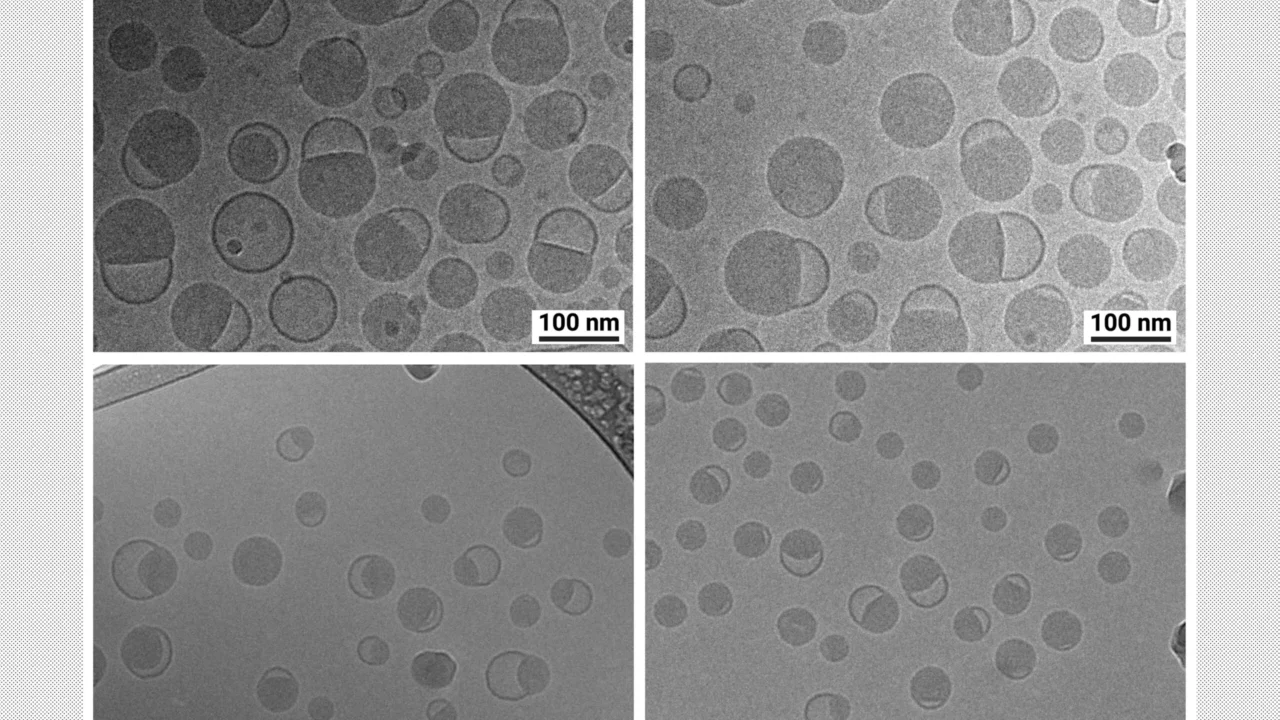
MIT scientists have innovated a fully automated technique to produce lipid nanoparticles (LNPs) with unprecedented control over their size and shape, offering a substantial advancement in the creation of RNA and DNA therapeutics. Detailed in the journal ACS Nano, the method promises to accelerate the development and optimization of RNA delivery vehicles critical for vaccines and gene therapies.
What Happened
The research team, including lead authors postdoctoral researchers Cedric Devos, Aniket Udepurkar, and Peter Sagmeister at MIT’s Department of Chemical Engineering, devised a novel two-step mixing process to fabricate lipid nanoparticles. Traditionally, LNPs are formed by mixing lipid molecules dissolved in ethanol with RNA-containing acidic buffers, but equal mixing rates were not used, leading to limited size and shape control.
Building on a previous study, the researchers implemented equal flow rates of RNA and lipid mixtures in the first step, followed shortly by the addition of buffer after a controlled delay to arrest particle growth. Adjusting this delay—termed “residence time”—allows precise tuning of particle size from smaller to larger formations. Moreover, by varying buffer concentration, they could transform particle shapes—from standard spheres to elongated “avocado-like” structures.
Crucially, the team integrated this process into an automated platform featuring real-time dynamic light scattering measurements, which monitor particle size instantaneously. The system then dynamically modifies parameters, such as delay times, to achieve targeted nanoparticle sizes without human intervention.
Key Facts
The study was published in the journal ACS Nano and conducted at MIT’s Department of Chemical Engineering. The automated technique was developed with contributions from MIT’s Undergraduate Research Opportunities Program, involving computer science undergraduates who integrated advanced software engineering with chemical manufacturing processes.
Production occurs in MIT.nano facilities, with funding from the U.S. Food and Drug Administration and the National Cancer Institute’s Koch Institute Support Grant. The research group has filed a patent for this automation technology and is advancing toward commercialization through a startup, BIZON Labs, supported by MIT entrepreneurship programs.
What This Means
This new automated method provides an essential “degree of freedom” for RNA therapeutic developers by accurately controlling LNP size and shape, factors that heavily influence where in the body these nanoparticles deliver their genetic payloads. Since different tissue types preferentially absorb nanoparticles of certain sizes, this precision enables tailored therapies that may improve efficacy and reduce off-target effects.
By automating the process and incorporating real-time feedback, researchers can now rapidly iterate and optimize LNP formulations, dramatically reducing the trial-and-error nature that has historically slowed RNA therapy development. This technology could streamline the path for new vaccines and treatments, facilitating quicker responses to emerging diseases or genetic disorders.
Furthermore, the ability to engineer a variety of particle shapes introduces new possibilities for targeted delivery and cellular uptake mechanisms, potentially opening novel avenues in nanoparticle design beyond conventional spherical carriers.
The Bigger Picture
As RNA-based therapeutics grow in prominence, catalyzed by the success of mRNA COVID-19 vaccines, improving delivery systems remains critical. Lipid nanoparticles are central to this effort yet have suffered from inconsistent manufacturing control. MIT’s advancement aligns with a broader trend toward automated, precision nanomedicine manufacturing that overcomes reproducibility challenges and helps scale personalized medicine.
What Remains Unclear
The researchers note that while their system automates size control effectively, measuring and automating shape control remains partially outside the current platform’s capabilities. Additional methods are required to quantify shapes in real time within the automated process. Furthermore, the translation of nanoparticle shapes into biological performance in vivo needs further investigation.
What Comes Next
The team plans next to refine their automated platform to integrate shape measurement and expand predictive modeling using their accumulated data. They are also pursuing commercialization via BIZON Labs to make the technology available to pharmaceutical developers. Longer-term, applying this automated approach to diverse nanoparticle compositions for specialized therapeutic targets is a key future goal.
Sources
This article is based on reporting and publicly available information from the following sources:
Read more Science & Technology stories on Goka World News.