
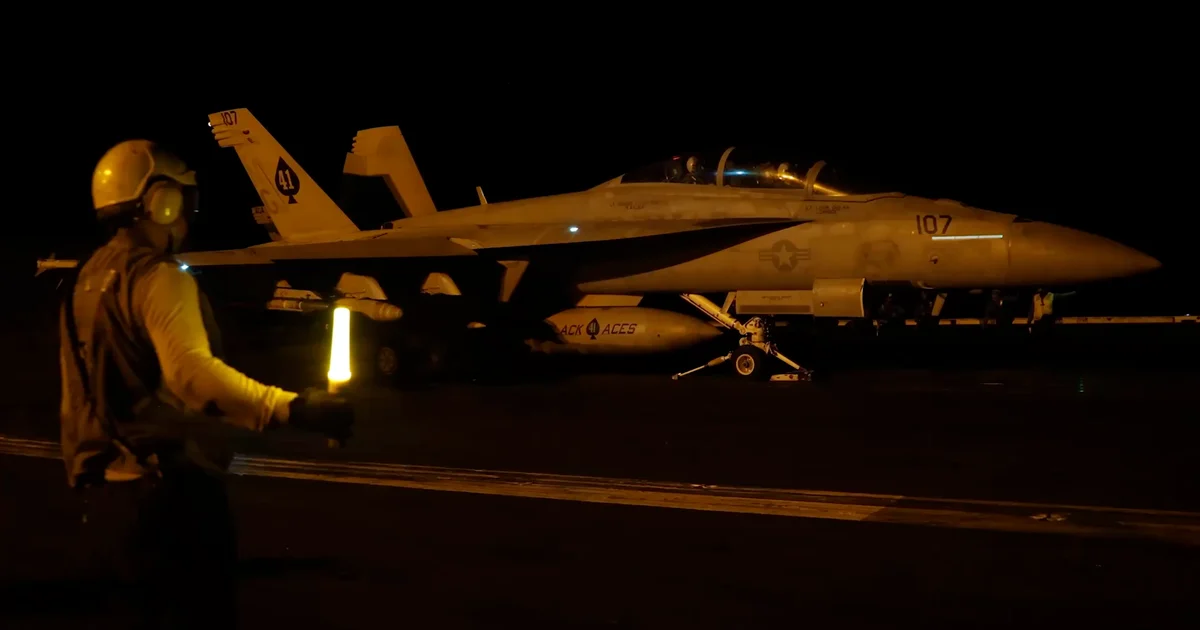
The United States carried out its third round of military strikes against Iran this week in response to an Iranian missile attack on a commercial vessel near the strategic Strait of Hormuz, further intensifying regional conflict and diplomatic efforts in the Gulf.
What Happened
On the night of July 11, 2026, U.S. Central Command executed retaliatory strikes targeting approximately 140 sites across Iran, including missile and drone launch positions, naval facilities, and communication hubs. This represented a continuation of a series of U.S. attacks earlier in the week, prompted by Iranian operations against commercial shipping lanes and U.S. interests.
The latest strikes followed a missile assault by Iran’s Revolutionary Guard Corps (IRGC) on the Cyprus-flagged container ship M/V GFS Galaxy in the Strait of Hormuz, which caused significant engine damage and a fire onboard, forcing evacuation of the crew. Iranian forces also claimed missile attacks on two vessels and U.S. military installations in the region, including a command center and drone facility at Jordan’s Prince Hassan Air Base. Iran stated it had closed the Strait of Hormuz “until further notice.”
Simultaneously, Iran’s supreme leader vowed revenge in reaction to U.S. threats, after President Trump warned of severe retaliation if Iran attempted an assassination against him, citing “1000 Missiles are Locked and Loaded.”
Diplomatic channels remained active as an Iranian delegation met with Omani officials in Muscat to discuss management of the Strait of Hormuz, building on a memorandum of understanding signed in June. However, progress appeared limited amid rising conflict on the waterway.
Key Facts
According to U.S. Central Command, the third wave of strikes targeted around 140 locations utilizing naval vessels, fighter jets, and drones. Across the week, U.S. forces struck more than 300 Iranian sites. The Cyprus-flagged ship M/V GFS Galaxy suffered extensive engine room damage, and a civilian crew member is reported missing. India confirmed that of 11 nationals aboard the vessel attacked east of Oman, 10 were rescued while one remains missing.
Iran claimed missile hits on U.S. drone hangars and command facilities in Jordan, and also launched missile and drone attacks against Gulf Arab states including the United Arab Emirates and Bahrain. Qatar’s Interior Ministry reported three injuries, including one child, from debris following missile interceptions.
Qatar’s foreign ministry condemned the attacks, calling Iran’s strikes on its territory and neighboring countries a “dangerous escalation.”
What This Means
This latest escalation underscores the fragility of security in the Gulf region, a critical artery for global oil and trade traffic. The repeated targeting of commercial ships and military assets threatens to disrupt international shipping and heighten tensions between Iran, U.S. forces, and Gulf allies. The Strait of Hormuz remains a flashpoint where any miscalculation could spark wider conflict affecting energy markets and global supply chains.
The ongoing military exchanges also complicate diplomatic efforts. Although talks continue between Iran and Oman to regulate the strait’s navigation, the persistent attacks and retaliations erode trust and raise questions about the viability of the June memorandum of understanding. For Gulf countries allied with the U.S., Iranian missile barrages represent a direct security challenge, forcing them into active defense roles and escalating regional instability.
For international observers and traders, the violence signals increased risks for maritime passage through one of the world’s busiest chokepoints, potentially causing insurance costs to soar and shipping routes to shift.
Background
The June memorandum of understanding between Iran and Oman aimed to ease tensions by establishing coordinated management of the Strait of Hormuz, jointly used by both countries. However, attacks on commercial vessels in early July, repeatedly attributed to Iran, triggered U.S. military responses and raised doubts about Iran’s commitment to the agreement. This has fueled a cycle of violence involving strikes and counter-strikes between Iran and U.S. forces along with allied countries in the Gulf.
What Comes Next
Negotiations between Iran and Oman are ongoing, focusing on the administration of maritime traffic through the Strait of Hormuz. Meanwhile, Gulf countries remain on high alert following missile and drone attacks, with their defenses actively intercepting further Iranian strikes. Diplomatic watchers will be closely monitoring further engagements or escalations as the situation remains fluid.
Sources
This article is based on reporting and publicly available information from the following sources:
Read more US News stories on Goka World News.