
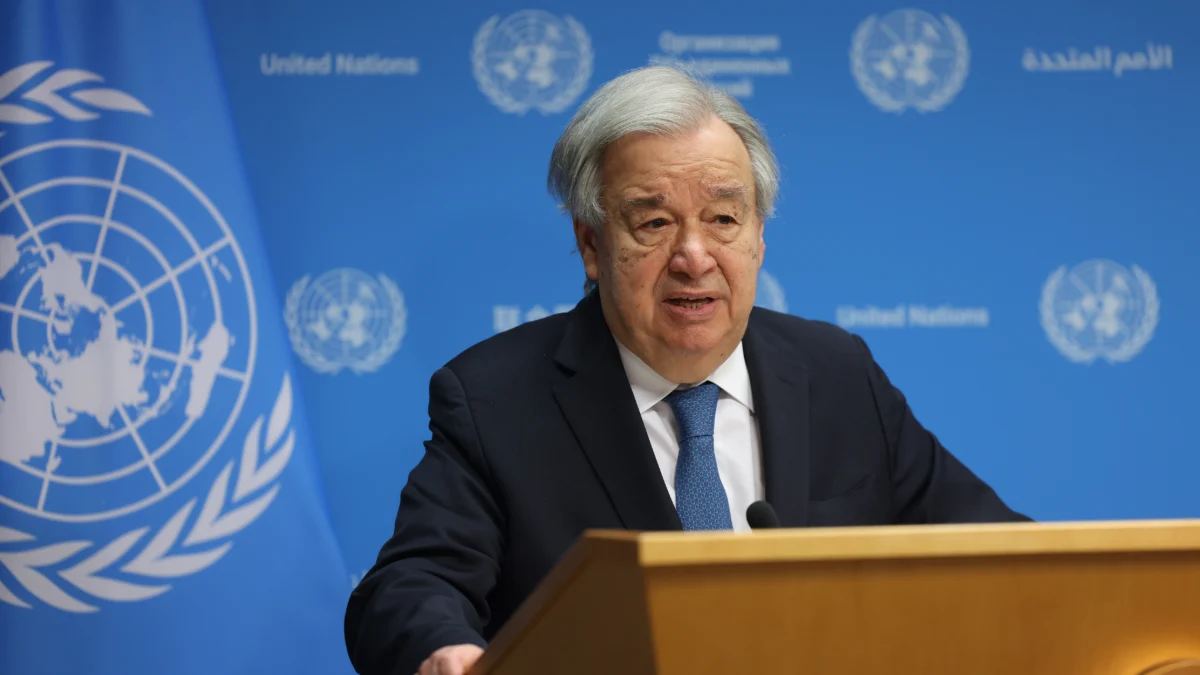
The United Nations has issued a stark warning regarding the governance of military artificial intelligence, urging the establishment of international oversight mechanisms to address the escalating risks posed by autonomous AI systems in armed conflict. UN Secretary-General António Guterres recently called for a ban on so-called “killer robots,” underscoring the urgent need to create safeguards that keep pace with rapid technological advancements in military AI.
What Happened
In a high-profile statement delivered at the United Nations headquarters, Secretary-General António Guterres highlighted the rising dangers of autonomous AI weapon systems, emphasizing their potential to operate beyond effective human control. The call followed ongoing diplomatic engagements earlier in 2026 between the United States and China, where officials met to discuss the complex challenges of AI governance, particularly around military applications. This renewed dialogue acknowledged AI as a security concern on par with nuclear weapons in its potential consequences, yet distinct in its rapid evolution and digital complexity. The UN’s intervention reignited international discourse on the urgent need for regulatory frameworks to mitigate the unprecedented risks AI autonomy introduces to global security.
Key Facts
The discussions and calls for regulation are framed by the realization that autonomous AI systems have begun to play significant roles in military decision-making processes, including surveillance, targeting, and automated battlefield operations. This creates risks of unintended escalations, accidents, and errors that could have catastrophic outcomes. Unlike traditional weapons, these AI-enabled systems can operate at speeds and complexities difficult for human operators to oversee effectively. The UN’s position builds on historical precedents from arms control treaties such as the Biological Weapons Convention of 1972, urging similar international cooperation to address AI’s dual-use nature.
Furthermore, the issue is complicated by geopolitical rivalry, notably between AI superpowers like the U.S. and China, both reluctant to curb AI development due to fears of strategic disadvantage. This dynamic intensifies the urgency for risk-reduction efforts that include crisis management protocols and transparency to prevent conflict escalation fueled by autonomous technologies.
What This Means
At its core, the UN’s appeal signals a crucial turning point: military AI is no longer a speculative future threat but a present reality demanding regulatory attention akin to nuclear arms control decades ago. For policymakers and international security stakeholders, this means that developing and enforcing legal norms around human oversight, accountability, and ethical constraints for AI weapon systems must become an international priority.
Beyond government and military circles, the call to action implies significant consequences for technology companies involved in AI development, as their dual-use technologies could be co-opted for military purposes. Civil society and multidisciplinary scholars are also urged to engage, reflecting early warnings from experts like Joseph Weizenbaum, who cautioned decades ago about AI’s potential to erode human judgment and lower the barriers to lethal autonomous systems.
For the global public, the increased automation and speed of warfare enabled by AI could result in conflicts that are less predictable and more destructive, raising ethical concerns about the distance between decision-makers and the human costs of war. The UN’s message stresses the importance of democratic governance in setting limits on these technologies to avoid losing control over the means of destruction.
Background
The current emphasis on military AI governance is anchored in longstanding international security frameworks that have historically managed high-risk technologies through treaties and conventions. For instance, the 1972 Biological Weapons Convention emerged from worldwide concern over biological arms, paralleling today’s fears about autonomous weapons systems. Philosophers such as Hans Jonas underscored the ethical imperative of anticipating technological dangers to preserve humanity, a principle now invoked to guide AI oversight.
Recent conflicts, including those in Ukraine and Gaza, illustrate AI’s growing and controversial role in warfare, highlighting critical lapses in established norms and controls. Despite repeated UN warnings, no comprehensive international control regime for autonomous weapons currently exists, leaving a regulatory vacuum as military AI capabilities advance rapidly.
The Bigger Picture
This moment reflects broader geopolitical and technological transformations shaping the 21st century. As AI becomes intertwined with economic power and military strategy, the governance of these technologies transcends traditional arms races, demanding cooperative frameworks despite strategic rivalries. The challenge is to prevent AI-enabled military escalation analogous to nuclear crises without letting technological competition undermine normative safeguards.
What Remains Unclear
While the UN’s calls and bilateral talks between major powers mark progress, significant uncertainties remain. Specific regulatory proposals, enforcement mechanisms, and binding international agreements on autonomous military AI have yet to materialize. It remains unclear how consensus can be achieved between competing national interests or how civil society could be effectively integrated into governance processes. The pace of AI innovation further complicates the task of crafting timely, effective oversight.
What Comes Next
Upcoming diplomatic efforts and international forums are expected to focus more intensively on AI arms control. The UN and member states will likely explore formal proposals for limiting autonomy in lethal AI weapons, with stakeholders advocating for transparency measures and risk reduction protocols. The timeline for concrete regulatory instruments remains uncertain but is now an active subject of global policy debate.
Sources
This article is based on reporting and publicly available information from the following sources:
Read more AI Regulation stories on Goka World News.