
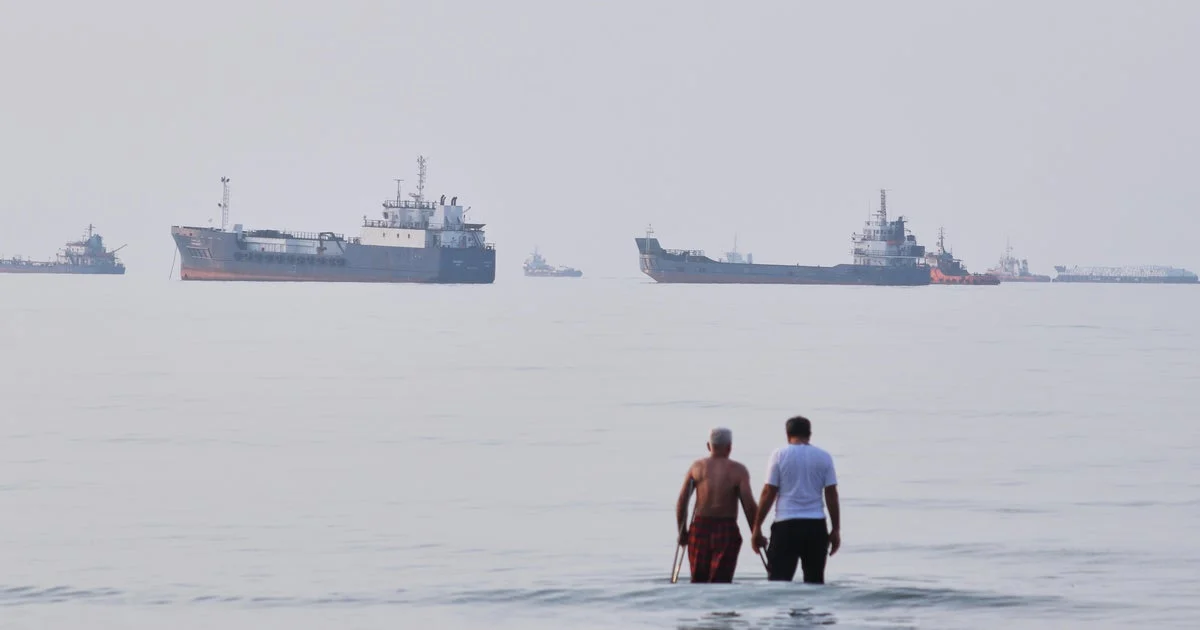
President Donald Trump’s announcement of a 20% surcharge on cargo passing through the Strait of Hormuz triggered strong opposition from the shipping industry and international legal experts before he suddenly abandoned the plan in favor of trade deals with Gulf states. The reversal highlights ongoing regional maritime security challenges and the fragile state of international law governing this critical oil transit route.
What Happened
On July 13 and 14, 2026, President Trump declared that the United States would impose a 20% fee on all cargo passing through the Strait of Hormuz to cover U.S. costs for securing the vital waterway. This controversial proposal came amid ongoing tensions related to the U.S.-Iran conflict, maritime attacks, and Iran’s own threats to charge tolls for passage. By July 14, Trump abandoned the plan via his social media platform, announcing instead that the U.S. would seek “Trade and Investment Deals” with Gulf states as an alternative. No further details on the new approach were provided, and Gulf governments had not commented immediately.
Key Facts
Experts estimate that a 20% fee on cargo vessels, particularly large natural gas or crude oil tankers, would have imposed costs reaching $17 million to $30 million per shipment. Lloyd’s List analysis cited an example where a large crude carrier carrying 2 million barrels of oil could face up to $24 million in fees at current prices. This dwarfs past fees historically charged by Iran during conflicts, which were around $2 million or just 1.2% of cargo value.
Shipping companies and logistics firms, including German giant Hapag-Lloyd, publicly denounced the proposal as illegal under international maritime law. The International Maritime Organization (IMO) also stated there is no legal basis for mandatory tolls on straits used for international navigation.
U.S. Secretary of State Marco Rubio and other officials have emphasized that international waterways like the Strait of Hormuz cannot be subject to tolls by any nation, referencing existing international law.
The announcement initially caused a spike in global oil prices, with Brent crude briefly reaching $87 a barrel, before settling down near $84. Iranian Foreign Minister Abbas Araghchi mocked the U.S. fee plan as excessive and reiterated Iran’s claim to being the “guardian” of the strait, asserting a willingness to charge more moderate tolls.
What This Means
The aborted fee plan underscores the sharp sensitivity surrounding the Strait of Hormuz, one of the world’s most strategically critical maritime chokepoints through which roughly 20% of global oil passes. Attempting to monetize security costs by charging transit fees risks creating dangerous precedents that could unravel long-standing international maritime norms. Many analysts warn that legitimizing tolls in such straits could encourage other countries to impose similar fees, threatening free passage rights essential to global trade stability.
For global consumers, such disruptions risk higher fuel and shipping costs, feeding into inflationary pressures worldwide. For regional actors, it highlights the ongoing instability in the Persian Gulf amid strained U.S.-Iran relations and questions about who controls security and economic access. The episode may accelerate diversification of oil export routes, as Gulf producers seek pipelines and overland alternatives to circumvent the vulnerable waterway.
Background
Earlier in 2026, the U.S. and Israel launched joint military action against Iran, triggering Iranian retaliatory attacks on commercial shipping vessels in and near the Strait of Hormuz. Iran had threatened to impose its own fees on passage, while the U.S. reasserted a naval blockade of Iranian ports. A memorandum of understanding was signed intended to keep the strait open to commercial shipping, though tensions remain high with ongoing attacks reported, including Iranian missile strikes on tankers using alternative shipping routes along Oman’s coast.
Analysis
Petras Katinas, a research fellow at the Royal United Services Institute (RUSI) Europe, described the 20% fee as opening “a very dangerous Pandora’s Box” that could undermine fragile international maritime law. Similarly, Lloyd’s List editor Richard Meade emphasized that such charges—whether imposed by Washington or Tehran—risk normalizing politically motivated tolls on international waterways, a precedent condemned by global shipping interests and the IMO alike.
Myles B. Caggins III, an energy and security consultant and retired U.S. Army colonel, noted that the fee’s principle—charging for maritime security—is sound in theory, but its blunt implementation could exacerbate global supply chain costs and encourage oil producers to develop alternative routes, such as pipelines through Iraq and Syria.
What Comes Next
The Trump administration has yet to detail its replacement “Trade and Investment Deals” strategy with Gulf states. The maritime security situation in the Persian Gulf remains volatile, with Iran and Gulf countries continuing to contest control over shipping routes. Meanwhile, oil market watchers will closely monitor traffic patterns and prices in the coming weeks as the fallout from the fee controversy settles.
Sources
This article is based on reporting and publicly available information from the following source:
Read more World News stories on Goka World News.