
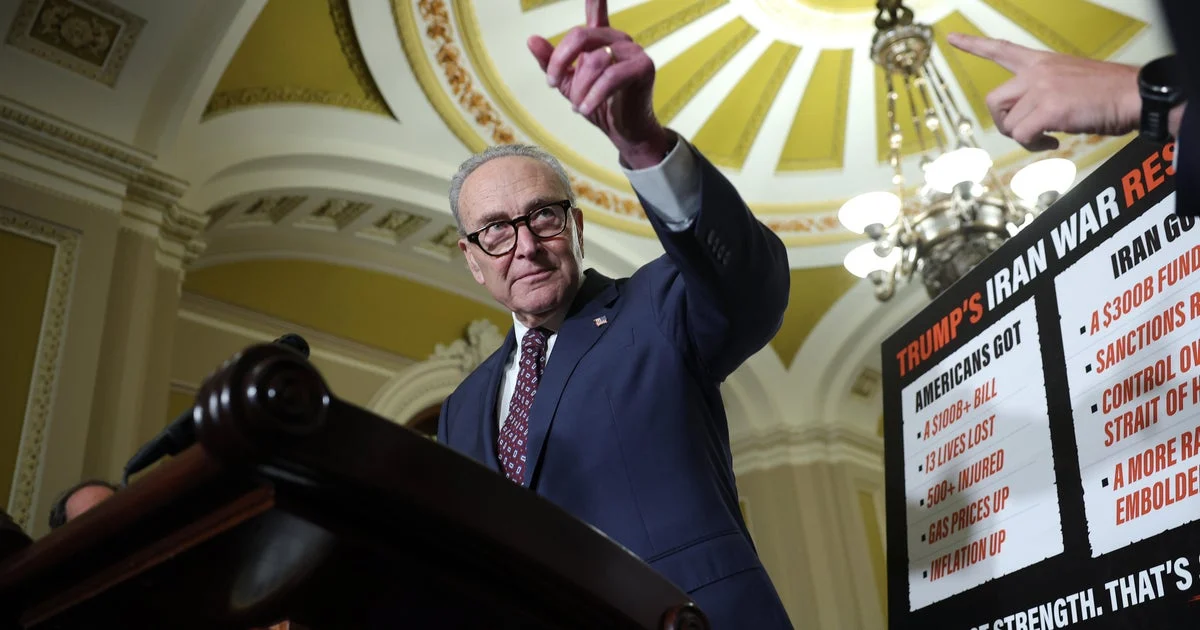
Senate Democrats on July 14, 2026, voted to block the initial procedural motion to advance the National Defense Authorization Act (NDAA), the annual must-pass defense policy bill, citing objections to the Trump administration’s approach to the war with Iran. The vote, which ended 50 to 46 against advancing the bill, revealed deep partisan tensions over how the ongoing conflict is being managed.
What Happened
On Tuesday, the Senate held a procedural vote to move forward with the 2026 NDAA, a legislative vehicle traditionally passed with broad bipartisan support that outlines defense priorities and funding for the U.S. military. However, Senate Democrats opposed moving the bill forward, effectively blocking progress. Senator Richard Blumenthal (D-CT) characterized the vote as a referendum on U.S. involvement in the Iran conflict, which Democrats say has been mishandled by President Trump.
Senate Majority Leader John Thune (R-SD) voted against the procedural motion, a strategic move that preserves his ability to bring the bill back for consideration. Despite his vote, Thune urged Democrats to overcome their objections and support the legislation. He emphasized the bill’s defense investments, including a 3.6% pay raise for troops, expanded use of drone technology, shipbuilding, maintaining a 1,800-fighter air force, and development of the new B-21 strategic bomber.
Senate Minority Leader Chuck Schumer (D-NY) strongly criticized the timing of the vote. Just a day earlier, the White House had notified Congress that hostilities with Iran had resumed after Trump’s claim that the conflict “terminated” in April. Schumer condemned the Republican push to advance the NDAA “as though none of this is happening” and labeled the administration’s war actions unauthorized, criticizing the lack of congressional approval or clarity regarding mission objectives.
Key Facts
The Senate vote on the procedural motion to advance the NDAA concluded at 50 against and 46 in favor. Majority Leader Thune’s no vote was procedural to retain control over the bill’s reintroduction. Democrats cited the 1973 War Powers Resolution, which requires the president to report military deployments to Congress within 48 hours and limits unauthorized hostilities to 60 days unless Congress authorizes further action. The Trump administration’s position that hostilities had ended in April is contested, as renewed conflict was confirmed by a formal White House notification on July 13.
The NDAA includes significant provisions to strengthen U.S. military capabilities with emphasis on unmanned aerial systems, counterdrone technologies, shipbuilding initiatives, and air power. It also incorporates a troop pay raise and investments in military housing, healthcare, education, and childcare.
What This Means
The Senate Democrats’ refusal to advance the NDAA signals a rare and significant showdown between the legislative branch and the Trump administration on war powers and executive military action. By blocking a critical defense bill over Iran war objections, Democrats are pressing for greater congressional oversight and accountability in a conflict that they argue lacks clear legal authorization and strategic clarity.
This impasse could delay crucial funding and policy decisions for the armed forces, affecting everything from personnel benefits to procurement programs and modernization efforts. It also reflects an increasing partisan divide over how national security issues are managed, where Democrats demand transparency and debate, while Republicans emphasize swift defense readiness amid global threats.
For ordinary Americans, the dispute takes place amid renewed hostilities in Iran, risking escalated conflict and potential future military involvement. It raises questions about the limits of presidential war powers and Congress’s role in authorizing sustained military action. The standoff underscores the challenge of balancing national security imperatives with democratic oversight and legal constraints on executive authority.
Background
The NDAA is a key annual bill that traditionally passes with strong bipartisan support by setting U.S. defense priorities and budgets. The 1973 War Powers Resolution was enacted to prevent extended unauthorized military engagements without congressional approval. However, recent years under the Trump administration saw disputes over the application of this law, particularly regarding the Iran conflict, where administration officials contended hostilities had ended despite ongoing military operations.
Democrats have repeatedly criticized President Trump for engaging in what they consider unauthorized military actions in Iran, pressing for clearer congressional authorization and public accountability. The timing of the current blockade is particularly notable as it coincides with fresh White House disclosures of resumed hostilities, amplifying concern over the administration’s conduct.
What Comes Next
Following the blocked procedural vote, Majority Leader John Thune retains the option to bring the NDAA back to the Senate floor for reconsideration. Negotiations are expected to continue between Senate Republicans and Democrats, as well as with the House of Representatives and the White House, to resolve objections and advance the legislation. The timeline for further Senate action on the NDAA has not been officially announced.
Sources
This article is based on reporting and publicly available information from the following source:
Read more Politics stories on Goka World News.