
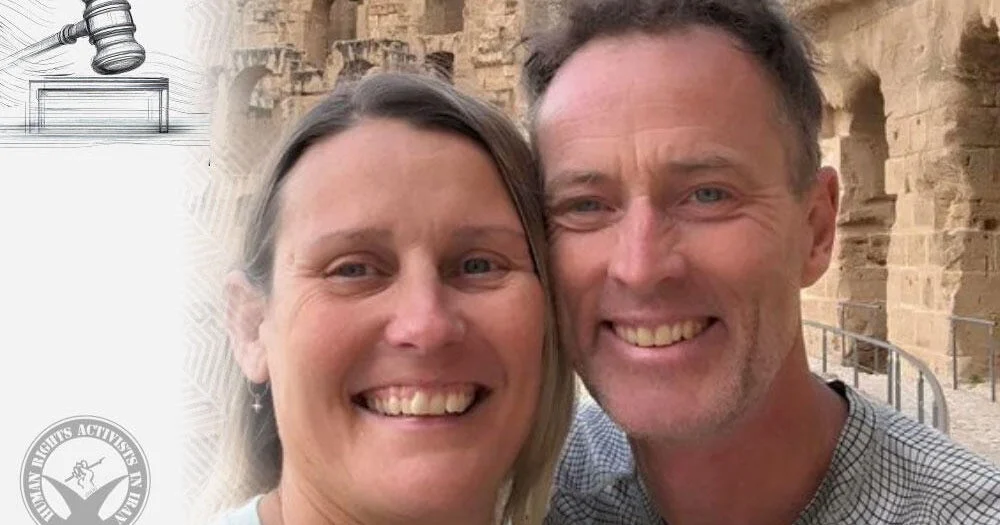
British citizen Craig Foreman, detained in Iran on espionage allegations denying by his family and UK officials, has had his prison sentence extended by two years during a prolonged hunger strike. Foreman and his wife have endured harsh imprisonment amid escalating Iran tensions affecting diplomatic efforts and raising grave humanitarian concerns.
What Happened
Craig Foreman, 52, and his wife Lindsay, 53, were arrested in Iran in January 2025 during a motorcycle trip from Europe to Asia. In February 2025, shortly before the US and Israel launched coordinated attacks on Iran that intensified regional conflict, both were convicted of espionage by a Tehran court. They received 10-year sentences, soon followed for Craig by a two-year extension reportedly for speaking to the media without legal counsel or translation, according to family statements. The Foremans have spent nearly 19 months imprisoned, primarily in Tehran’s Evin prison, known for harsh conditions.
Key Facts
The couple began hunger strikes in May 2026—Craig on May 9, followed by Lindsay on May 18—to protest their detention and treatment. Their family reports significant health deterioration, with Craig losing 35 pounds and Lindsay 30 pounds, both suffering symptoms including dizzy spells and body tremors. The UK Foreign Office confirmed urgent diplomatic engagement with Iranian authorities regarding Craig’s sentence extension. UN special rapporteurs Mai Sato and Dr. Alice Jill Edwards have formally called for the Foremans’ release, condemning the trial’s lack of fair trial guarantees and labeling their imprisonment wrongful.
What This Means
This case underscores the human cost amid Iran’s ongoing conflict with foreign powers and highlights the precarious position of foreign nationals caught in geopolitical hostilities. The extension of Craig Foreman’s sentence amid deteriorating health raises serious questions about Iran’s judicial process and treatment of prisoners, potentially straining UK-Iran relations further. For the Foremans’ family and broader British and international communities, this situation reflects the challenges of securing diplomatic protections and humanitarian rights when individuals are entwined in complex international conflicts.
Moreover, the repeated hunger strikes signal a desperate bid to assert their innocence and protest detention conditions. Their plight may increase pressure on governments to intensify diplomatic negotiations, but it also exposes how civilians face severe consequences from wider regional strife beyond direct military engagements.
Background
The Foremans were arrested months before the outbreak of war between Iran and a coalition including the US and Israel. Their sentencing by a judge sanctioned by Western governments for “show trials” compounds doubts about the legitimacy of their prosecution. Their imprisonment coincided with escalating military action, including an Israeli bombing of the prison facility where they were expected to be transferred. The British government previously classified their decade-long sentence as “completely appalling and totally unjustifiable” and has advised against travel to Iran since 2022.
What Remains Unclear
Details surrounding the new two-year sentence extension remain vague. The Foremans were reportedly summoned under the pretense of meeting a lawyer but were instead presented with the increased sentence without counsel or a translator, denying them the opportunity to defend themselves. The precise legal grounds and procedural fairness of this extension have not been verified by independent sources.
What Comes Next
The UK government has recently appointed a special envoy tasked with supporting British nationals detained overseas in complex cases, including the Foremans’. Family advocates are urging the British government to officially classify the couple’s detention as arbitrary, hoping this will accelerate diplomatic efforts toward their release. The impact of ongoing regional hostilities and potential future diplomatic initiatives remain key factors to watch.
Sources
This article is based on reporting and publicly available information from the following source:
Read more World News stories on Goka World News.