
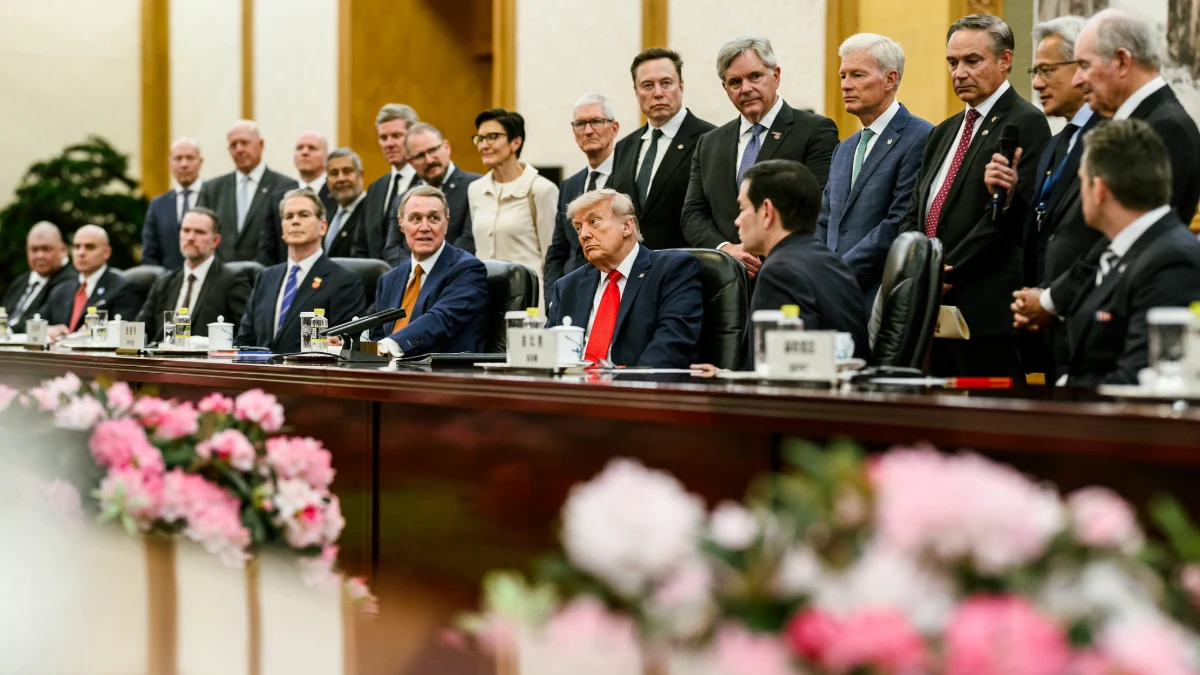
The United States and China are on the cusp of launching a high-level dialogue aimed at de-escalating the intensifying battle over AI model supremacy. Both nations currently impose stringent controls on AI technologies amid deep concerns about national security and technology dominance, but officials see the upcoming discussions as a potential turning point toward cooperative AI governance and shared safety standards.
What Happened
On the eve of the World AI Conference scheduled for July 17-20, 2026, in Shanghai, U.S. and Chinese officials are preparing to initiate a bilateral dialogue focused on AI governance. This dialogue seeks to promote information sharing on AI risks and risk mitigation methods without an immediate goal of reaching binding agreements. The discussions come after years of increasing restrictions by the U.S. and China on the export, deployment, and access to advanced AI models, especially those considered most capable and potentially vulnerable to misuse or exploitation.
Key Facts
The U.S. has developed a de facto AI model licensing regime using export controls that determine which American AI models are publicly available, restricted, or completely banned. These measures are driven by fears that Chinese entities might leverage U.S. models to compromise critical infrastructure. Similarly, China has tightened controls on its AI models, moving away from widespread public availability toward closed models accessible to approved users only, citing parallel concerns about U.S. attempts to infiltrate Chinese networks.
Recent actions include Chinese authorities instructing users to uninstall American models from Anthropic over alleged security vulnerabilities linked to U.S. surveillance concerns. Concurrently, U.S. federal agencies, including the Department of Defense, prohibit using Chinese-developed AI models, with investigations underway by House committees scrutinizing national security risks, and growing calls among state and federal officials for broader bans on Chinese AI use in government systems.
Chinese open-source AI models currently hold a significant share of use by U.S. enterprises, with firms like Airbnb, Perplexity, DoorDash, and others relying on models such as Alibaba’s Qwen. This interdependence complicates any comprehensive restrictions or bans. Venture capital firms estimate that up to 80% of new U.S. AI startups may rely on Chinese open-source models.
What This Means
The proposed U.S.-China AI governance dialogue represents an effort to avoid further escalation of AI model access restrictions that could severely disrupt global AI development and commercial use. Both nations face a choice between deeply entrenched protectionism—manifested as export bans and usage prohibitions—and a collaborative framework that sets internationally recognized safety and security standards.
Such cooperation could standardize pre-deployment reviews examining risks including cybersecurity threats, unauthorized bioweapons development, and loss of human control. This would foster a certification regime applicable to all AI providers, including open-source models, potentially enforced by cloud platforms and code repositories responsible for distributing these models. This approach promises more predictable regulatory environments for developers and users, reducing the risks of unexpected AI model blackouts due to export controls or unilateral decisions.
For enterprises and consumers, cooperative governance might sustain access to a broader range of AI technologies without sacrificing security. It could also prevent the fragmentation of AI ecosystems, which currently put companies and researchers at risk of losing cross-border AI tools amid intensifying rivalries. At the same time, the dialogue underscores the geopolitical complexity of AI governance, as it involves reconciling rising national security concerns with the global reliance on AI innovations from multiple sources.
Background
U.S. export controls have effectively restricted the international dissemination of advanced AI models developed by American companies. China’s systems, while historically more open-source-oriented, have also come under increased restrictions, particularly through pre-deployment content reviews and efforts to restrict model deployment to approved users. Past U.S. government actions include federal agency bans on Chinese models and warnings issued globally through U.S. embassies about Chinese AI cybersecurity risks. Likewise, Chinese prohibitions on certain U.S. AI models reflect mutual distrust heightened by national security priorities.
What Comes Next
The initial U.S.-China AI governance dialogue is expected to begin shortly before the World AI Conference in Shanghai in mid-July 2026, focusing on risk communication and safety assessments without immediate binding agreements. Subsequent outcomes may include further negotiations around establishing mutual technical standards, risk certification procedures, and possibly mechanisms for reciprocal verification or enforcement.
Sources
This article is based on reporting and publicly available information from the following sources:
Read more AI Regulation stories on Goka World News.