
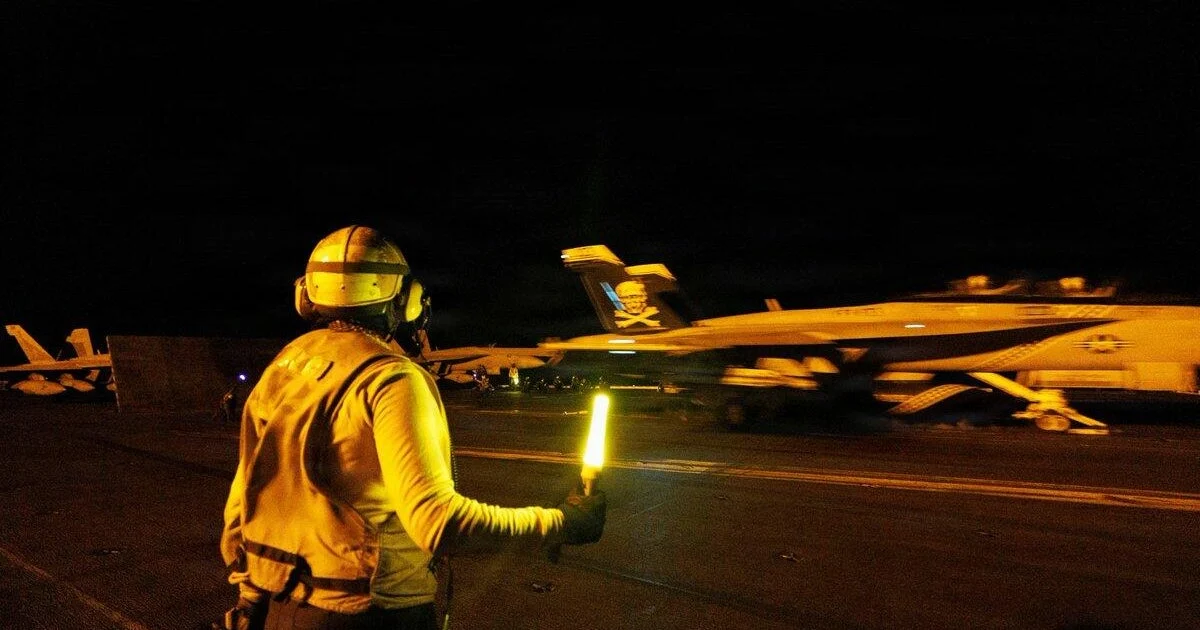
The United States carried out its sixth consecutive night of military strikes against Iranian targets late Thursday, marking a significant escalation in the ongoing conflict near the strategically vital Strait of Hormuz. These actions follow Iranian attacks on U.S. allies and commercial vessels in the Persian Gulf, intensifying regional tensions and prompting strong warnings from both sides.
What Happened
On Thursday evening, U.S. Central Command announced a fresh round of strikes against Iranian military sites starting around 9:30 p.m. Iran time. Although specific locations were not officially disclosed by the U.S., Iranian state media reported explosions in Bandar Abbas, a southern port city adjacent to the Strait of Hormuz. Iranian news agencies also detailed missile strikes near Qeshm Island, another frequent focal point of U.S. operations.
White House press secretary Karoline Leavitt reinforced President Trump’s stance against Iranian aggression during a late afternoon briefing in Washington, D.C. She emphasized that the United States would not allow attacks on ships transiting the strait without consequences. Leavitt pointed to a June memorandum of understanding Iran violated by firing on commercial vessels navigating these waters, which triggered the American strikes.
Meanwhile, Iran continues to retaliate with assaults on facilities linked to the U.S. and its regional partners in Jordan, Kuwait, and Bahrain, though no direct damage to American bases has been reported. Iranian military officials have vowed to target all “infrastructure in the region” should the U.S. pursue further attacks on civilian installations, heightening concerns about a widening conflict.
Key Facts
- The sixth night of American strikes occurred late Thursday, with operations commencing around 9:30 p.m. Iran time.
- Strikes targeted Iranian military capacities but the exact sites were officially undisclosed by the U.S.
- Iranian media confirmed missile strikes on Qeshm Island and explosions in Bandar Abbas, both near the Strait of Hormuz.
- White House press secretary Karoline Leavitt cited Iran’s violation of a June memorandum of understanding as justification for the strikes.
- Iran’s military threatened to target all regional infrastructure if the U.S. attacks civilian sites.
- Iranian state media condemned the U.S. strikes near a children’s cancer hospital in Ahvaz, which prompted evacuation amid claims of civilian harm.
- Retaliatory attacks by Iran targeted U.S. allies’ military facilities in Jordan, Kuwait, and Bahrain without reported direct hits on American bases.
What This Means
This persistent escalation illustrates the precarious nature of security around the Strait of Hormuz, a critical chokepoint for global oil shipments. For the international community, continued military strikes and counterattacks risk disrupting regional stability and global energy markets, which rely heavily on uninterrupted passage through this waterway.
At home, the U.S. government’s firm military response underscores its commitment to protecting commercial and allied interests in the Persian Gulf. Yet, intensified bombardments cycle between confrontation and retaliation, increasing risks of broader conflict involving regional partners and possibly endangering U.S. service members and civilians in the area.
The strikes also highlight the limitations of diplomatic efforts, as White House officials admit that despite ongoing talks, Iran persists with aggressive actions breaching agreed terms. This pattern may harden political and military decisions in Washington and Tehran, diminishing the prospects for an immediate peaceful resolution.
What Comes Next
The U.S. administration continues to monitor the situation closely, balancing military pressure with diplomatic engagement. No public schedule for further negotiations or ceasefire talks has been announced, but White House officials state that responding forcefully to what they call “acts of terrorism” remains a priority. Regional allies and the international community await developments amid fears the conflict could further destabilize the already volatile Gulf region.
Sources
This article is based on reporting and publicly available information from the following source:
Read more World News stories on Goka World News.