
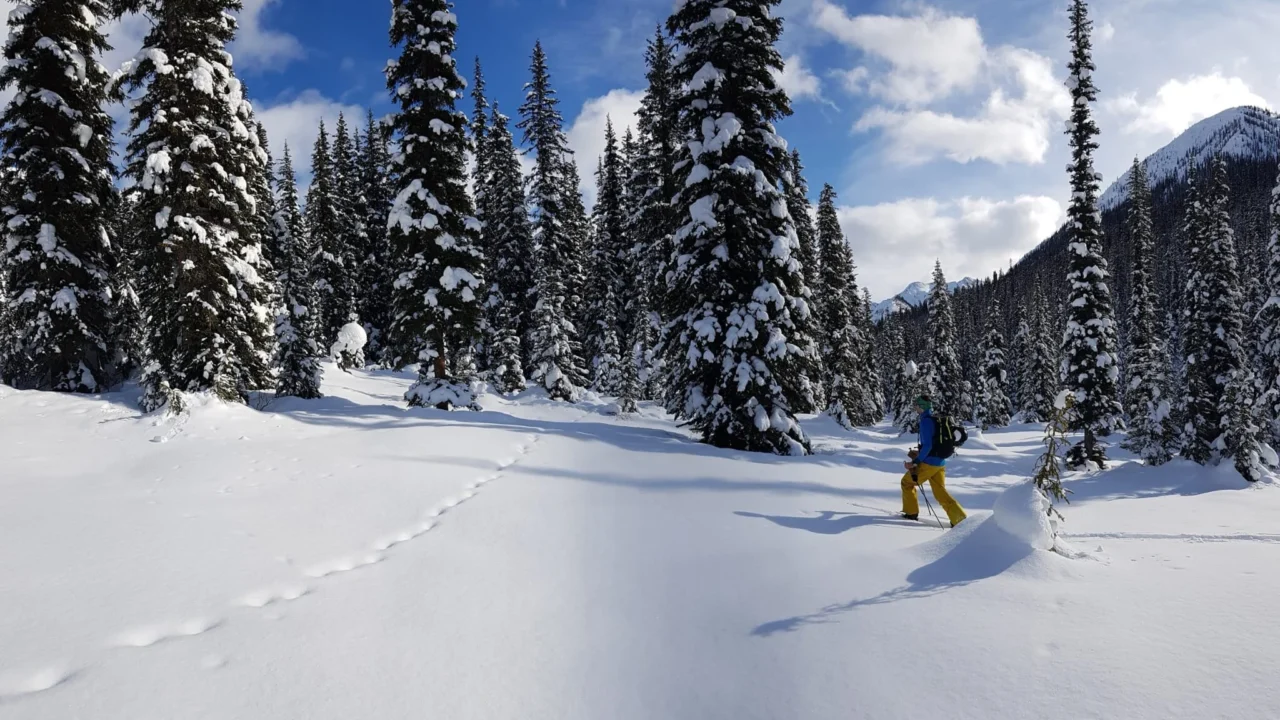
Human activities such as backcountry recreation and road construction are linked to lower wolverine population densities across large swaths of the Canadian Rockies and Columbia Mountains, according to a new study led by researchers from the University of Calgary. This research, published September 29, 2026, in Biological Conservation, represents one of the most extensive landscape-scale investigations into how human disturbances impact this elusive carnivore.
What Happened
The study, conducted as part of Dr. Mirjam Barrueto’s doctoral research, used extensive data to assess the status of wolverine populations across roughly 81,800 square kilometers in western Alberta and eastern British Columbia. The team combined field research with data from public recreational heat maps capturing activities such as backcountry skiing, heliskiing, cat skiing, and hiking. The analysis showed fewer than 300 wolverines in the entire studied region.
Findings revealed that areas with higher road density and higher recreational use corresponded to significantly reduced numbers of wolverines. Female wolverine density, in particular, was more affected by road presence. The study notes this is critical due to females’ essential role in population recovery, given wolverines’ slow reproductive rate — typically producing only one to three offspring every few years.
Key Facts
The research spanned a landscape of approximately 31,600 square miles, one of the largest regions analyzed for this species. Road density and recreation data were derived from satellite maps and user-generated location data from recreational apps. The population in the Upper Columbia region of southeastern British Columbia was especially sparse, with potential population size estimated to be around 30% higher if current levels of human disturbance were reduced.
Road density emerged as a main predictor of lower population density for both sexes but had a disproportionately negative effect on females. The influence of recreation—tracked via heat maps for winter and summer activities—was also significant, marking the first landscape-scale study linking recreation to carnivore population density decline.
What This Means
This study provides a quantitative understanding of how human infrastructure and recreational use alter wildlife populations on a broad scale. For conservationists and land managers, the findings highlight the urgent need to reconsider road building and recreational access in critical wildlife habitats. Maintaining roadless zones and reducing disturbance during key reproductive periods could be essential to preserving wolverine populations.
Moreover, the research underlines the importance of protecting female wolverines to ensure population viability over the long term. Since females are more sensitive to road networks, strategies targeting road development have practical implications for species recovery efforts. Recreational users may also face new management plans aiming to balance human enjoyment with ecological sustainability.
In a broader ecological context, the decline of a carnivore such as the wolverine could alter predator-prey dynamics, potentially affecting ecosystem health. This research thus prompts a reevaluation of how outdoor recreation and infrastructure are planned in wild landscapes to avoid unintended biodiversity losses.
Background
Previous research established that wolverines tend to avoid areas with frequent human activity, and road density has long been studied as a threat to carnivore habitats. However, concrete evidence linking recreational use at a large landscape scale to population density reductions was lacking until now. This study builds on earlier findings confirming road density’s impact and extends understanding by integrating recreation as a distinct factor.
What Comes Next
To support wolverine conservation, the research team proposes several management recommendations, including preserving roadless areas, limiting recreation in critical breeding habitats, and protecting low-disturbance corridors. Ongoing monitoring and further research will be required to evaluate the effectiveness of these measures and refine strategies for coexistence between human activities and wildlife.
Sources
This article is based on reporting and publicly available information from the following source:
Read more Science Discoveries stories on Goka World News.