
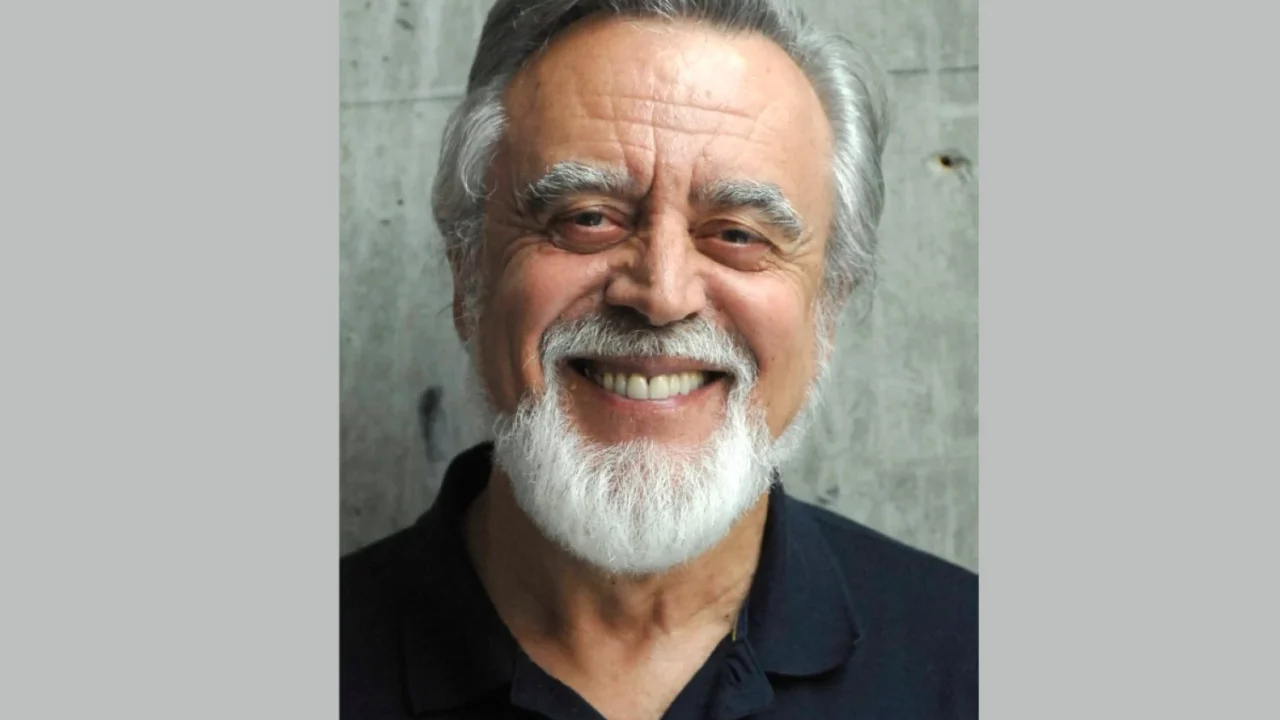
Dimitri Bertsekas, a distinguished computer scientist and professor known for his seminal contributions to optimization, control theory, and artificial intelligence, died at his home in Belmont, Massachusetts, on June 3. He was 83 years old. Bertsekas’ decades-spanning career left a profound imprint on engineering and computational sciences through his academic work, authored books, and mentorship of numerous scholars.
What Happened
Bertsekas, who held the titles of Jerry McAfee Emeritus Professor in Engineering at MIT and Fulton Professor of Computational Decision Making at Arizona State University, passed away after a prolific academic and research career. He was involved with MIT’s Department of Electrical Engineering and Computer Science (EECS) and the Laboratory for Information and Decision Systems (LIDS) for many years before joining Arizona State University in 2019 full-time. Over his career, he earned widespread recognition for pioneering work in large-scale computation, nonlinear optimization, reinforcement learning, and dynamic programming, and authored more than 20 influential textbooks and monographs. Bertsekas also founded Athena Scientific publishing and acted as chief scientific advisor to Bayforest Technologies.
Key Facts
Dimitri Bertsekas earned his PhD in System Science from MIT in 1971 after completing degrees at the National Technical University of Athens and George Washington University. His academic appointments included Stanford University, the University of Illinois at Urbana-Champaign, MIT, and Arizona State University.
His contributions extended beyond research to educational literature, with textbook titles widely adopted across leading institutions including MIT. He received numerous accolades, such as the 2018 INFORMS John von Neumann Theory Prize (jointly with John Tsitsiklis), the 2014 Richard E. Bellman Control Heritage Award, and election to the U.S. National Academy of Engineering in 2001.
Close colleagues and former students praise his clarity in writing, mentorship style, and ability to integrate complex theory with practical problems. His collaborative book with Tsitsiklis on neuro-dynamic programming notably shaped the fields of reinforcement learning and approximate dynamic programming.
What This Means
Bertsekas’ work underpinned many foundational advances in optimization and computational methods that continue to influence technologies ranging from machine learning to network optimization. His clear exposition and educational materials cultivated generations of engineers and researchers, helping disseminate complex ideas in accessible form. This ripple effect ensures his legacy impacts both academia and industry for years to come.
By mentoring numerous students who advanced into their own leadership roles, and by bridging rigorous theory with practical applications, Bertsekas strengthened the infrastructure of modern computational decision-making. As AI and reinforcement learning grow vital in diverse technologies, his early contributions provide critical underpinnings that enable ongoing innovation.
Background
Bertsekas’ career was marked by affiliations with top-tier academic centers and strong publication output, including early stints at Stanford and the University of Illinois. His longstanding MIT tenure helped establish its global leadership in electrical engineering and computer science. Public recognition via prestigious awards attests to the broad respect he commanded.
His involvement in authoring fundamental texts on dynamic programming and stochastic control, often in collaboration with Tsitsiklis and others, contributed key theoretical frameworks vital to AI’s development.
Sources
This article is based on reporting and publicly available information from the following sources:
Read more Science & Technology stories on Goka World News.