
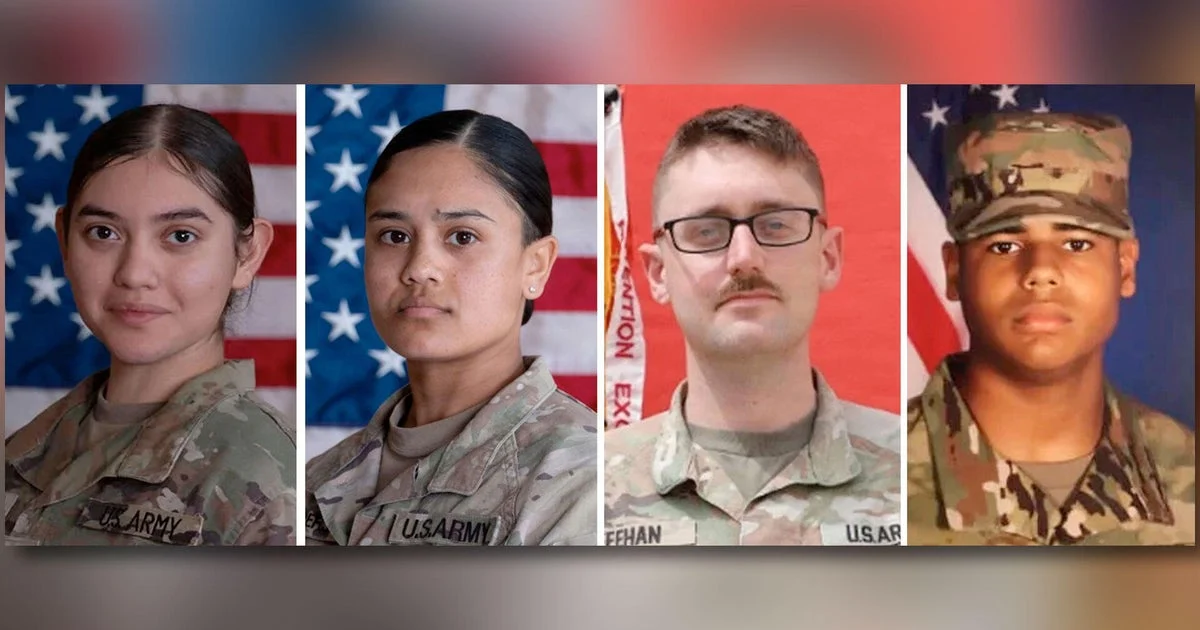
The Pentagon has revised its public records on U.S. military casualties in the war with Iran, adding four service members killed in July but initially omitted from the official count of casualties. This adjustment comes amid criticism over the Defense Department’s transparency and inconsistent reporting of both deaths and injuries sustained during the conflict.
What Happened
In July 2026, four U.S. service members—1st Lt. Tyler James Feehan, Sgt. Angel S. Rampersad, Pvt. Isabella Gonzales, and Sgt. Michael Emmanuel Swinton—were killed during operations in Jordan and Iraq linked to the conflict with Iran. Initially, these deaths were listed separately as “Overseas Operations Casualties” rather than under the Pentagon’s formal count for the Iran war, known as Operation Epic Fury. At one point, their deaths appeared on both lists but were later removed from the Iran war casualties, lowering the total reported deaths from 18 to 14 in that conflict.
The New York Times reported this discrepancy, suggesting the four fatalities occurred after a ceasefire announced by the Trump administration in April. However, these service members died about a week after President Trump informed Congress on July 7 that military actions had resumed.
Pentagon spokesperson Sean Parnell attributed the conflicting records to “site errors on the Defense Casualty Analysis System” caused by a “temporary data disruption,” calling the New York Times’ story “completely fake” and accusing it of colluding with anonymous sources.
Key Facts
According to Pentagon data as of late July 2026, 14 service members are confirmed killed in the war with Iran under Operation Epic Fury, with an additional four deaths listed separately as Overseas Operations Casualties. The four served in Jordan and Iraq. The Defense Department previously misclassified two fatalities from an Iranian strike in Jordan under the ISIS-targeted Operation Inherent Resolve before amending the designation to “overseas operations.”
The Pentagon also reported nearly 100 service members injured since July 7, with 96% returning to duty. Most injuries have been described as minor concussions, a category that can encompass varying forms of traumatic brain injury, some with delayed symptoms. However, the Defense Casualty Analysis System’s public count showed fluctuating injury numbers, with 417 wounded in the Iran war and 207 in Overseas Operations as of the last update.
Defense officials have not briefed the media on the Iran war since May 2026 and have not provided clarity on the classification of these deaths or the injury figures.
What This Means
This inconsistency in casualty reporting undermines confidence in Pentagon transparency and raises concerns about the accuracy of public information regarding the human cost of the Iran war. For families and the public, clear and consistent casualty data are essential for understanding the war’s impact. The delayed and conflicting information may contribute to confusion about the current status and intensity of U.S. military operations in the Middle East.
Moreover, the initial reluctance to update injury figures despite ongoing combat suggests challenges in monitoring and communicating the scale of harm to service members, especially with injuries like concussions that can have complex symptoms. This gap could affect support services and military readiness assessments.
As the conflict persists, these reporting issues highlight the difficulties governments face in providing timely, accurate war casualty data amid evolving military and political circumstances.
Background
The Pentagon’s Iran war casualty reporting is part of a broader effort to track deaths and injuries in U.S. military engagements, with Operation Epic Fury designating the Iran conflict specifically. Earlier in 2026, the Trump administration declared a ceasefire in April but resumed military action on July 7, setting the stage for renewed hostilities and casualties.
In past months, Pentagon disclosures have been sparse, and inconsistencies in casualty data have drawn media scrutiny, reflecting challenges in war transparency and communication.
What Remains Unclear
The exact reasons for the Pentagon’s initial exclusion of the four July deaths from the Iran war database remain officially unconfirmed beyond the cited technical errors. The Defense Department has not clarified why the site demonstrated fluctuating injury totals or why detailed briefings have been withheld since May 2026.
Details about the circumstances of some injuries and deaths have also not been fully disclosed, nor has there been official comment on the operational changes between the April ceasefire and the July resumption of hostilities.
What Comes Next
The Pentagon has indicated that further injury and casualty updates will be provided via the Defense Casualty Analysis System. Ongoing monitoring of the conflict and future transparency efforts remain critical as the war continues. No scheduled media briefings have been announced to address these issues.
Sources
This article is based on reporting and publicly available information from the following sources:
Read more US News stories on Goka World News.