
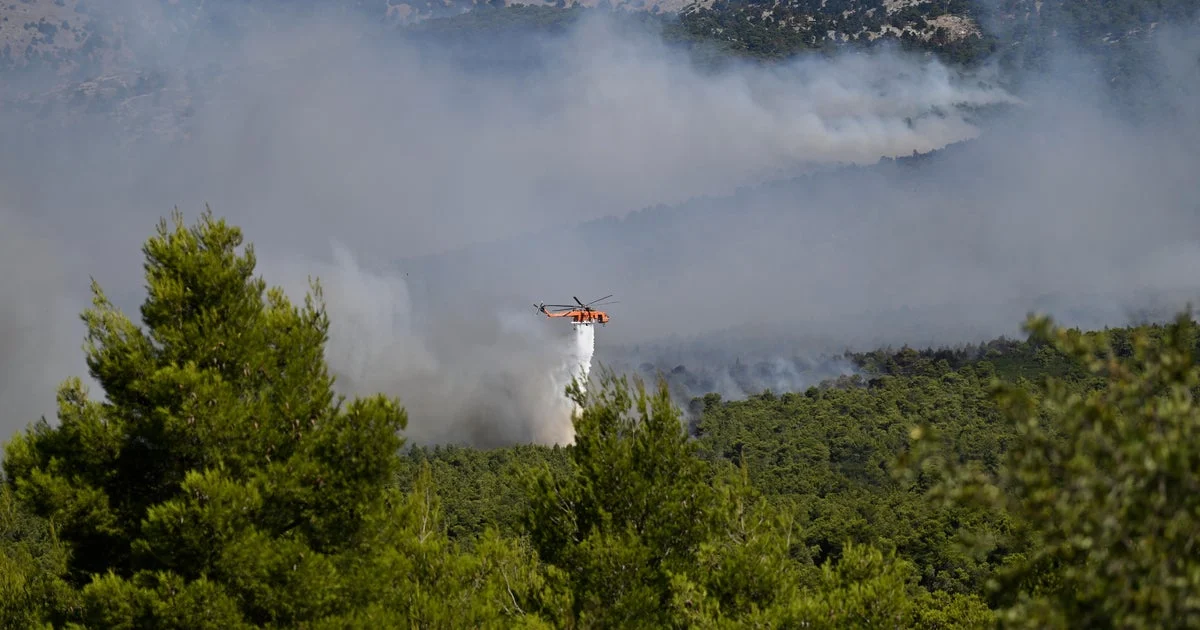
Two Greek firefighting helicopters collided midair on August 2, 2026, while battling intense wildfires near Athens, resulting in one helicopter crashing and the deaths of two crew members. The incident underscores the escalating wildfire emergency sweeping Greece and much of Europe this summer.
What Happened
The collision occurred over the Psatha region, west of Athens, where strong winds fueled a rapidly spreading wildfire that began on Friday, July 31, near Agios Vasileios. The two Bell helicopters, each carrying a two-person crew, collided while attempting water drops in challenging conditions.
Following the crash, two crew members—a Greek and a Danish national—were confirmed dead, while the other two, a Greek and a British national, survived. The exact distribution of fatalities between the aircraft has not been clarified. The wildfire has forced evacuations in nearby towns, including Porto Germeno and mountain communities west of Athens.
Key Facts
Nearly 500 firefighters and 23 aircraft have been deployed to combat the blaze in the Attica region. Roughly 266 people have been evacuated from affected areas, often by sea due to roads being cut off by fire and smoke, with evacuations occurring on both Friday and Saturday. Flames continue to threaten residential areas and industrial zones amid gale-force winds that hinder water collection efforts by firefighting aircraft.
On the island of Kefalonia and the Halkidiki region, other fires have sparked evacuations and ongoing aerial water drops. Earlier in the week, three firefighters were killed fighting separate fires on Crete and in the Peloponnese.
These wildfires follow a record-breaking fire year in 2025, when over 3,860 square miles burned in Europe. The continent has experienced nearly 800 wildfire-related deaths over the last 40 years.
What This Means
The helicopter collision is a stark illustration of the heightened risks emergency responders face amid increasingly severe wildfire conditions exacerbated by climate change. It highlights the operational hazards of aerial firefighting in regions with violent winds and rapidly shifting fire fronts. For local communities around Athens, the wildfires threaten lives, infrastructure, and the environment, reviving fears linked to the devastating 2018 Mati wildfire, Europe’s deadliest in recent history.
The broader European wildfire crisis strains firefighting resources across multiple countries, spreading emergency services thin during peak summer season. The destruction also disrupts daily life, with thousands displaced from homes and vacation areas, deepening the humanitarian and economic impacts.
Long-term, this fire season reaffirms Europe’s vulnerability as the fastest-warming continent, where climate change intensifies weather extremes, making such devastating wildfire events more frequent and severe. This situation demands renewed focus on mitigation, preparedness, and regional coordination to protect ecosystems and populations.
Background
The wildfire near Athens drew immediate parallels to the catastrophic 2018 Mati blaze that claimed 104 lives, underscoring the persistent wildfire threat in Greece’s forested and coastal zones. This year’s fire season has seen fatalities among firefighters already, emphasizing escalating dangers for frontline responders. Across Europe, wildfires have become more frequent and intense, fueled by prolonged heat and drought. Scientific analyses link human-caused climate change to a higher likelihood of extreme fire-weather conditions, particularly in France and southern Europe, where evacuations have displaced hundreds of thousands this summer.
What Comes Next
Greek authorities continue to monitor and battle the fires with available firefighting personnel and aircraft, with ongoing evacuations when necessary. Prime Minister Kyriakos Mitsotakis has been briefed on operations, signaling high-level governmental attention. Regional firefighting efforts will remain critical as wind conditions challenge suppression efforts and threaten to extend the fire’s reach.
Sources
This article is based on reporting and publicly available information from the following sources:
Read more World News stories on Goka World News.