
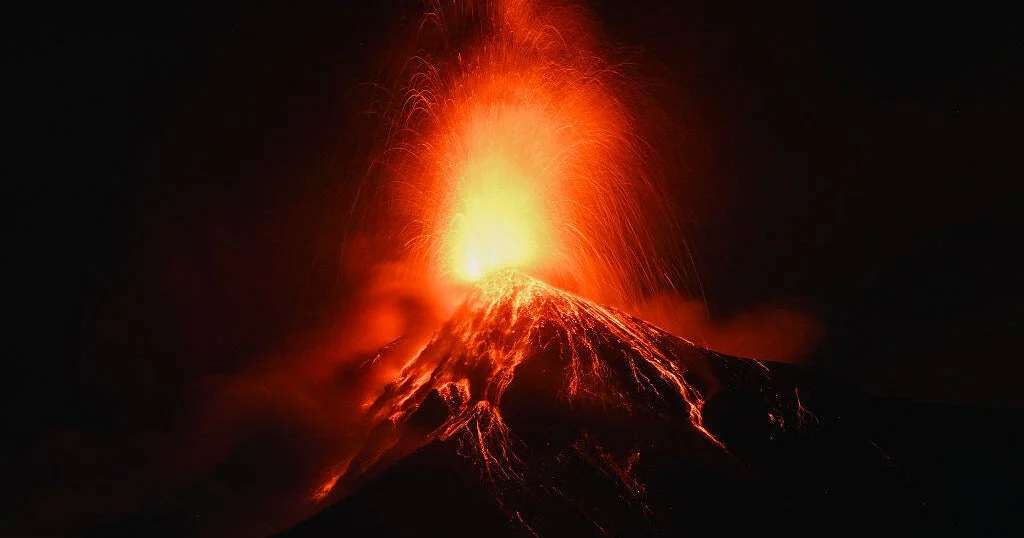
Guatemala’s Fuego volcano erupted on August 4, 2026, resulting in lava flows and towering ash plumes that forced nearby communities to evacuate and raised the country’s emergency alert to its second-highest level. The eruption has drawn global attention due to its intensity and the humanitarian risks posed.
What Happened
The Fuego volcano, located approximately 22 miles from Guatemala City, began erupting on the morning of August 4, 2026. The eruption intensified through the day and into the night, with lava spewing down its slopes and ash clouds reaching nearly four miles high. In response, Guatemala’s disaster coordination agency, CONRED, issued a nationwide orange alert—the alert level just below red, which signals the most severe emergency.
Authorities initiated evacuations of two villages situated near the volcano’s western and southern flanks, identified as the highest-risk zones. Live footage showed glowing lava flows and plumes of gas and ash blanketing the area on the morning following the eruption, with the volcanic activity giving the clouds a distinctive red hue.
Key Facts
According to CONRED, the lava flows consist of a dangerous mixture of volcanic gases, ash, rocks, and high temperatures that travel rapidly down Fuego’s slopes. The country’s Institute of Volcanology warned that the volcano is advancing toward a more explosive phase, increasing the threat of hot volcanic debris flows. Ashfall is expected to affect nearby communities as well.
Historically, Fuego is one of Central America’s most active volcanoes and is located on the Pacific “Ring of Fire,” an area prone to frequent seismic and volcanic activity. Recent years have seen multiple evacuations: over 500 people were displaced in 2025, about 1,200 in 2023, and a deadly eruption in 2018 resulted in 215 deaths and many missing as lava devastated a village.
What This Means
The eruption’s proximity to Guatemala City and populated villages underscores the urgency of ongoing evacuations and disaster preparedness measures. The scale and rapid progression of the volcanic activity threaten not only lives but also infrastructure, agriculture, and air quality over a wide area. The ash plume’s height suggests potential disruption to air travel and respiratory health risks for residents downwind. As an active volcano with a history of deadly eruptions, the current events are a stark reminder of the ongoing volcanic hazards facing Guatemala and the need for vigilant monitoring and emergency response resources in the region.
Internationally, the eruption highlights the vulnerability of countries along the Pacific Ring of Fire to natural disasters with cross-border implications, such as ash dispersal and airspace closures. The eruption might prompt regional cooperation in disaster risk management and humanitarian aid should the situation escalate further.
Background
Fuego’s repeated eruptions have made it a focal point for disaster management in Guatemala. Its 2018 eruption was particularly catastrophic, causing hundreds of deaths and widespread destruction. The volcano’s activity is closely monitored by local institutions due to its potential to produce pyroclastic flows, lava, and ashfall that can quickly endanger nearby communities. The country’s experience with past evacuations has shaped current emergency protocols and community responses to volcanic threats.
What Comes Next
Authorities continue to monitor Fuego’s activity closely as it moves toward a potentially more explosive phase. Evacuations remain a priority for vulnerable villages on the volcano’s flanks, and CONRED has maintained the orange alert nationwide. Further developments will depend on volcanic behavior in the coming days, with emergency services ready to escalate alerts and response if necessary.
Sources
This article is based on reporting and publicly available information from the following source:
Read more World News stories on Goka World News.